Today you can play championship golf in nearly every corner of Alabama, from the Tennessee River all the way down to Mobile Bay. But it started over 100 years ago with just a few dozen Birmingham businessmen and a meadow at the end of a streetcar line.
A Meadow, a Club, and 77 Men with an idea
The Country Club of Birmingham was founded in 1898 by 77 men on the piece or property that Highland Park Golf Course now sits, but that first year, it wasn’t a golf club. It was a driving club for horse-drawn buggies at the end of the North Birmingham trolley line.
One year later, member Robert Henry Baugh–an engineer and a sportsman–turned a meadow near the driving club into the city’s first golf course. In 1900, a Canadian named Nick Thompson arrived to work there as an instructor to teach these men to play the game played on the course they just built.
Baugh built a hilly nine-hole course that started out with sand greens for the putting surface. In 1906, the greens were converted from sand to grass.
At the same time, the game was spreading along the Gulf Coast and near the state’s capitol. The Country Club of Mobile was established in 1897, and the course at Selma Country Club opened in 1903. Alabama had officially caught the golf bug.
The Golden Age
(Country Club of Birmingham/Facebook)
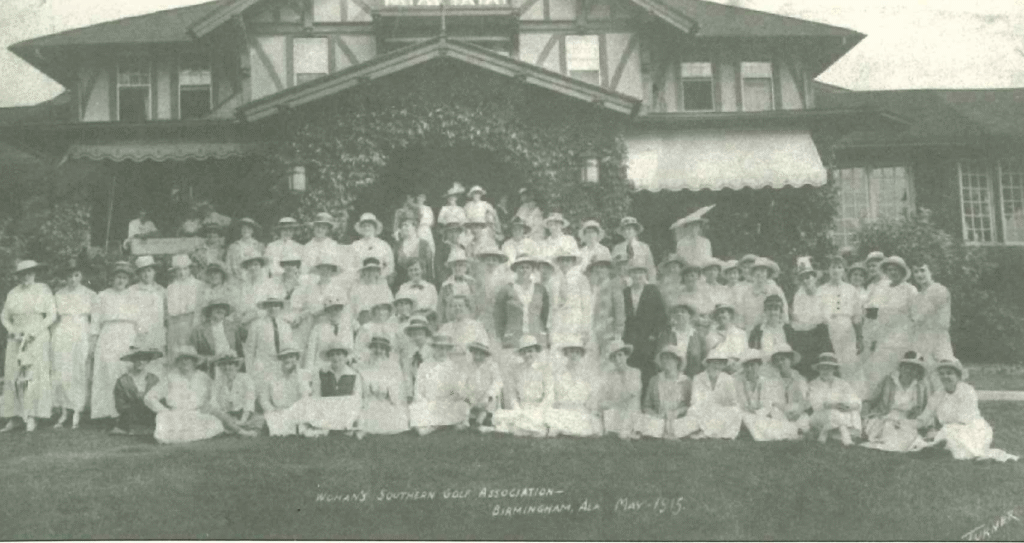
By the 1910s, Alabama golf was garnering serious attention from the golf community. The Women’s Southern Golf Association held its first tournament at the Birmingham club in 1915. In 1916, a then teenager made a name for himself at Highland Park: Bobby Jones–yes that Bobby Jones–won the Birmingham Country Club Invitational at the age of 14.
Next came the famous architects. After the Birmingham club moved to Mountain Brook in 1926, Donald Ross designed two 18-hole courses there, and a Ross course was laid out for the Country Club of Mobile in 1928. In 1929, he came back to Birmingham to design the course at Mountain Brook Club.
Ross was among the biggest names in American golf course design history–designing Pinehurst No. 2, Seminole Golf Club, and countless others–and his works in Alabama are still played to this day.
Champions and Characters
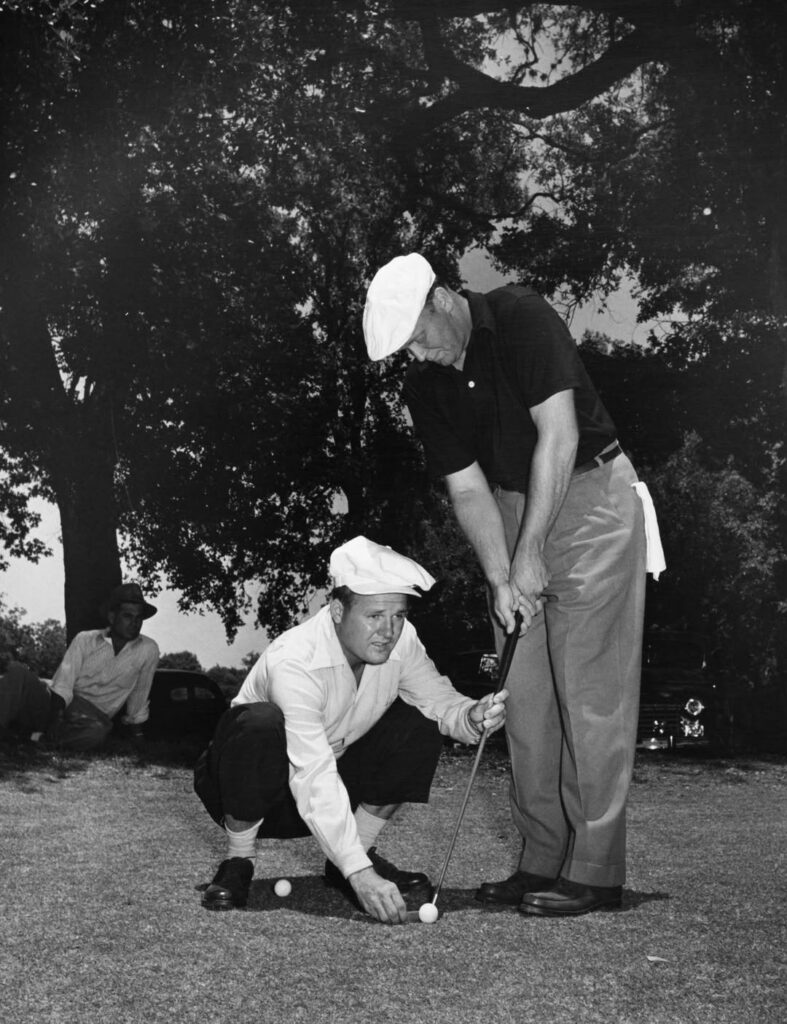
Charley Boswell (Alabama Sports Hall of Fame)
Historic Alabama golf produced its own playing stars as well. The Country Club of Birmingham became nationally known for excellent players, including Alabama native Hubert Green, who went on to have an illustrious professional career, winning two major championships.
At Highland Park, a plaque on the first tee honors Charley Boswell, a reminder that the state’s public courses have their own heroes as well. Boswell was permanently blinded while trying to rescue a fallen comrade in a tank explosion during World War II. He learned to play golf during his rehabilitation at Valley Forge General Hospital, having never played the game before losing his sight.
He went on to win over 15 Blind Golfers Association National Championships, shot an 81 at Highland Park–a world record for a blind golfer–and made three career hole-in-ones, including a famous one on October 21, 1970 on the 17th hole of Vestavia Country Club.
Shoal Creek and a Turning Point for Golf
In the mid-1970s, the Golden Bear himself, Jack Nicklaus, routed Shoal Creek as his first ever solo design project. It opened to national acclaim in 1977, and by 1984 it hosted its first professional major, the PGA Championship.
The course was set to host its second PGA Championship in 1990, but controversy centered around the club’s membership practices threatened to derail the event amid protests and sponsor concerns.
Shoal Creek responded to the controversy by creating greater diversity amongst its membership, setting an example that would be followed by clubs in Alabama and beyond.
The Trail
Next, in the early 1990s, Alabama golf took another leap forward. The CEO of the Retirement Systems of Alabama, David Bronner, wanted to diversify the state’s pension fund and boost Alabama’s economy, and he thought golf could do both.
He partnered with legendary architect Robert Trent Jones Sr–yes, the famed designer of California’s Spyglass Hill and Spain’s Real Club Valderrama, but no not the same as the aforementioned famous player “Bobby Jones.”
They set out together to build the Robert Trent Jones Golf Trail. The first four courses opened in 1992–Grand National in Opelika, Hampton Cove in Huntsville, Magnolia Grove in Mobile, and Oxmoor Valley in Birmingham.
The RTJ Golf Trail turned out to be a big idea. Today it has 26 courses at 11 sites across the state. It has drawn golf travelers from far and wide, and it’s often credited with helping attract companies like Mercedes and Hyundai to the state. Just as important, it gave everyday golfers access to championship-caliber courses at affordable prices.
Still Teeing It Up
From a buggy club’s meadow to a statewide trail, Alabama golf has come a long way. You can still walk the historic holes at Highland Park, play Ross’s designs in Birmingham and Mobile, or load up the car and take on the Trail one stop at a time. Golf has been part of Alabama’s DNA for more than 125 years, and there’s no sign it’s slowing down.
For more stories like this, subscribe to our newsletter and get the best of Alabama delivered to your inbox every Friday.