Oysters can tell us a lot—about the waters they grow in, and about the people who bring them to the table. Behind every harvest is a network of farmers, scientists, chefs, and coastal communities whose work shapes not only what we eat, but the health and future of the places we call home. For Beth Walton, executive director of Oyster South, connecting those people is at the heart of building a stronger Southern oyster industry. She works alongside her husband, Bill Walton, in that effort, to help bring together people who grow, study, serve, and celebrate oysters into the same conversation.
The nonprofit connects communities and provides resources to support oyster farmers across the Southern United States. Its mission extends beyond farming itself, championing the environmental, economic, and cultural value of oysters while celebrating the foodways that have shaped the region for generations.
“We fully recognize that there’s three coasts involved,” Walton explains, “but our primary focus is not on focusing just farmers, but the whole community.” The organization wants to see farmers succeed, but it also recognizes that a thriving oyster industry depends on relationships among people who might otherwise work in separate corners of the same field.
Bringing the Oyster Community Together
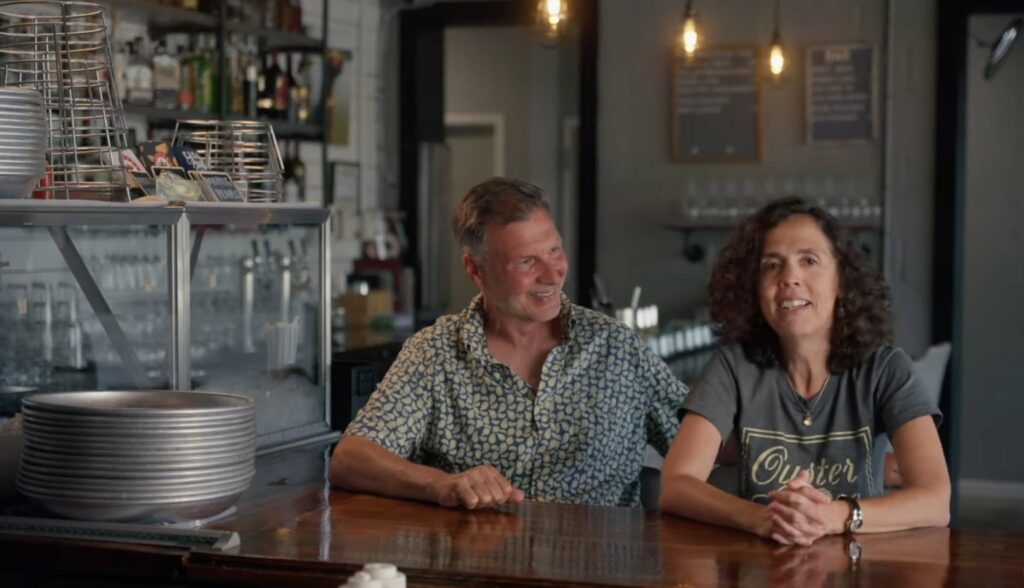
Bill and Beth Walton (Oyster South/Facebook)
Oyster South’s origins grew out of the intersection of hospitality and oyster farming. Walton recalls how the idea took shape through connections at Kimball House, an Atlanta restaurant known for its raw bar, and an oyster-farming fundamentals course at Auburn University.
At the time, the restaurant’s oyster program offered an opportunity to introduce a different perspective on Southern oysters. While diners and industry professionals were already familiar with oysters from the East and West coasts, Gulf oysters had not received the same attention in some circles.
As Alabama farmers began working with the restaurant, the team at Kimball House recognized an opportunity to bring farmers and hospitality professionals closer together. And it made sense: farmers could learn what chefs looked for in a quality oyster, while chefs could better understand the people and processes behind the product.
“We have hospitality over here, academia here, and industry people here,” Walton says of the different groups that make up the oyster community.
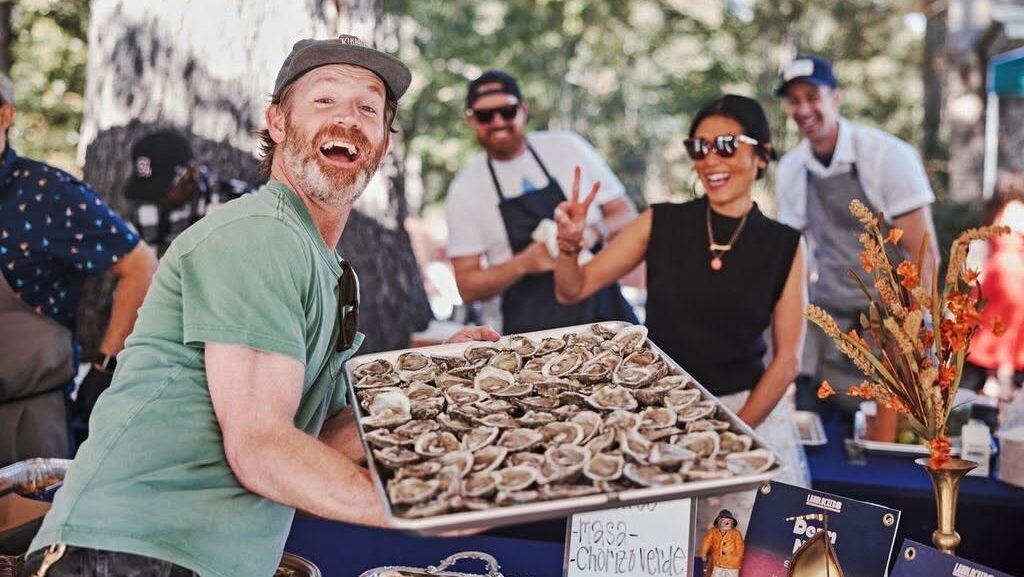
Oyster South helps bridge those worlds through two major events: Landlocked, its public-facing oyster celebration, and the Oyster South Symposium, which focuses on education and information sharing among industry professionals.
At these gatherings, attendees can speak directly with a farmer or chef, ask questions, and make connections that might eventually lead to a farm visit, a restaurant partnership, or a new approach to their own work. The goal is to create the space for those conversations to happen naturally.
The organization also supports a peer-to-peer program that helps Southern farmers learn from one another and from oyster growers in other regions. That might mean exploring a new farming technique, attending a conference, or traveling to another coast to see how a different operation works.
Partnerships have been essential to making that work possible. Walton points to Evans Meats, which has provided logistical support from the beginning and helped connect restaurant clients with opportunities such as server training. Kimball House was another early partner whose interest in Southern oysters helped create an opening for local farmers.
The Work Behind a Southern Oyster
(Oyster South/Facebook)
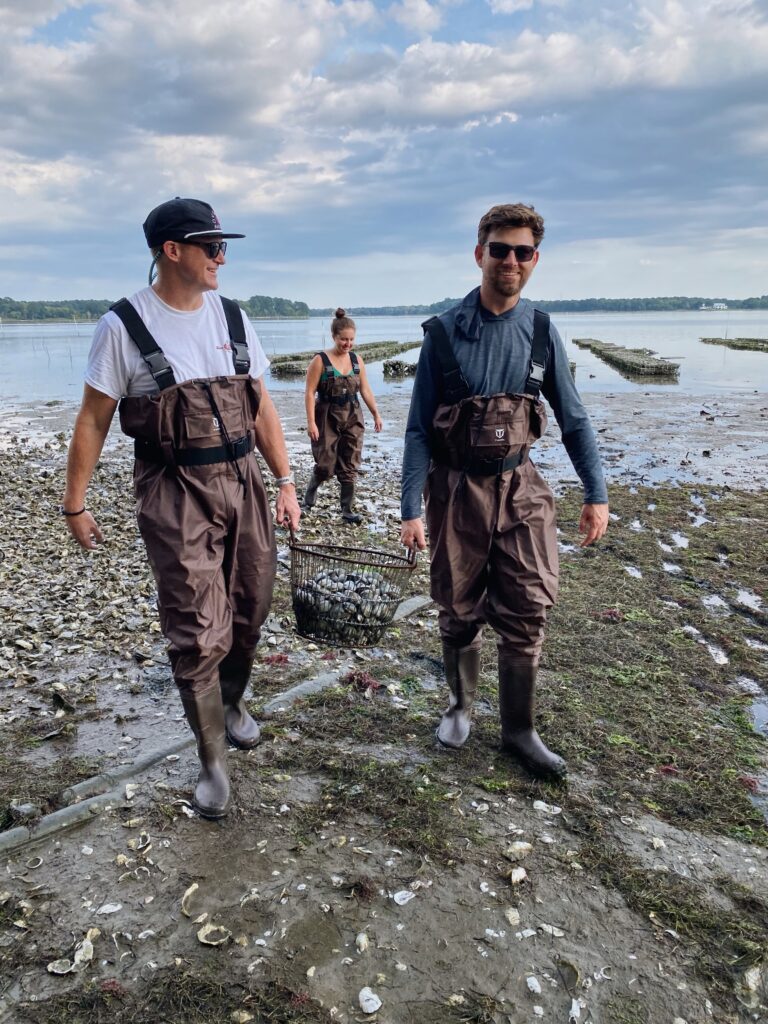
Oyster farming looks different across the country, and the methods used in Southern waters have their own history. In many places, off-bottom oyster aquaculture—raising oysters in gear suspended above the seafloor rather than allowing them to grow directly on the bottom—has become an important approach to farming.
While the method has long been established in some regions, it was newer to much of the Gulf and parts of the Southern Atlantic. Walton compares the approach to gardening: farmers tend to their crop, manage its growing conditions, and work with the environment in which it develops. The work requires practical knowledge, investment, and a willingness to adapt.
Oyster South supports those exchanges while also helping tell the story of Southern oyster farming to a broader audience. In partnership with The Local Palate, the organization has worked on Shellbound, a documentary project intended to introduce more people to the industry and explain why it matters.
That public understanding matters because oyster farming is connected to more than the food on a restaurant menu. Oysters are filter feeders, drawing water through their bodies as they feed on microscopic particles. Under the right conditions, oyster reefs and farms can contribute to healthier coastal ecosystems, though the benefits depend on factors such as farming practices, water quality, and local conditions.
A successful industry also supports jobs and economic activity in coastal communities, from farming and equipment supply to distribution, restaurants, and tourism. Maintaining healthy waters and a dependable oyster resource is in the interest of everyone who relies on the coast, even if they never work directly with oysters.
For Walton, those shared interests offer a way to bring people together around practical solutions. Conversations about environmental change can become contentious, but people with different perspectives may still agree on the importance of clean water, a healthy resource, and jobs that sustain their communities.
“We want good water quality,” she says of those common priorities. “A robust resource. Jobs.”
She adds, “I’ve not come across anyone yet who disagrees with this.”
Knowing the People Behind the Food
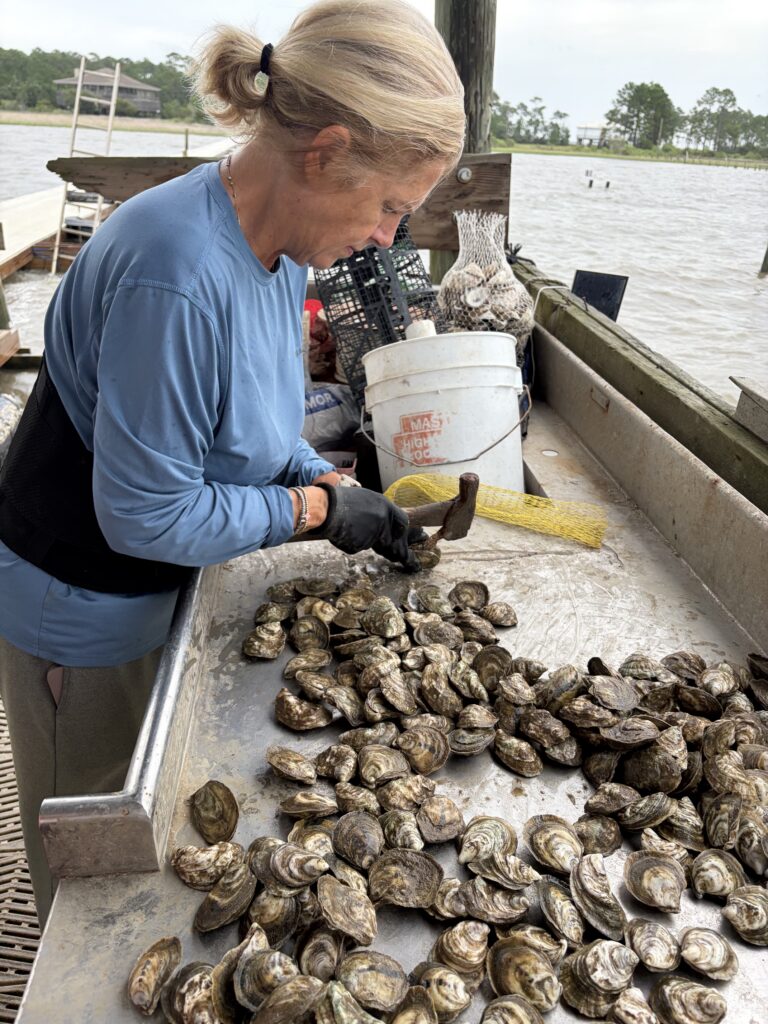
(Holly Swafford/SoulGrown)
Oysters have a distinctive place in Southern food culture. They can be deeply local, shaped by the conditions of a particular estuary or coastline, and they offer us a unique perspective of their merroir through their flavor, texture, appearance, and seasonality.
They are also unusually interactive. Unlike many foods that arrive at the table ready to eat, oysters ask something of the person enjoying them. They’re also by nature celebratory—we enjoy them at gatherings, or on vacation with loved ones. For Walton, that shared experience is part of what makes oysters special.
Walton describes a kind of unspoken connection that forms around the table—a “third place” that can be difficult to articulate. That sense of connection extends beyond the dining room. Oyster South celebrates the historic foodways surrounding oysters while encouraging people to learn more about the farmers and communities behind them.
For Walton, one of the simplest ways to support the industry is to know who grew the oysters you are eating.
“You should absolutely know who the farmers are,” she says.
She encourages diners to look up the farms they encounter, learn about the people who run them, and pay attention to the stories behind the names on an oyster menu. Many farmers operate in public waters under leases, investing in their own equipment while working in places where their operations are visible to others. Their names and reputations are closely tied to the quality of what they produce.
“It’s personal,” Walton says. “They are putting their name on it. That is their legacy—why wouldn’t they do everything possible to make sure it’s the best?”
She also encourages people to think about the watershed as a connected system. Caring for coastal waters begins with understanding how actions on land affect rivers, bays, and the sea. Being a good steward means learning how those systems work together, not treating the coastline as something separate from daily life.
Looking Toward the Future
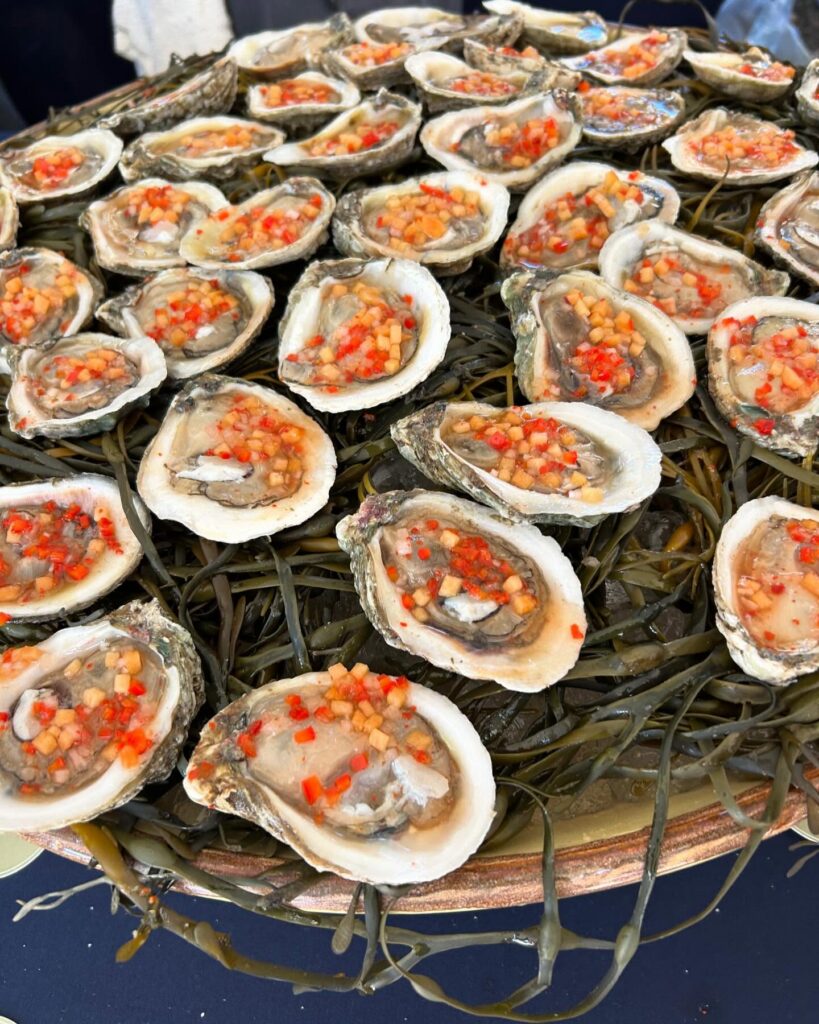
(Oyster South/Facebook)
Oyster South’s work reflects a belief that the future of Southern oyster farming depends on collaboration. Farmers need access to information and practical research. Scientists and universities benefit from working alongside people who understand the realities of growing oysters. Chefs and restaurants help create markets for the harvest, while diners can support the industry by seeking out the people and places behind their food.
The organization continues to create opportunities for those groups to meet, share what they know, and find solutions to common challenges. Its work also invites more people into the conversation, whether through educational programming, farm visits, the documentary project, or public events.
That spirit will be on display at Landlocked 10 this weekend, as Oyster South gathers people around the food and community at the heart of its mission. I won’t be there in person, but I’ll be thinking of the Oyster South team and everyone who has helped build this community over the years. There is something worth celebrating in the work they do to make the connections between healthy waters, successful farmers, and good food more visible.
For anyone who loves oysters but has never thought much about where they come from, Walton’s invitation is simple: find out who grew them. Ask questions. Learn about the waters they came from. And when you find a farm or an oyster you love, tell someone else.
A single oyster may be a small thing, but the story behind it reaches across a whole community. Oyster South is helping more people see—and taste—those connections.
Love this story? Subscribe to our newsletter and get the best of Alabama delivered to your inbox every Friday.