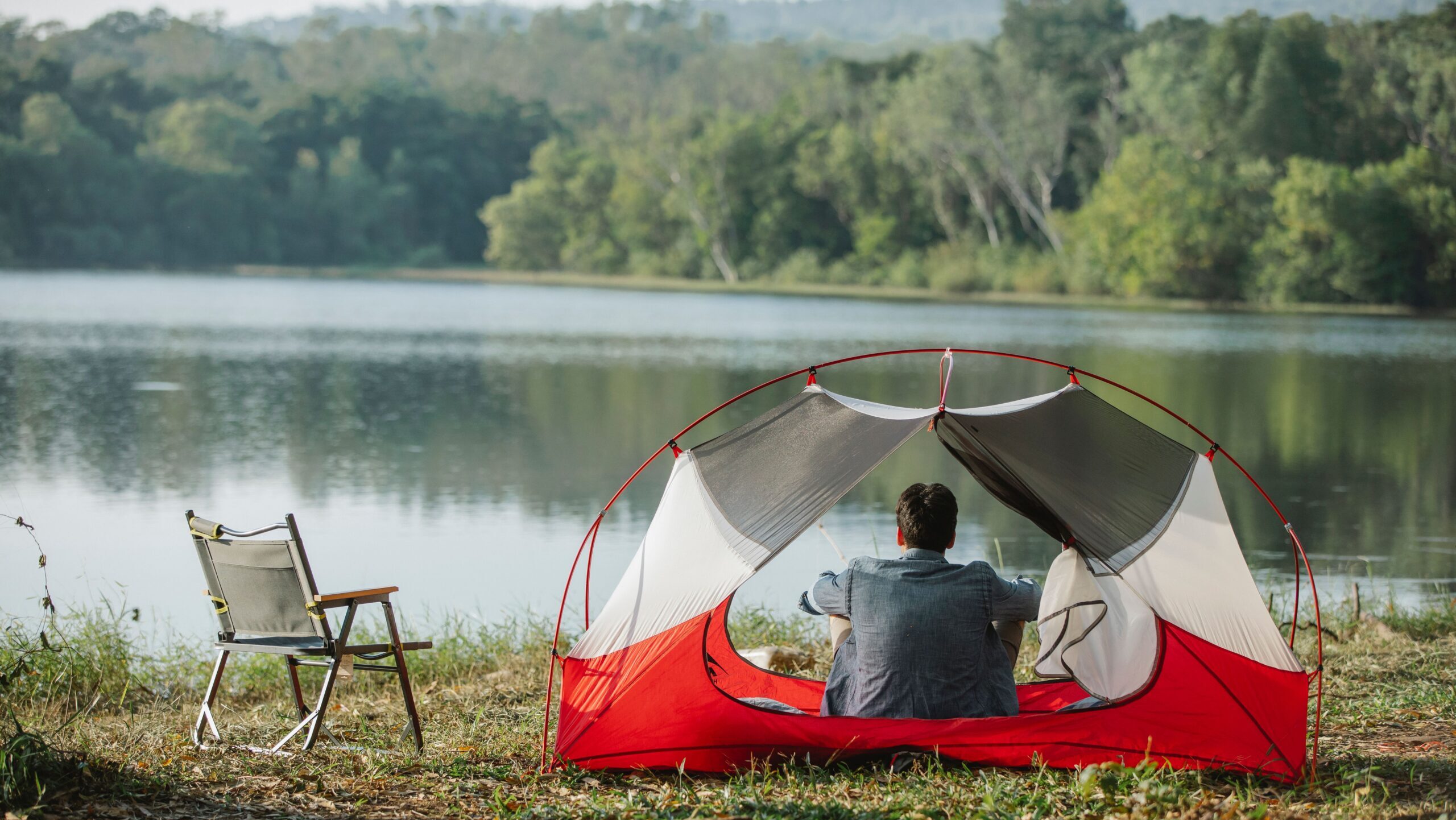
It’s a crisp fall night, the temperature in the low 60s, maybe even the high 50s. You can smell the faint aroma of damp pine leaves, fresh dirt and wood smoke. You’re sitting around a campfire that you worked hard to start yourself, passing a flashlight around like it’s an ancient talking stick, telling ghost stories and roasting marshmallows on long twigs because you forgot to pack the skewers you bought. Life is good.
If you’ve never camped before, Alabama is one of the best places to start. The climate is mild, and we’ve got mountains, lakes, forests and beaches—all within a few hours’ drive of one another. Here’s what to bring, where to go and when to go.
What to Bring
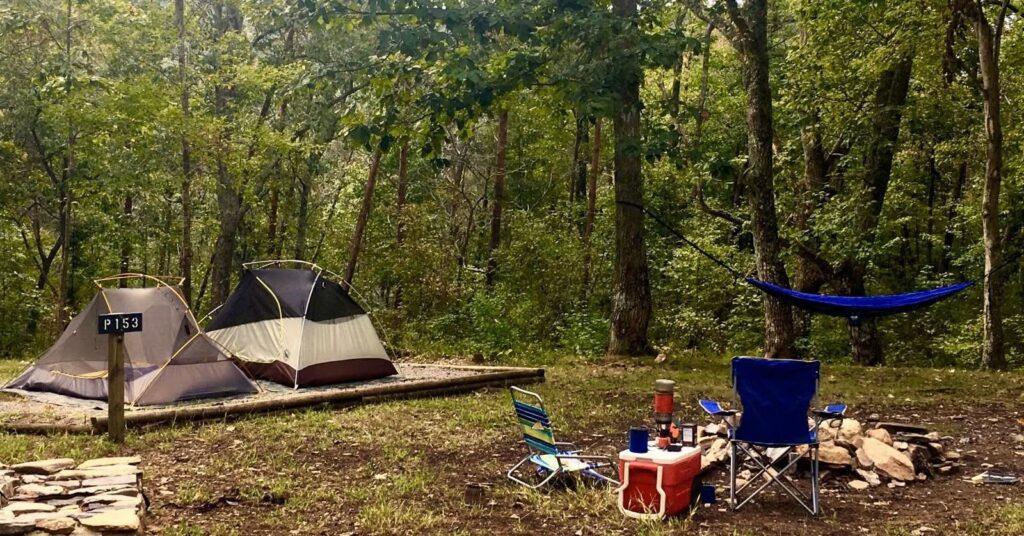
(Cheaha State Park/Facebook)
First, the three things you’ll want to start with: a tent, a sleeping bag and a sleeping pad. For your tent, bring one that’s rated for at least one more person than you actually have sleeping in it. Two-person tents are cozy until 2 a.m. rolls around and you roll right on top of your tent buddy.
Bring a sleeping bag that’s rated for a temperature close to what the actual temperature will be. Those sleeping bags rated for 32 degrees actually work and will have you sweating up a storm if it’s only 60 degrees outside. And don’t skip the sleeping pad. It can be the difference between actually sleeping and just lying on the ground staring at the roof of your tent.
Next, you’ll want to figure out what you’re going to eat and make sure to pack enough. Camp activities have been known to work up an appetite. Packing only prepared cold items in a cooler, like sandwich meat, bread and American cheese, is the simple, more Spartan way to go. But for those who want to add outdoor cooking to their experience, bring along a camp stove.
In addition to the stove, be sure to bring a lighter, a cooler with plenty of ice, one pot, one pan, utensils and trash bags. If you’re unfamiliar with minimalist outdoor cooking, foil packet dinners are hard to beat. Wrap some sausage, potatoes and veggies in foil, set them on the coals, and just like that, you’re a camp chef.
And, of course, don’t forget the marshmallows, Hershey’s chocolate and graham crackers for s’mores. Oh, I almost forgot again: remember to pack the skewers so you don’t have to use twigs like me to roast the marshmallows.
A few more things to pack for the trip are:
- Bug spray—mosquitoes, yikes.
- Rain gear, a tarp and a spool of twine—pop-up showers come out of nowhere.
- Extra water and sun protection—you’ll be glad you did.
- A flashlight, first-aid kit, foldable camping chairs and a portable phone charger.
- An offline map downloaded to or screenshotted on your phone—cell service tends to disappear in the woods. A real analog paper map would be even better.
One more pro tip: Do a practice run setting up your tent before the trip to set yourself up for success.
Where to Go
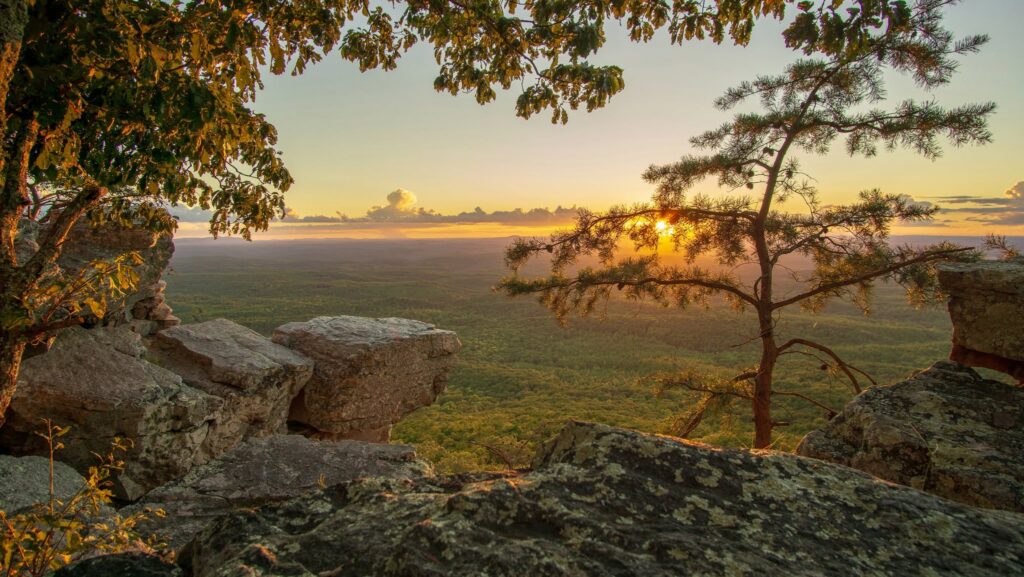
(Cheaha State Park/Facebook)
Alabama has spots for all types of campers.
Want views? Cheaha State Park is home to the highest point in the state, and sunrises there are worth an early wake-up call, no matter how late you stayed up telling ghost stories. DeSoto State Park, near Fort Payne, is another favorite, with waterfalls and plenty of hiking.
Prefer water? Guntersville State Park has lakeside campsites, lots of great fishing and some of the best birdwatching around.
Craving an adventurous feel? Visit Bankhead National Forest or Talladega National Forest. They’re more rugged, feel more isolated and are usually less crowded. But if you’re a true beginner, maybe save these for a later trip and get some experience under your belt first.
Want to be close to a real bed, just in case? Oak Mountain State Park near Birmingham is a great option for first-timers, and if things go sideways, there are plenty of great hotels nearby.
Want to visit the beach? Gulf State Park in Gulf Shores lets you camp near the beach, which is hard to beat.
For your first trip, pick a developed campground with bathrooms and running water. You can rough it and go full backcountry later. Book ahead through the Alabama State Parks reservation system or through recreation.gov for national forest sites. Popular spots fill up fast in peak season!
When to Camp
Fall and spring are the sweet spots in Alabama because of the more pleasant weather. October and November bring cooler nights, fewer bugs and overall great weather, while March through May is comfortable and green. Fall weekends book up quickly at the popular spots, so reserve early!
Summer is doable, but it’s hot, humid and stormy. If you go, try to choose a spot near water and pack extra shade and drinking water. Winter camping in Alabama is milder than in most places, but evenings can still get cold, so bring a sleeping bag rated for colder temperatures and pack every type of extra layer—gloves, beanies, sweaters and more.
If you’re eyeing the Gulf Coast, be mindful of hurricane season—June through November—when planning. Also, if you can swing it, a weekday trip will make for a more peaceful and quiet campground.
Just Do It!
Regardless of when, where or even how you go, just go! The best way to learn to camp is through trial and error. You’ll forget something—those darned marshmallow skewers—and that’s part of it. Keep it simple, learn from your mistakes and forget something else the next time you pack.
Start with one night close to home and get out there and enjoy yourself. The rest will come with practice.
Love this story? Subscribe to our newsletter and get the best of Alabama delivered to your inbox every Friday.