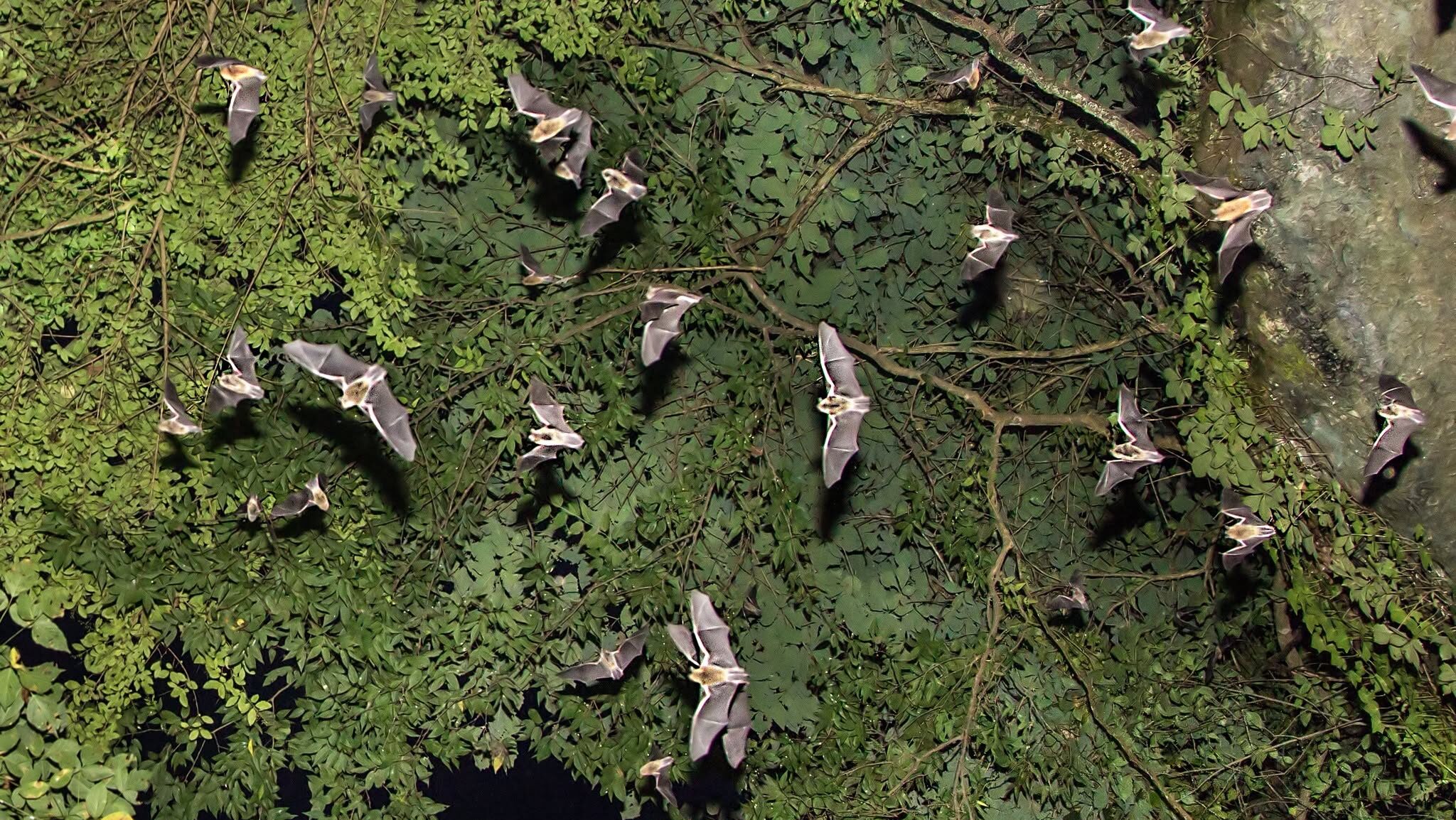
As pitch black dark approaches on a summer night in Jackson County, something magical happens–if you know where to look. A few bats peacefully fly out of an opening in the hillside. Then a few more. Before you know it, a steady stream of bats is pouring into the sky, spiraling upward in formation, some peeling off to hunt for bugs, staying just out of your reach.
It’s one of the coolest free shows that mother nature puts on in the state of Alabama, and all you have to do is show up.
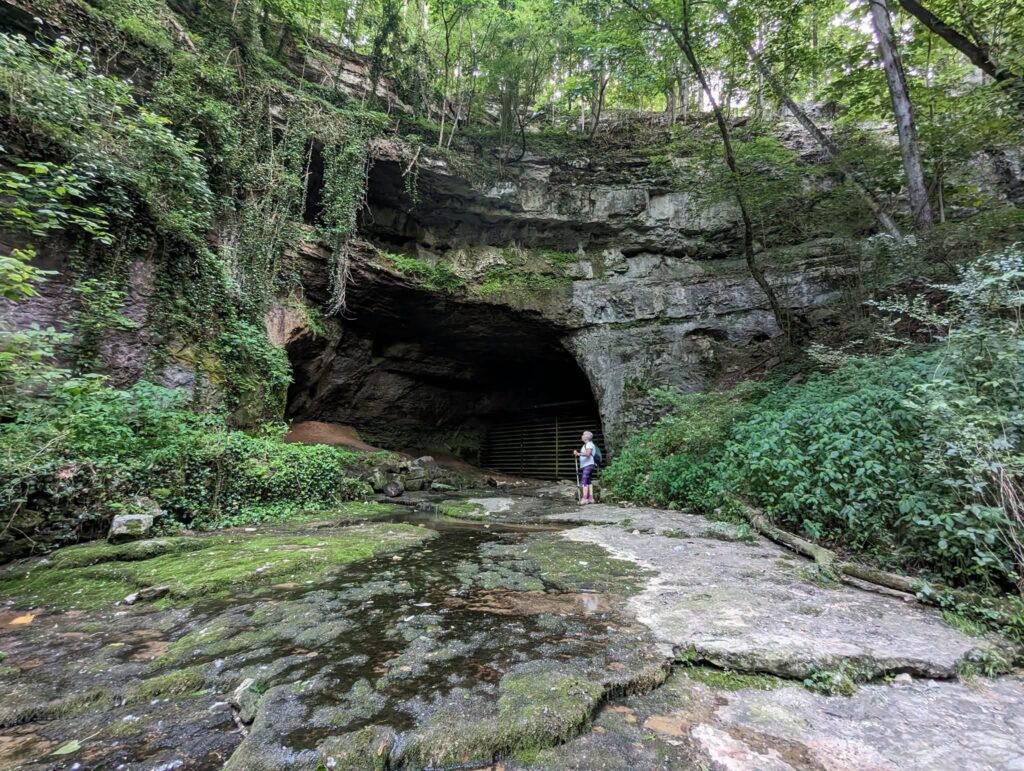
That hillside opening is the mouth to Alabama’s Sauta Cave, and the bats are part of a story that goes far beyond an under-the-radar thrill seeker’s attraction.
Bats: not as scary as you think
Bats are in dire need of a rebrand. They’ve been cast as the vampire’s sidekick in Hollywood horror movies for so long that most of us have forgotten what bats even actually do outside at night. They eat. Bugs. One single bat can go through thousands of mosquitos, moths, and other insects–including the crop-damaging varieties–in just one night. Multiply that by a colony one hundred thousand deep, and you have a natural pest control system worth more than anything money can buy to farmers and outdoorspeople. All organic, no pesticides required.
That alone should win quite a few public relations points. Fewer mosquitoes at the next cookout, healthier crops with fewer pesticides, an overall quieter and less itchy summer? Sign me up. They’re also less dangerous than some would suggest. They do carry rabies, but almost all bat-related rabies cases are tied back to someone intentionally picking up or handling a sick or wounded bat–so don’t do that. If you leave the bats alone, they’ll return the favor.
Health of the bat population
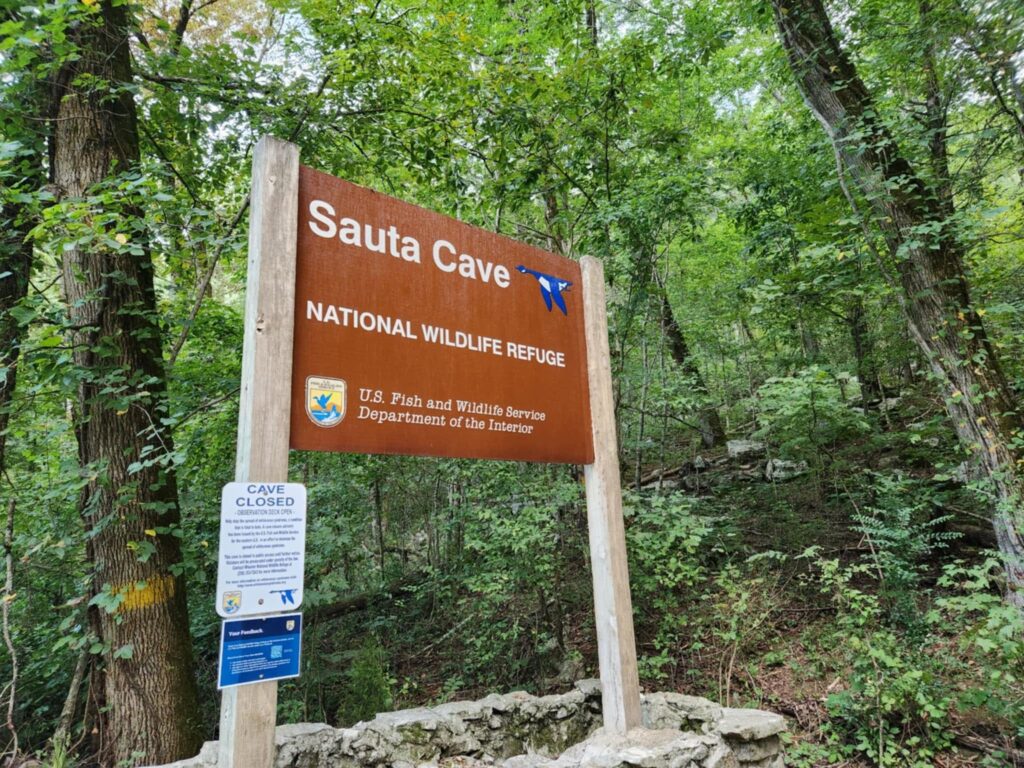
(Sauta Cave National Wildlife Refuge/Facebook)
Many of Alabama’s bat species are in big trouble. Two of them–Gray bats and Indiana bats–are federally endangered. They rely on just a few specific caves, like Sauta Cave, for their species’ survival. Disturbances to their habitat are their biggest threat. Too much foot traffic or disturbing them during their hibernation could wipe out a colony that took years or decades to build. Additionally, a fungal disease called white-nose syndrome has gone through bat populations nationwide, making the health of their populations even more fragile.
Places like Sauta Cave make for a cool photo opp, but they’re so much more than that to the bats. It’s one of just a handful of places left in the US where bats can exist in their natural habitat, mostly undisturbed. So let’s all do our best not to disturb their habitats.
How to see the show for yourself
(TAG Caver/Facebook)
If all of this has piqued your interest, the good news is that bat watching is one of the easiest and cheapest wildlife experiences our state has to offer. No permit, no boat, no gear–except the flashlight on your phone–are needed. Just come armed with a little patience.
The best time to bat watch is summer to early fall. Look to arrive at your location about 30 to 40 minutes before it gets fully dark outside. Bring some bug spray–yes you still need it, the bats can’t get all the bugs–and wear an old hat–bat droppings falling from the sky can be part of the experience.
A clear night with a big moon makes for the best visibility. Once you’re there, keep the noise to a minimum, keep your flashlights pointed at the ground rather than the bat cave, and sit back and enjoy the show. The bats will take care of the rest.
Alabama’s bat show
Sauta Cave National Wildlife Refuge, located just off Highway 72 near Scottsboro on the edge of the Guntersville Reservoir, is the state’s most popular site. 300,000 to 400,000 gray bats call the cave home each summer, with Indiana bats also relying on it as a winter hibernation site, making it one of the biggest bat emergences in the entire region.
The actual cave is gated to protect the colony, but an easy walk leads to a viewing platform designed perfectly to see the spectacle. It’s also stop #39 on the North Alabama Birding Trail, so if you arrive early, you can turn it into quite the full outing.
If you live in the Northeast Alabama area and you haven’t been, next time dusk rolls around and you’re feeling adventurous, go check it out. If you don’t live nearby, consider making a weekend out of it. You won’t regret it.
Want more stories like this? Join our newsletter for more stories rooted in Alabama, delivered to your inbox every Friday.