Fear not, readers—a human is writing this. Every word, sentence, and paragraph is being carefully composed by an actual person. If you were in the room, you could hear the clacking keys. Perhaps a strange intro to make, but now more than ever, creatives are being asked to prove their “human-ness.”
That’s just one of many fears that has crept into artistic spaces with the rise of AI. It’s the topic of the moment—and many creatives, especially those who have built careers out of their art, are left with the same question: will I be replaced?
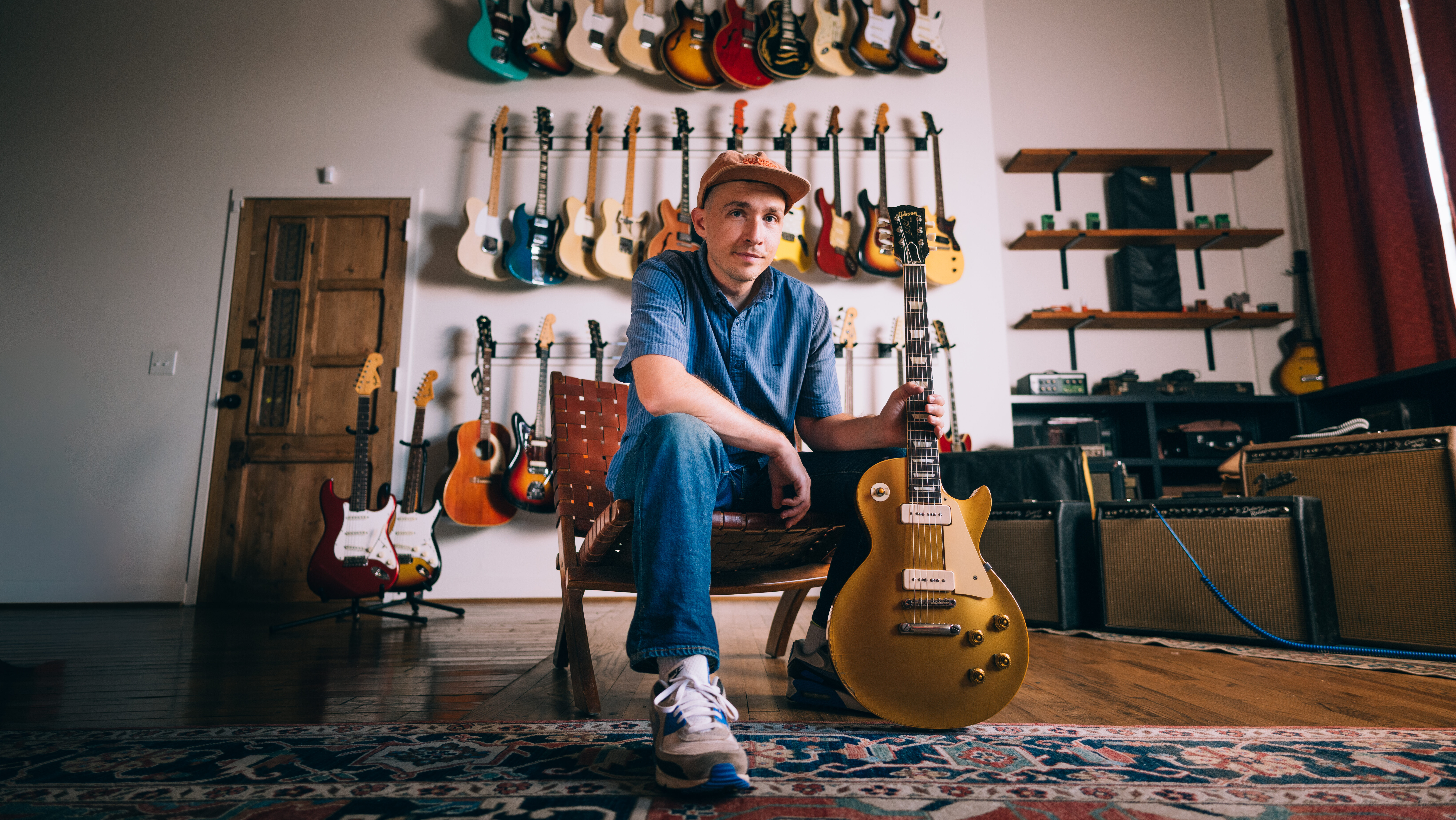
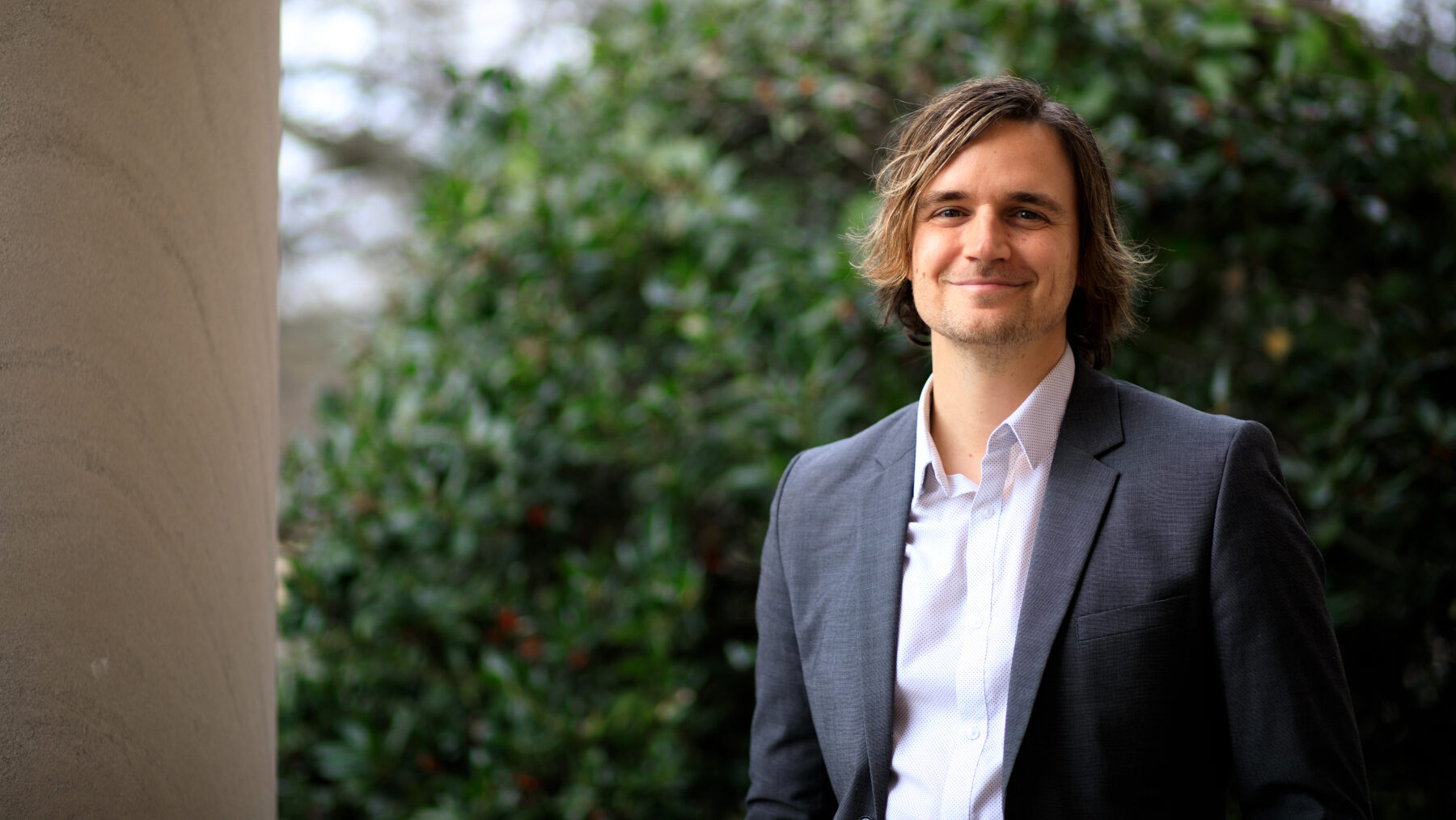
Steven Potaczek has heard that question more times than he can count. As a musician, professor, and now an author, he’s spent the last several years fielding that question from his students, their parents, and fellow artists alike—until he decided to compile his own research and find answers for himself. The result is Fear Not, Creative: How to Futureproof Your Artistic Career in the Age of AI. The book is part manifesto, part survival guide for making art, and a living, in the age of AI.
Potaczek didn’t originally set out to author a book on artificial intelligence. He spent a decade touring with 1000 Generations, a band he formed with his wife, before the group signed to a label for its third record. All the while, he was producing projects for other artists on the side, and writing songs for well-known shows such as New Girl and Parks and Recreation. When starting a family pulled him off the road, production work took over full time—until Anderson University asked if he’d like to try teaching as an adjunct.
“I was surprised by teaching and how much I loved it,” he says. His career eventually led him back to school for a graduate degree, and later, to Samford University, where he was recruited to help launch a commercial music program. He and his wife visited Birmingham, fell for the city, and built the program from scratch starting in 2019, weathering a pandemic that hit just a year later.
It was in that classroom that Potaczek began to watch his students succumb to anxiety and fear over AI’s growth. “I didn’t start out wanting to write a book. I started researching just to find answers,” he says. His own curiosity slowly took shape as a lecture series, and then as a manuscript. It was pushed further into motion when artist manager Philip Peters urged him to put his ideas into something more permanent.
When I sat down to coffee with Potaczek, I wanted to know everything at once: the trends he was seeing, how AI has affected his own work and his students, and what he predicts for the future. We started with the notion of “camps,” of which Potaczek says there are two.
“There are two evangelists of AI: the boomers, or the optimists, who think it’s going to create a utopia where we’ll never work again. Secondly, there’s the doomers, who think it’s going to wipe us out,” he says. “Both of those terrified me.”
It immediately became clear to me that Potaczek’s writing and research has led him to a more nuanced opinion on AI—one that validates our current fears, and looks bluntly at AI’s unmet promises.
“Are our fears justified? Yes, absolutely,” Potaczek says. “AI has so much hype behind it, and a lot of that is driven by greed at the highest levels—promising things like curing cancer, utopia scenarios. We’ve had it about four years in its current season. Where are these abounding miracles?”
That skepticism runs through much of Fear Not, Creative, which situates the current AI moment inside a much longer history than recent headlines suggest, and with that history, a predictable pattern. The pattern, as he lays it out, is a flood of hype and investment, followed by promises that quietly fail to materialize.
Part of that skepticism, he argues, comes down to what AI actually is—and isn’t—capable of. For all the noise about artificial general intelligence (AGI), Potaczek believes the technology’s biggest leaps may already be behind us. “AGI, if we’re nearing that, is still just a pipe dream,” he says
From an artist’s perspective, the very mechanics of how AI works make it a poor substitute for artistic risk-taking. “AI always leans toward the average of its data. It’s math,” he says. “In art, we’re not shooting for average or middle of the road—we’re shooting for something that knocks people off their feet.”
If we sit between the choice of what’s technically possible by AI, and what’s genuinely meaningful, we will quickly discover our answer, Potaczek suggests. When we look to art, we’re looking for that deeply-human, soul-level meaning and expression, something that AI can never replicate in its quest to be “average.”
“Humanity is a market premium at this point,” he says. It’s there when we call a customer support line and repeat the words “speak to a rep-ree-zen-tah-tif” ever so slowly. “I would pay extra just to be able to talk to a human.”
Recently, we’ve been given warnings on how the lack of “human-ness” is affecting all facets of life—even our physical health. “The U.S. Surgeon General shared that the number one epidemic right now is loneliness—and the number one driver of that is technology,” he says.
For artists, he argues, that craving for connection is exactly what’s at stake when AI enters the creative process. “As an artist or writer, you’re not writing to a consumer, you’re writing to connect,” he says. “If you find out that connection isn’t real, you feel like you’ve been duped. Humanity is looking for connection, not just consumption. Art has always been about something higher.”
He sees early signs of a backlash already forming—audiences growing weary of algorithmically generated “content” and gravitating instead toward work that feels unmistakably human. “We’re at the tip of the bubble,” he says. “We’re seeing a lot of humanity react to content culture—audiences don’t want to read something owned by a giant corporation farming out content. We want to read something that’s authentic.”
Potaczek believes that the real opportunity for creatives lies in their willingness to lean into what makes them irreplaceable in the first place.
Still, Fear Not, Creative delivers a nuanced perspective on the use AI. Potaczek asks AI users to critically think about what they hope to achieve by reaching for it, and warns against complacency. “The ethical concern is: am I contributing to the problem if I’m using this? Do I really need to use AI in this moment, or can I figure this out on my own?” he says.
Final words of advice from Potaczek? It’s in the title itself. “Don’t let fear dictate your decision to create,” he says. “Move forward anyway, in spite of it.”
Fear Not, Creative is available now for pre-order, with exercises at the end of each chapter designed to help readers put that philosophy into practice—including, fittingly, an invitation to write something themselves. Potaczek will discuss the book locally on October 2nd at Little Professor, with a talk beginning at 6:30 p.m.
Love this story? Subscribe to our newsletter and get the best of Alabama delivered to your inbox every Friday.