There is exactly one teaching restaurant on earth with a master sommelier in residence. It’s in Auburn, Alabama—and the man behind that distinction is Thomas Price, the first African American to earn the title of master sommelier.
As Auburn University’s sommelier-in-residence and a faculty member in the Horst Schulze School of Hospitality Management, Price helps train the next generation of culinary and hospitality professionals while working directly with guests at 1856 – Culinary Residence. In this Q&A, originally published by Auburn Magazine, he shares why wine shouldn’t be intimidating, how aspiring sommeliers develop their palates, and the advice he gives first-time wine drinkers.
Q: What drew you to teaching within the Horst Schulze School of Hospitality Management at Auburn and 1856 – Culinary Residence rather than working in a traditional restaurant?
Thomas Price: Teaching is central to keeping my soul happy. I love sharing my knowledge of wine and expertise in the culinary industry with people who are brand new to it. I enjoy taking an intimidating topic and making it easier to understand. At 1856, I love being on the floor and talking to guests, helping a table find a wine they’d enjoy with their meal or pouring them a glass of something they may have never had before.
This is the only program on planet earth that has a master sommelier in residence at its teaching restaurant. With that comes a pretty specialized level of instruction. I have a wealth of real-world experience and I’ve owned my own restaurant. Here at Auburn, I can combine my vocational training and academic teaching for the benefit of both students and guests, and there are very few places where the two intersect.
Q: What should everyone know about wine?
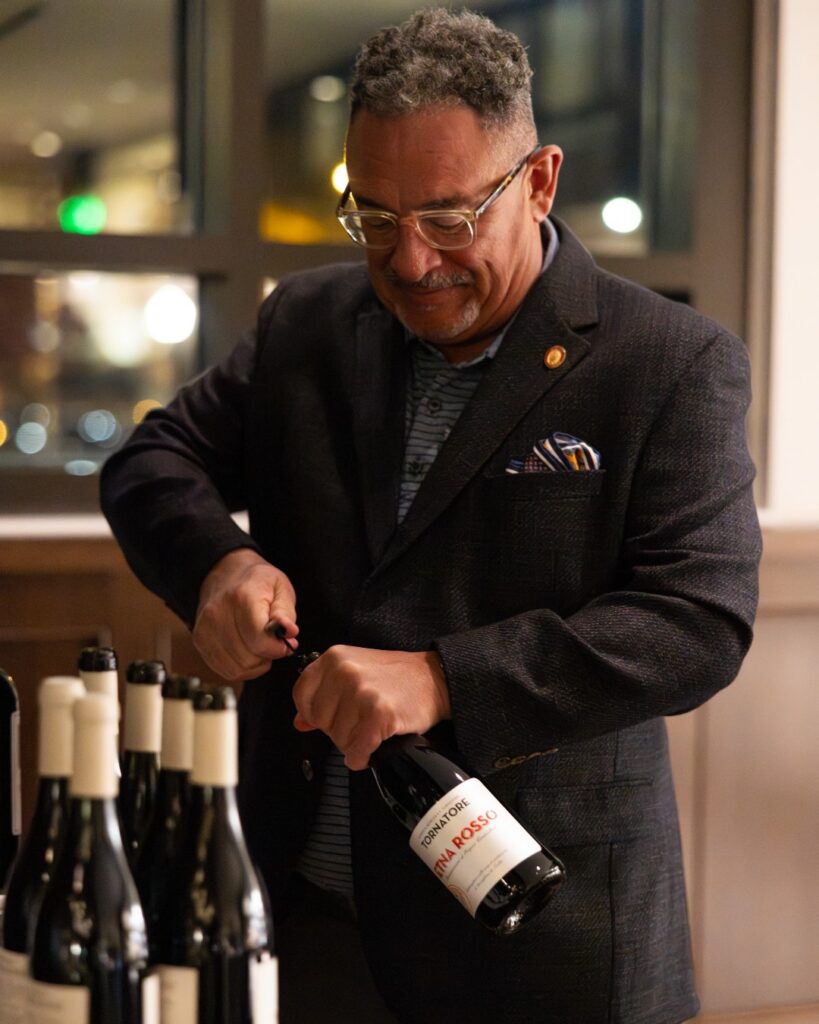
(1856-Culinary Residence/Contributed)
Thomas Price: Be curious. Don’t let the roadblock of intimidation that wine may present—the foreign languages, the regions, the perceived “snobbiness” of the beverage industry—be a barrier to your learning. It’s about exploring your individual tastes, finding what you like and becoming comfortable with that. Focus on what you know, not what you don’t know, because there’s no way to know every single thing about wine. The topic is just too vast.
I’m not one to preach having white wine with seafood and red wine with steak. If there’s a particular wine you enjoy, have it. Knowing what you like and sticking to it, as opposed to worrying about what other people think of your choices, is three-quarters of the battle with wine intimidation. You have to be comfortable in saying, “Yeah, I’m going to have Riesling with my steak and cabernet with my halibut,” if that’s what you like.
Q: What makes for an accurate wine taster?
Thomas Price: Many people think that wine tasting and knowing wine is an innate ability you’re born with, but that’s not it at all. It’s learning about the wine regions of the world and applying that information to what is in your glass. Wine tasting is a true game of deduction.
It would be great to be able to stick your nose in a glass and instantly recognize a Chablis from France versus a chardonnay from Napa Valley. In reality, it’s eliminating what it isn’t and why. To be able to do that, you need to have some theoretical knowledge of wine.
Why is the Chablis in the glass, which is made from chardonnay grapes, not a Napa Valley chardonnay, which is also made from chardonnay grapes? The climate is much cooler in Chablis, France. They don’t use oak, so the wines are drier, crisper. On the other hand, California is warmer. The grapes are lusher, richer. That’s deductive tasting—that’s how you get “good.”
Q: For first-time wine drinkers, where do you recommend they start?
Thomas Price: Martin Codax Albarino. It’s a crisp, delicious dry white wine, sort of like Sauvignon Blanc. Next, Louis Jadot Beaujolais Villages. That one is a light, fruity red wine.
Both are around $13 at Publix, so you could buy a bottle of each for under $30 total, which is pretty affordable. They can be had with a wide variety of foods. You can open them at a tailgate with friends or dinner with family. If you don’t like them, there are definitely other wines to try, but those two are a good benchmark for where your journey could begin.
This story was originally published in Auburn Magazine.