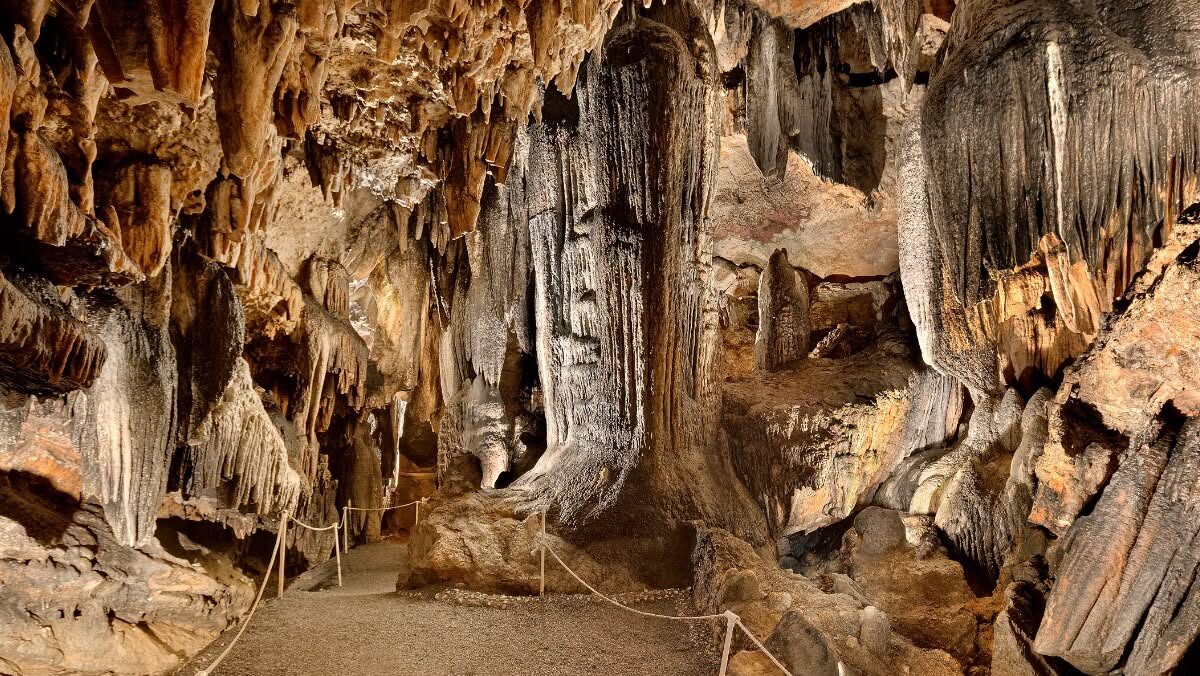
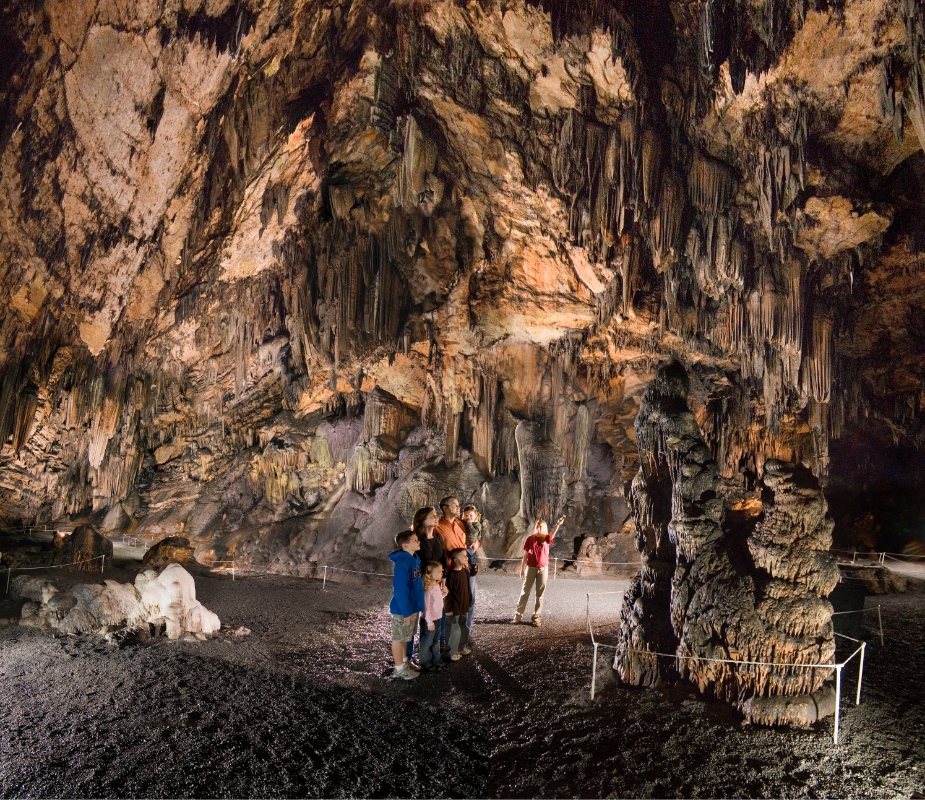
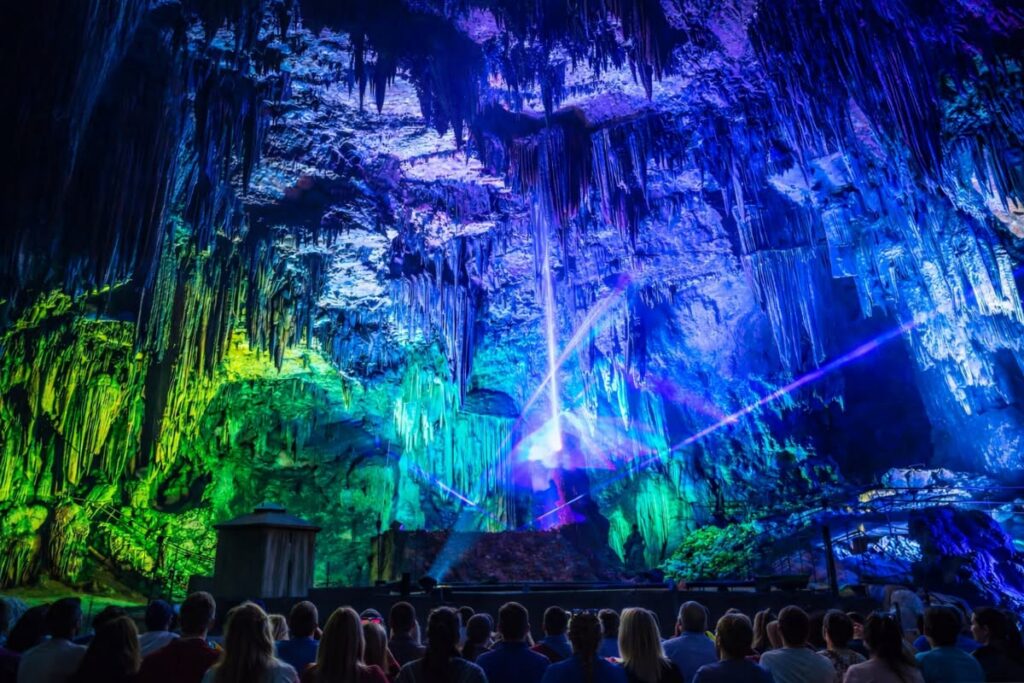
Today when one walks into Majestic Caverns in Childersburg, Alabama, they can expect to see visiting families, children, school field trips, and geography enthusiasts eagerly exploring the famed caverns. The site’s central attraction is a cave room over 120 feet high and larger in total area than a football field. In addition to the caverns, there is an above-ground maze, amusement park rides, and a light and sound show.
Beneath the modern-day tourist attraction, however, lies centuries of Alabama history. Over the course of thousands of years, Alabamians and visitors have entered this cave for very different reasons—some for shelter, some as a gathering place, some to extract its natural resources, and some as an ancient ritualistic burial site.
A Cave Older Than Alabama Itself
(Majestic Caverns/Facebook)
The earliest known Alabamians to visit the caverns did so over 2,000 years ago. In 1965, archaeologists from The University of Alabama excavated the cave and unearthed the remains of an ancient burial site containing four adults and one child. Copper and ore found among the remains linked them to the Copena culture, believed to be the ancestors of many modern Indigenous tribes.
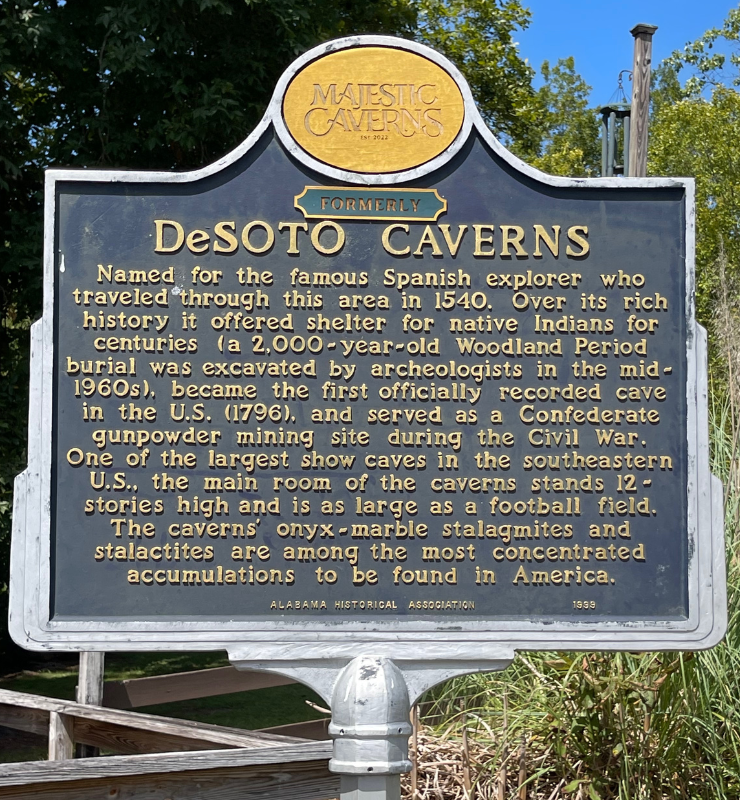
Fast forward to the 1500s, and famed Spanish conquistador Hernando de Soto enters the scene. From 1539 to 1543, de Soto and his men led a massive expedition throughout the Southeast in search of gold and riches. In October 1540, the expedition entered what is now Alabama. It has long been local lore that de Soto and his men spent time in the caverns; they were even formerly named for him: DeSoto Caverns.
Whether de Soto himself actually set foot in the cool, calm caverns has never been definitively proven, but his expedition certainly marched through the surrounding landscape at a time when Alabama’s forests, rivers, and caverns were completely unknown to Europeans.
In the early 1700s, a British fur trader named I.W. Wright became the next confirmed visitor to the caverns. Based in Charleston, South Carolina—the primary British fur trading hub of the era—his trading route followed southeastern trail networks down through the Coosa River Valley, where he traded with Indigenous peoples for their deerskin and furs. In 1723, he embarked on a trading trip from which he never returned. Years later, his name was found carved into the cave wall, the last known sign of the trader’s life.
By the late 1790s, a presidential agent wrote to George Washington describing the wonder of the caverns, making Majestic Caverns the first cave on official record in the United States.
War, Whiskey, and a Woman from Florence
(Majestic Caverns/Facebook)
During the Civil War, in 1864, Confederate soldiers set up an extensive saltpeter mining operation in the caverns. Saltpeter is a natural mineral used for centuries as a vital ingredient in gunpowder, as a meat preservative, and as an agricultural fertilizer. Workers dug a well deep into the cave floor, then used vats and troughs in combination with the cave’s natural spring water to wash the earth and extract the nitrates. This operation was considered so crucial to the war effort that the Army actually paid young men to work in the caves rather than enlist in the military. Today, the original mining well remains on display, along with some of the original vats and troughs, and visitors can examine them during their tour.
In the 1920s, during America’s Prohibition era, the cave transformed into a secret underground speakeasy operating under the moniker “The Bloody Bucket.” Guests had to slide down a muddy tunnel in pitch-black darkness to gain entry. Once inside, they were greeted with lantern-lit caverns, a moonshine distillery, square dancing, illegal gambling, and all-around revelry. The combination of moonshine, dancing, and gambling led to the parties frequently turning rowdy—and sometimes violent—earning the caverns their colorful nickname. Before long, the operation was raided and shut down by federal authorities.
In 1912, American farmer and businesswoman Ida Elizabeth Brandon Mathis—a Florence, Alabama native nicknamed the “Economic Moses of the South”—purchased the cave along with a group of partners with plans to mine it for its abundant onyx. When that venture proved financially unviable, she bought out her partners and made a different choice: to preserve the cave and set it on the path to what it has become today—a beloved tourist attraction that honors its storied past and welcomes visitors of all ages and backgrounds.
(Majestic Caverns/Facebook)
Come Be a Part of the Story
The wonderful stories of these caverns didn’t end there, though—you can be a part of them today. Majestic Caverns is located at 5181 DeSoto Caverns Parkway in Childersburg, Alabama, less than an hour from Birmingham. Guided cave tours run every hour, and above ground there are over twenty attractions to keep the whole family busy, from the Lost Trail Maze to gemstone panning to amusement park rides.
Planning your July 4th week? Add Majestic Caverns to the list—they are open on July 4th, and it’s the perfect day to explore the historic cave. Plan your visit at majesticcaverns.com.