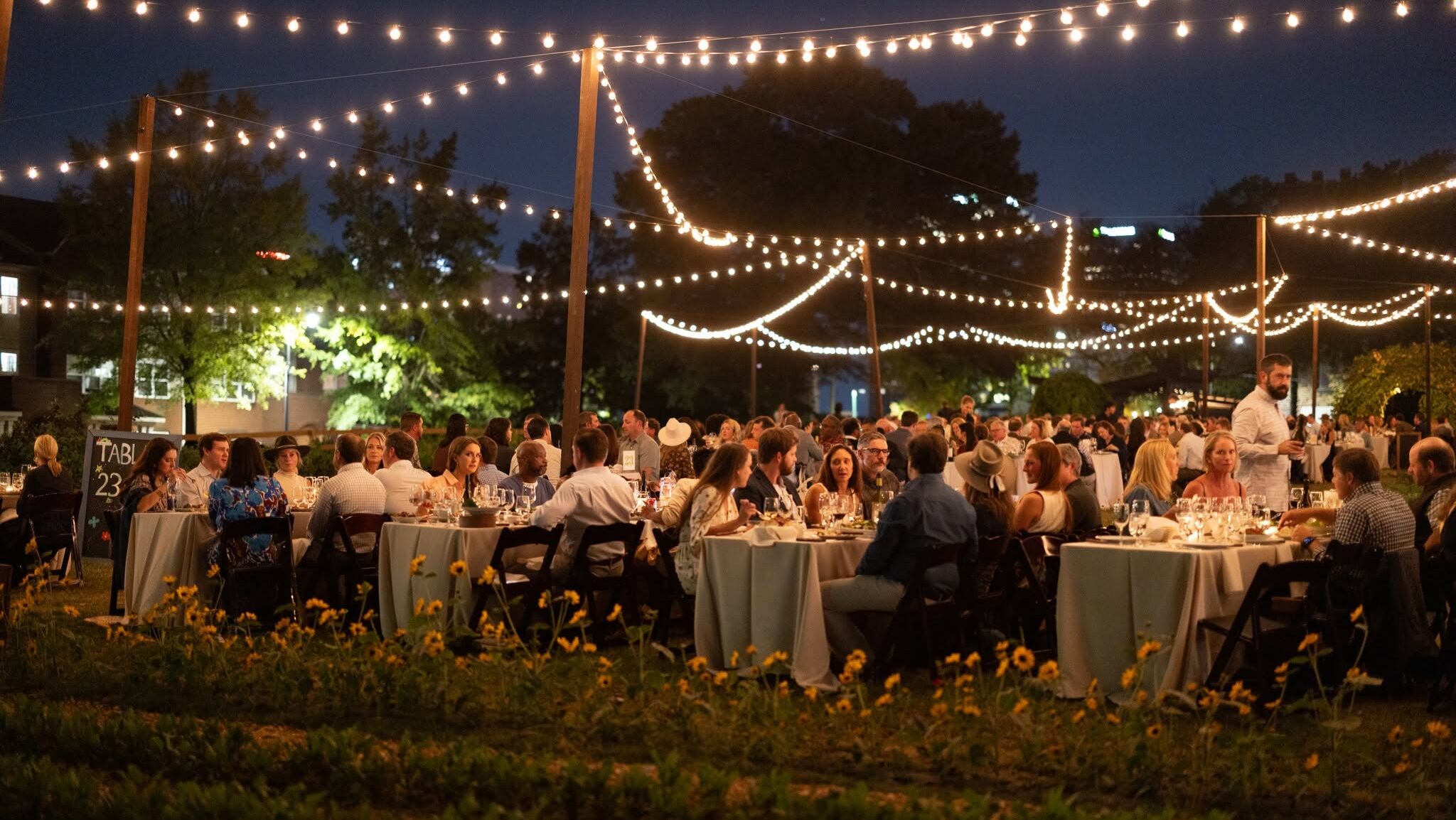
Next month, Jones Valley Teaching Farm in Birmingham will host an unusual guest for a working farm: a former governor who has sat across the table from warlords, dictators, and Nobel Peace Prize committees—and who believes the most powerful tool for peace he’s ever found is a shared meal.
David Beasley is bringing his Breaking Bread Together initiative to Alabama, and if his own history is any indication, it will not be a scripted, surface-level stop. It will be personal, because for him, it’s a lesson he learned from his own family’s table.
A Governor Who Helped Feed Millions
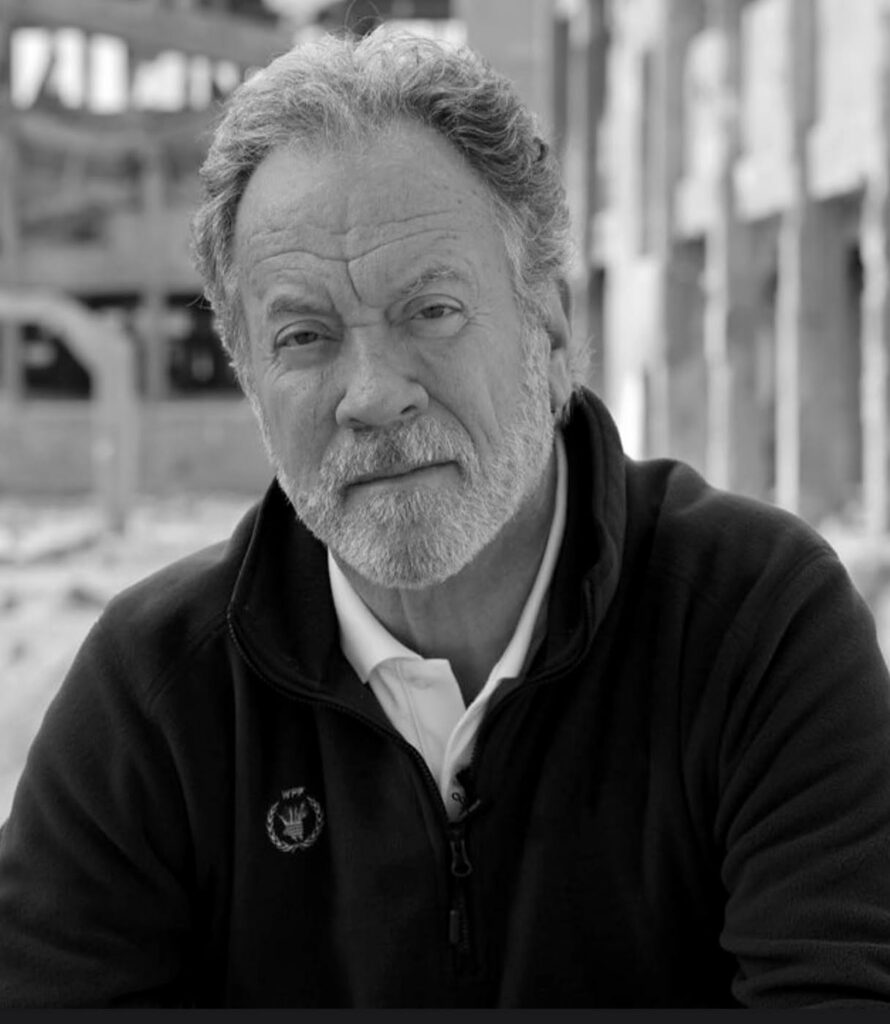
(David Beasley/Contributed)
Beasley served as Governor of South Carolina from 1995 to 1999, where he took an unpopular but principled stand on the Confederate flag—a decision that cost him support at the time, but earned him the JFK Profiles in Courage Award for choosing conscience over convenience. He was later appointed by the UN Secretary-General to lead the United Nations World Food Programme, drawing wide support from leaders across the country.
Under his leadership, from March 2017 to April 2023, WFP became the largest humanitarian organization on Earth. In 2022 alone, it assisted more than 160 million people. It raised over $55 billion to combat global hunger. And in 2020, Beasley stood on a stage in Oslo and accepted the Nobel Peace Prize on the organization’s behalf, for using food assistance to prevent hunger from becoming a weapon of war.
“When I took over the WFP, we were feeding millions every year,” Beasley recalled. “I was in war zones, and I began to see the power of it—not just to save lives, but to bring people together. It was amazing what happened.”
He traveled to roughly 75 countries a year during his tenure—a third of his time in the field, feeding people in crisis zones from Venezuela to North Korea to Taliban-controlled Afghanistan; another fifth of his time in world capitals, raising the money to make it possible. And as we spoke on the phone, he was preparing to catch a plane to the island nation of Timor-Leste, wedged between Jakarta and Australia, where food insecurity is severe and largely invisible to the rest of the world. He remembers using food as leverage between warring factions, timed carefully around ceasefires, to get supplies where they needed to go.
“It was about using food as a weapon of peace, rather than as a weapon of division,” he said. “That’s what led to the Nobel Peace Prize.”
But somewhere along the way, in refugee camps and war rooms and capital-city dinners with people who despised each other, Beasley noticed something else. Food wasn’t just saving lives. It was bringing people together: across nations, across political divides, across religions and languages and whatever else stood between one human being and another.
It Started at His Family’s Table
Long before the Nobel Prize, before the governorship, before WFP, Beasley learned this lesson at home, in Lamar, South Carolina—one of the first towns in the country to face forced racial integration of its schools.
Most white families in town pulled their children out and enrolled them in newly formed private academies. The Beasleys stayed.
“The black athletes couldn’t get to practice, so they’d come to my house to eat,” Beasley said. “That was my first experience of understanding this power—of breaking down barriers. We became brothers.”
Beasley returns to this memory often, because it contains the entire thesis of Breaking Bread Together in miniature: physical proximity plus a meal equals something that policy and argument rarely produce on their own.
“It started with my family,” he said. “That was my first experience of the power of breaking bread—different tribe, different religion, different political party.”
As governor, he began deliberately using meals to bring people with opposing views to the same table. As a global humanitarian leader, he did the same thing on a much larger, much higher-stakes scale—with people who, in many cases, were actively at war with one another.
“I found the power of bringing political enemies together around a table of food,” he said. “Something magical happens. Sitting across a table pointing fingers, nothing good happens. But when you break bread—basic human talk—you begin to see the commonality.”
The Meal That Silences Darkness
Ask Beasley why food specifically has this effect on people, and he doesn’t reach for a policy paper. He reaches for Mother Teresa, for Martin Luther King Jr., and for a single afternoon in a Charleston church.
“Reaching their heart through their stomach—that’s what it comes down to,” he said.
Then he tells the story that clearly still shakes him to the core: the 2015 shooting at Emanuel AME Church in Charleston, where a young white supremacist opened fire during a Bible study. Two days later, members of the victims’ families stood at a press conference and publicly forgave him.
“This racist kid walks in during a church service,” Beasley said. “Two days later, the families of the victims held a press conference and forgave him. It was the most powerful thing I’ve ever seen. I have friends from all over the world—Hindus, Buddhists, Catholics, Christians—all asking how could they forgive that boy? It touched everyone. All the darkness in the world can’t put out one little match. When you bring people together around food, it gives that light the combustion.”
“Love is the most powerful weapon on the planet,” he added.
What We Lose When We Stop Sitting Down Together
Beasley isn’t anti-technology, and he isn’t naive about what artificial intelligence and automation might do for agriculture and food production in the years ahead. But he’s wary of what gets lost when human connection moves entirely online.
“Technology isn’t bad in itself. It can be used for good or bad,” he said. “But when you have no face-to-face interaction, you lose the essence of what it’s like to be human.”
“Everyone has to eat,” he continued. “So when you sit down with someone, you see it through the history of time. We’re going to use technology to increase harvest and food production, but that doesn’t solve the greater problem.”
On AI specifically, he’s pointed: “The future assumes that because of AI, the price of goods will go down and quality will go up. But what good is that if you burn the house down by dehumanizing each other? I’ve seen the power of putting phones aside and just talking to each other, in my own life and in DC. We need to elevate that discussion and build awareness around it.”
Why Alabama, and Why a Farm
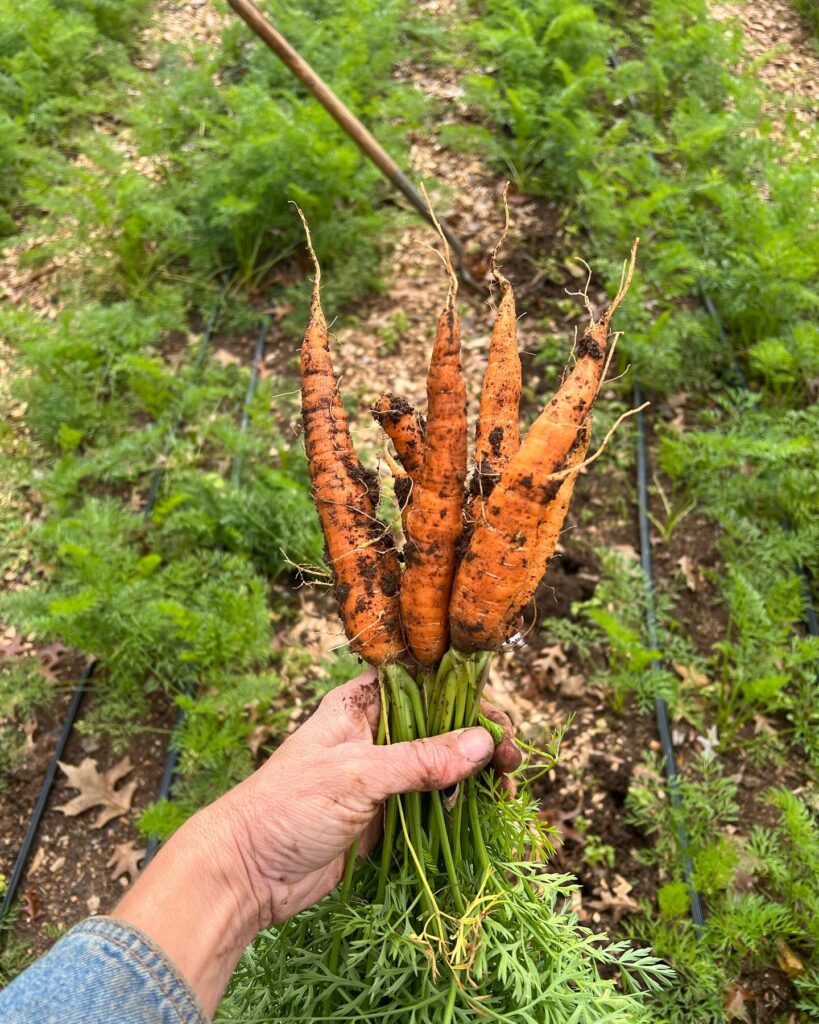
(Jones Valley Teaching Farm/Facebook)
Beasley’s decision to bring Breaking Bread Together to Jones Valley Teaching Farm isn’t incidental. Alabama, he says, already has the cultural DNA this movement depends on.
“Southern culture relishes food. There’s a history of sitting around the table as a family,” he said. “Jones Valley has taken advantage of that cultural dynamic, and the question is, what can we do to elevate it even further.”
At Jones Valley specifically, he sees a working model for something he tried to scale globally at WFP, where his teams helped start more than 300,000 community farms around the world and pushed for school meal programs that reach every hungry child.
“When you can have a home-grown meal, it takes it to another level,” Beasley said. “Kids see it go from the field to the table, and all of that is amazing.”
He’s especially encouraged by what he’s seeing among Birmingham high schoolers who’ve been working the land side by side, from all different backgrounds, growing food together without a script forcing them to talk about their differences.
“They’re out there together growing food, and they’re not thinking about their differences,” he said. “When you focus on differences, it’s easy to stay divided. But when you do things together—that’s different.”
He’s also encouraged by a broader shift in how younger generations think about food itself.
“Ultra-processed food is destroying us,” he said. “Young people need to learn more nutritious habits, and we need to couple that with breaking bread.” Of Gen Z in particular, he said: “They are so much more conscious about this today, and that pressure is good—it’s helping us clean up our food.”
“We’ve got to get more families growing food,” he added. “There’s something that happens when you get your hands in the soil.”
The Challenge
When asked what he’d say to someone convinced they share nothing with people across the political or cultural divide, Beasley doesn’t argue. He grieves for them.
“I’m sad for that person, because they’re missing out on the beauty and diversity of life,” he said. “When I hear that, I say, hey, let’s just sit and talk a moment.”
Beasley’s ask, in the end, is not complicated, and it doesn’t require a farm, a nonprofit, or a Nobel Prize. It requires a chair, a plate, and a willingness to sit across from someone unfamiliar.
“I will challenge everybody in the state, in the following week, to go break bread with someone you don’t know—different religion, different color, different politics,” he said. “I can assure you your life will be better for it.”
It’s the same instruction that anchors the entire Breaking Bread Together initiative, distilled to its simplest form:
“Go break bread with somebody of a different perspective, different politics, different religion, different race. Don’t talk politics, just get to know each other. And you will find out, wow, we have so much in common.”
Next month at Jones Valley Teaching Farm, Alabama gets its chance to take him up on it.