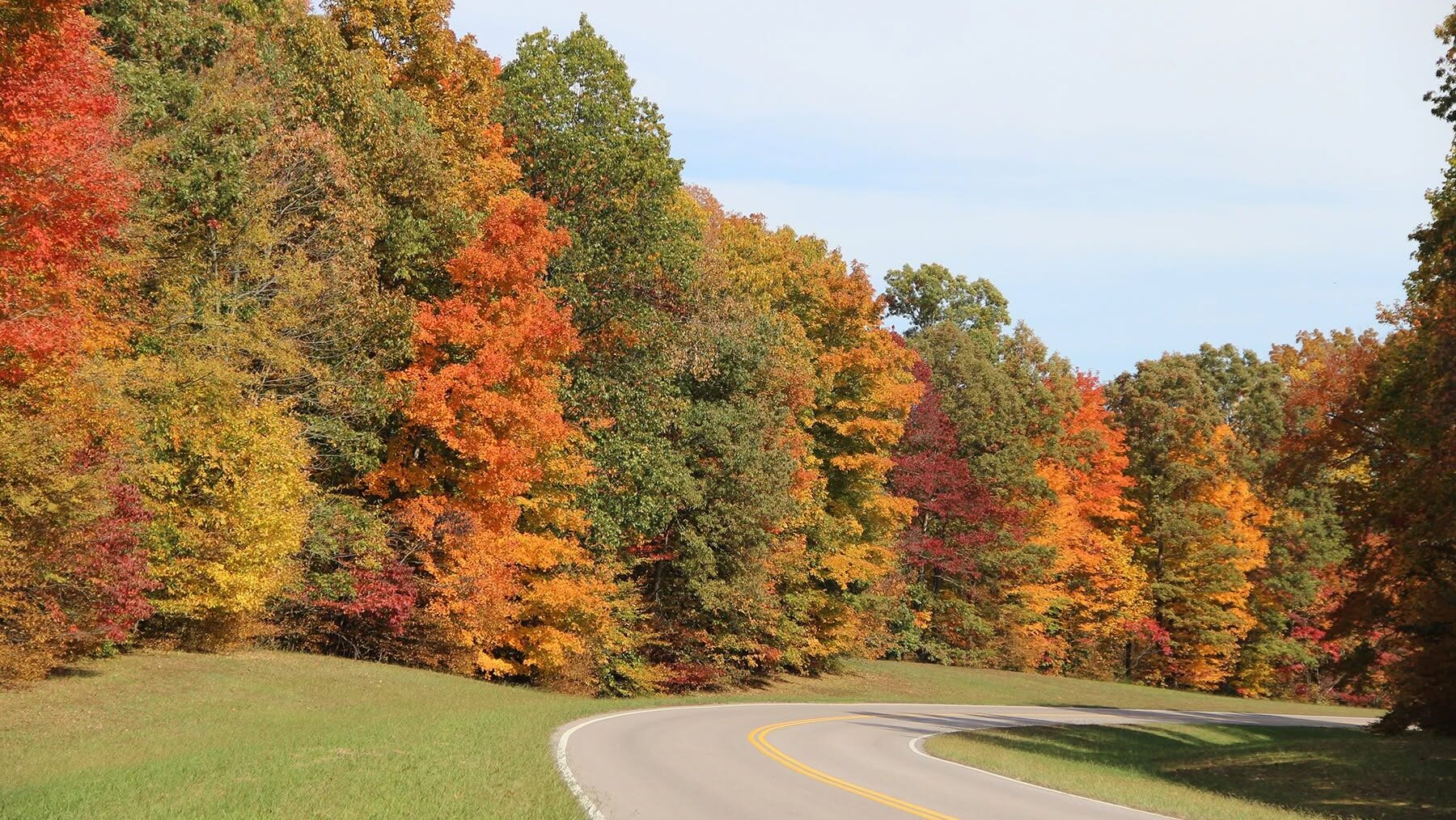
From mountain canyons to cotton fields to the historic Black Belt, Alabama packs a lot of variety into its fall drives. The northern end of the state is Appalachian foothills, sandstone canyons and hardwood forests, while central Alabama’s rivers and rich soil tell a very different story. Each part of the state shows off the season in its own way.
The state’s leaves usually peak through mid-November, with the north turning first and the south following a week or two behind. That staggered timing means you don’t have to catch everything in one weekend. You can work your way south as the color moves.
Here are five routes to put on your list, from a quick 33-mile cruise to a 210-mile road trip. Some are easy half-day drives, and others are better stretched into a weekend with an overnight stop. Each one has something worth pulling over for, whether that’s a waterfall, a canyon overlook or a piece of the state’s history.
Natchez Trace Parkway
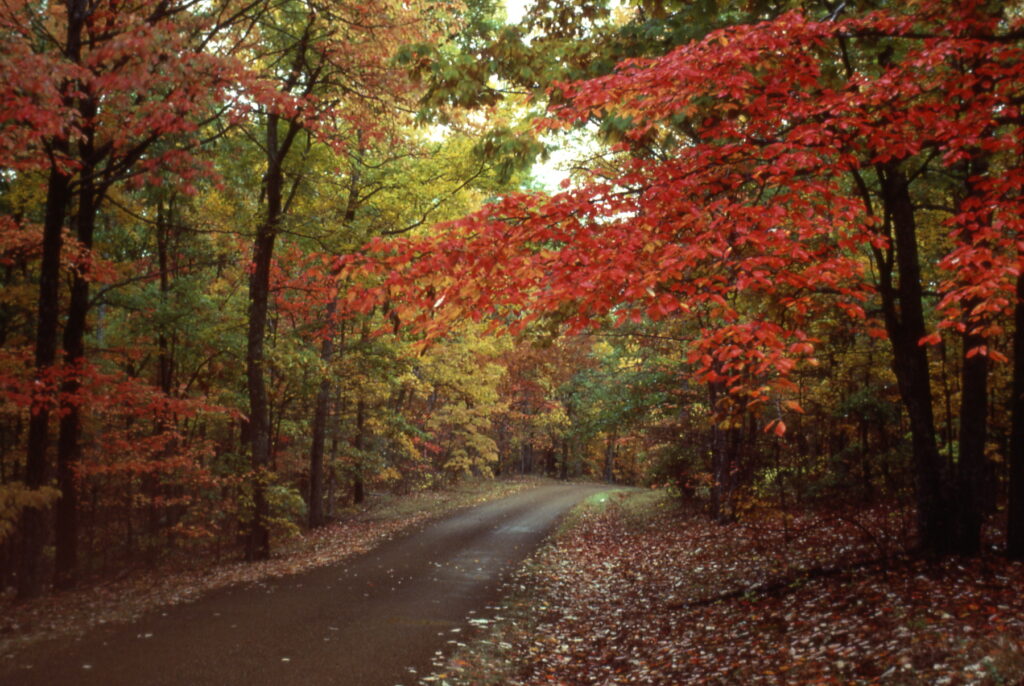
(Natchez Trace Parkway/Facebook)
Few roads in the country carry as much history per mile. The Natchez Trace is part of a route of roughly 444 miles that Native Americans and, later, traders, trappers and missionaries traveled for centuries. Today the parkway is a quiet, commercial-free drive, with a low speed limit that encourages you to slow down.
The Alabama portion is only about 33 miles, in the state’s northwest corner, but it covers a lot: open cotton fields, hardwood stands that turn gold and rust, and a crossing of the Tennessee River. Pull off at the overlooks and picnic areas along the way, and leave time for a short walk on one of the parkway’s trails. This is the easiest of the five drives to fit into an afternoon, and it pairs well with a meal in nearby Florence.
Best for: a half-day trip. Plan ahead: there are few services on the parkway itself, so fill the tank and pack snacks.
Appalachian Highlands Scenic Byway
At about 80 miles, this northeast Alabama route is the right length for a day: long enough to feel like a trip, short enough that you won’t be rushing. It runs through the rolling foothills of the Appalachians, where the state’s famously diverse forests put on a long, layered display of color.
The byway starts near Heflin and heads north on Alabama Highway 9, then follows U.S. Highway 411, Alabama Highway 273 and Alabama Highway 35 into Fort Payne. Along the way you’ll pass Talladega National Forest, the Chief Ladiga Trail and Little River Canyon National Preserve. If you travel with bikes, the paved Chief Ladiga Trail is a pleasant way to see the leaves at a slower pace. End the day in Fort Payne for dinner before you head home.
Best for: a full day with a few stops. Plan ahead: save the canyon overlooks for late in the day, when the light is warmest.
Lookout Mountain Parkway

(Little River Canyon National Preserve/Facebook)
Reader’s Digest has named this one of America’s best scenic drives, and it earns the title. The 93-mile byway winds through farms and woodlands in northeast Alabama and passes Little River Canyon National Preserve, often called the Grand Canyon of the East. Rivers, lakes, gorges, waterfalls and caves are all within easy reach, so you can build a day around whichever suits you: a canyon overlook, a short hike to a waterfall, or a tour of an underground cavern.
Because there’s so much to see, it’s a natural weekend trip. Fort Payne, Leesburg, Collinsville and Mentone all make good overnight stops, and Mentone in particular is a mountaintop town known for its shops and cafes. Book a room early if you’re going on a peak-color weekend, since these stops fill up.
Best for: a weekend getaway. Plan ahead: waterfalls run strongest after rain, so check recent conditions before you set out.
Black Belt Nature and Heritage Trail
The Black Belt takes its name from the rich dark soil that grew superior cotton in the 19th century, and it holds some of the most important chapters of Alabama history. The 210-mile east-west trail passes through Montgomery, the state capital, and follows land shaped by the meandering Black Warrior, Tombigbee and Alabama rivers. That is why the plants and wildlife here are especially rich, even if the fall color is subtler than in the mountains.
The stops are the draw. In Selma you can walk across the Edmund Pettus Bridge. Gee’s Bend is famous for its quilters, and Demopolis and Greensboro are known for their antebellum architecture. In York, the Coleman Center for Arts and Culture is a good place to learn more about the region’s story. This drive covers a lot of ground, so plan on a full day at minimum, or split it over a weekend with an overnight in one of the trail towns.
Best for: a quieter, more cultural trip than the mountain drives. Plan ahead: services can be sparse between towns, so top off the tank in the larger ones.
William B. Bankhead National Forest Tour
This compact 54-mile route in north Alabama runs from Moulton to Jasper through the central part of the William B. Bankhead National Forest. It’s one of the best places in the state for hiking and waterfalls, and it gets especially beautiful in fall as the forest changes color.
At the heart of the forest is the 25,000-acre Sipsey Wilderness, one of the state’s most beautiful natural areas. Plan on leaving the car for a while. Kinlock Falls and Parker Falls are good first stops, and both reward a little walking. Bring sturdy shoes, since trails can be muddy and rocky, and keep in mind that cell service is spotty in the forest.
Best for: hikers and waterfall chasers. Plan ahead: download an offline map and tell someone your route before you head into the wilderness.
Tips for Planning Your Fall Drive
- Time it: Head for the northern mountain drives first, in early November. The Black Belt and the more southern stretches usually peak a week or two later.
- Go early: Weekend traffic builds at popular overlooks and parks, and morning light is better for photos.
- Pack for stops: Bring walking shoes, water, snacks and a layer. Mornings can be chilly, and many of the best views come from short walks.
- Check conditions: Call ahead or check park and parkway websites for road closures and trail access, especially after storms.
- Save the route: Download maps before you go, since cell coverage drops out in the forests and canyons.
Alabama’s fall drives reward the traveler who slows down. Whether you spend an afternoon on the Natchez Trace, a full day chasing canyon views along the Appalachian Highlands Scenic Byway, or a weekend following the Black Belt’s history from Selma to York, each route offers a different way to see the state at its most colorful. If you can only fit in one trip, pair the Lookout Mountain Parkway with a stop at Little River Canyon for the most color in the least driving. If you’d rather trade mountain views for history, the Black Belt Nature and Heritage Trail is the one to take. Whichever road you choose, fill the tank, download your maps and leave room for the unplanned stops, because the best moments on a fall drive are often the ones you didn’t schedule.
Want more stories like this? Join our newsletter for more stories rooted in Alabama, delivered to your inbox every Friday.