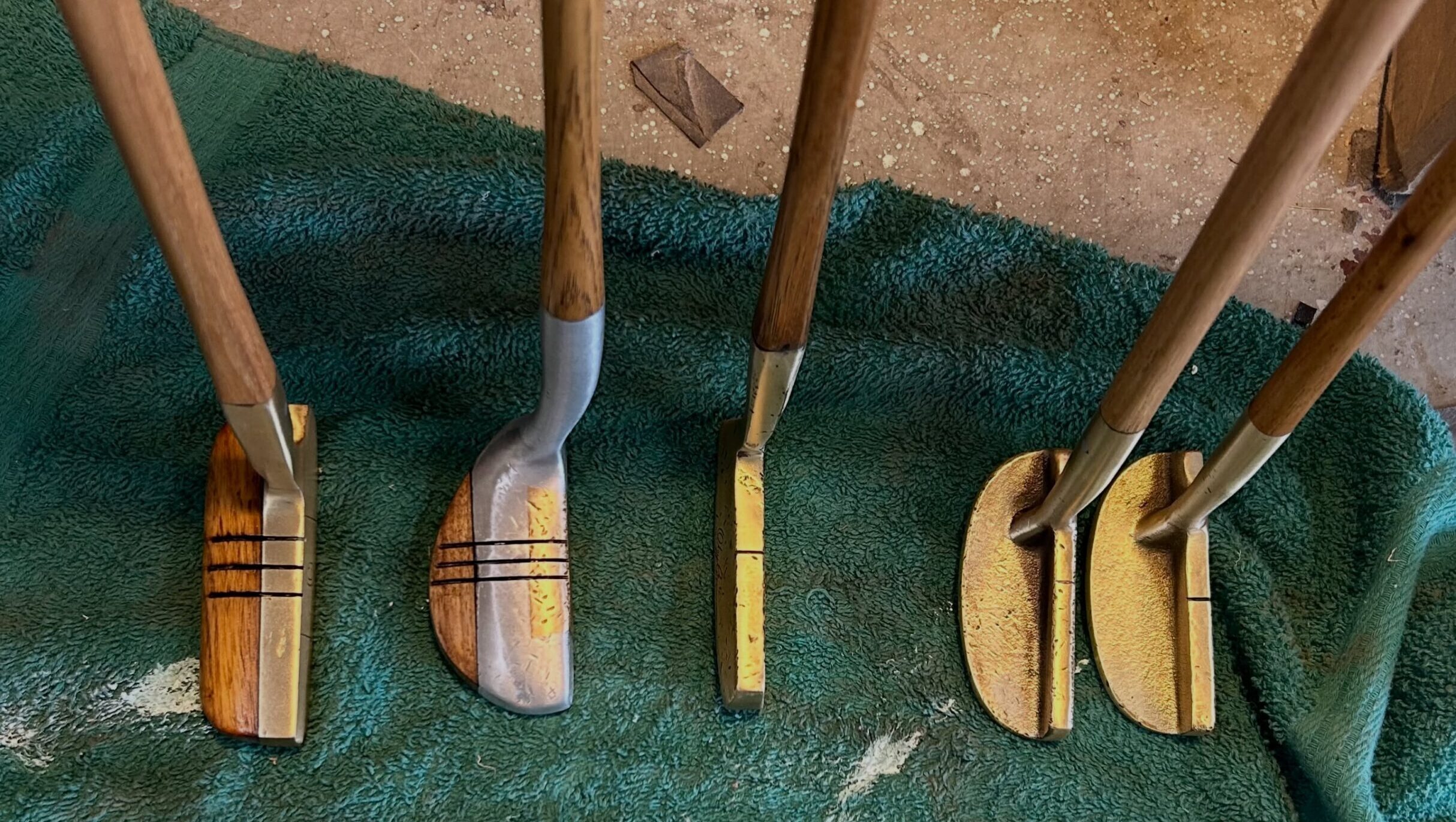
After nearly walking away from the craft, veteran club maker Otey Crisman III has opened a new storefront in Selma, reviving a historic golf brand that dates back to the 1940s.
At a time when nearly everything is designed to be faster, cheaper, and more automated, golfers from around the world are placing orders for something decidedly old-fashioned: a handmade putter crafted one at a time in Selma, Alabama.
After decades spent watching golf manufacturers chase technology and mass production, the 74-year-old craftsman thought the era of handmade clubs might be coming to an end. Instead, he has found himself at the center of an unexpected revival—one fueled by golfers who are increasingly drawn to objects with a story, a history, and the unmistakable marks of the people who made them.
“There just seems to be a generation now that likes historic, handmade USA items and they’re willing to pay for it,” Crisman said. “For a little while, everything had to be high-tech, which nearly destroyed us back in the ’90s and into the early 2000s, and now it’s coming back this way where when we do things, people appreciate it.”
The new shop, which opened March 1, serves as both a workshop and a showroom for his custom Otey putters. The launch comes on the heels of a growing appreciation for old-school American craftsmanship, a trend that has breathed new life into a family business nearly 80 years in the making.
A family legacy forged on the fairway
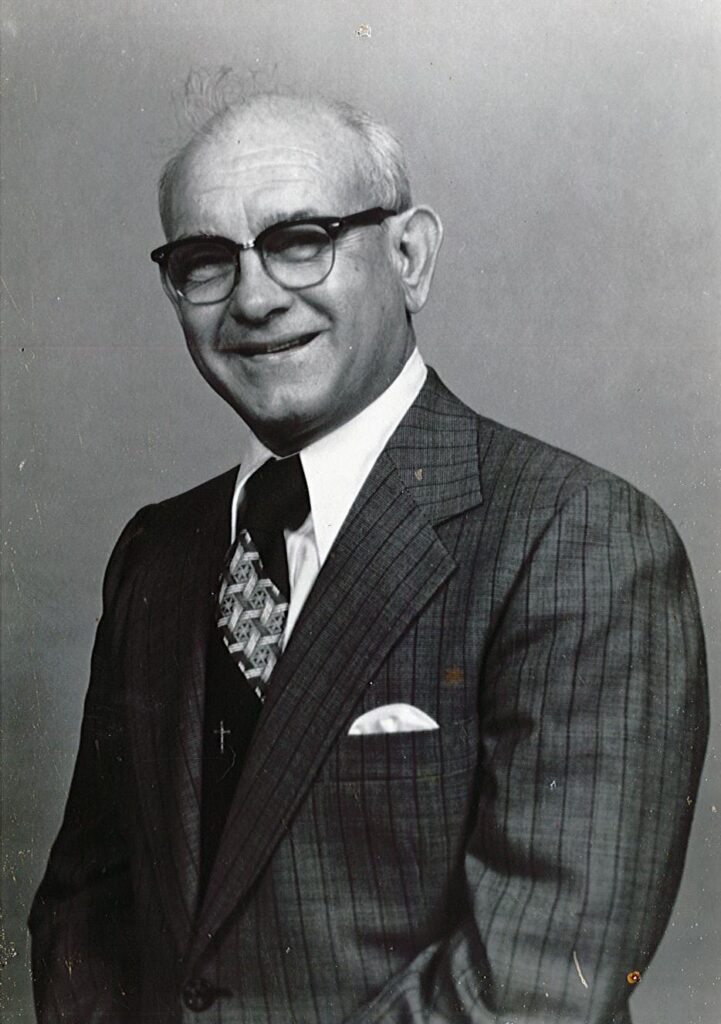
Otey Crisman Jr. (Alabama Sports Hall of Fame)
That legacy began in 1946 when Crisman’s father, William Otey Crisman Jr., a PGA professional, built a custom putter for himself and carried it onto the professional golf circuit. Fellow players immediately took notice.
What began as a personal project quickly grew into a business. Golf legends including Sam Snead and Ben Hogan became early admirers of the clubs, and orders soon started rolling in.
The breakthrough came when Jimmy Demaret won the 1947 Masters Tournament using an Otey putter. He won again with one in 1950, helping establish the Selma-made clubs on golf’s biggest stage.
Today, the Otey brand boasts a formidable footprint in golf history, with Crisman noting that its putters have been tied to five Masters victories and seven PGA titles.
Raised in the family workshop, Crisman III was handed a putter on his fourth birthday and a 5-iron a week later. Though he later earned a degree in accounting, he ultimately chose to spend his life cutting, fitting, and building clubs by hand. He worked alongside respected club maker Tad Moore before establishing his own independent shop just a few miles from where he grew up.
An unexpected resurgence
The current revival was sparked by a business partner who convinced Crisman that the family’s deep roots in the sport were worth sharing with a wider audience. When they launched a website last November, the response was immediate.
Orders poured in so quickly that Crisman shut the site down after just 12 days to catch up. Since reopening in March, sales have steadily outpaced the shop’s financial break-even point.
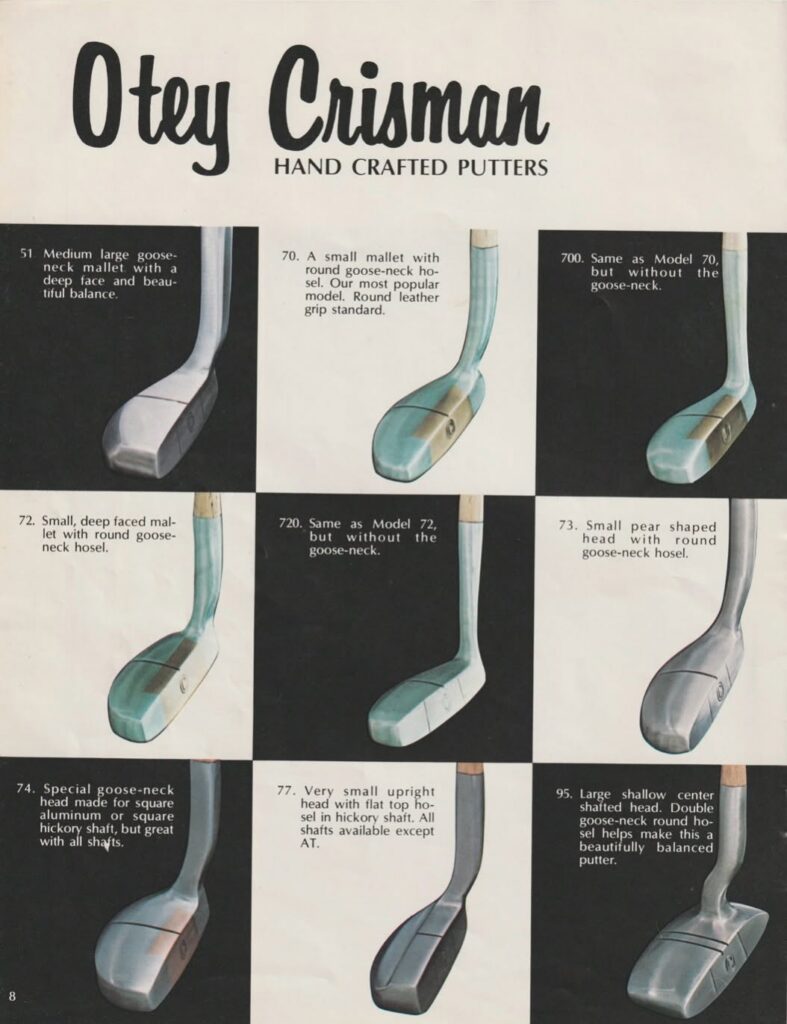
(Otey Crisman Putters/Facebook)
The renewed interest reflects a broader shift that extends beyond golf. While the industry has spent decades chasing technology and distance, many players are rediscovering the appeal of craftsmanship, heritage, and equipment made by human hands.
For decades, Crisman has continued working much as previous generations did, relying on tools and techniques that have largely disappeared from modern manufacturing. In one corner of the workshop sits an 80-year-old hydraulic copy lathe still used to shape hickory shafts, sending curls of wood shavings onto the floor as it works.
Today, the operation is entirely global. Recent custom orders have been shipped to players in Switzerland, Australia, New Zealand, and Mauritius, an island nation in the Indian Ocean. Later this summer, the Selma shop expects to ship golf shafts to St. Andrews, Scotland—the historic home of golf.
The worldwide demand would have been difficult to imagine during the years when traditional club making seemed destined to disappear. Instead, golfers are increasingly seeking out the craftsmanship, feel, and history that mass-produced equipment cannot replicate.
Building the next generation
Yet despite the growing attention, Crisman has little interest in turning Otey into a large-scale manufacturing operation. His philosophy is grounded in the same values that have sustained the business for generations: quality over quantity, and craftsmanship over convenience.
Turning 75 this month, Crisman is now focused on the future. He hopes to increase production to roughly 30 putters a week—about 1,400 a year. Reaching that milestone would allow him to bring his son into the business and secure a third generation for the family trade.
“It’s good for my family and good for Selma to sit here, and you can say, look, we got a business in town that’s been running for 90 years,” Crisman said. “That’s well known worldwide.”
In a small workshop in Selma, a craft that once seemed destined to fade away is finding new life. And with it comes the possibility that a family tradition—one forged by hand nearly eight decades ago—will continue for generations to come.
Never miss a story. Subscribe to our newsletter and get the best of Alabama delivered to your inbox every Friday.