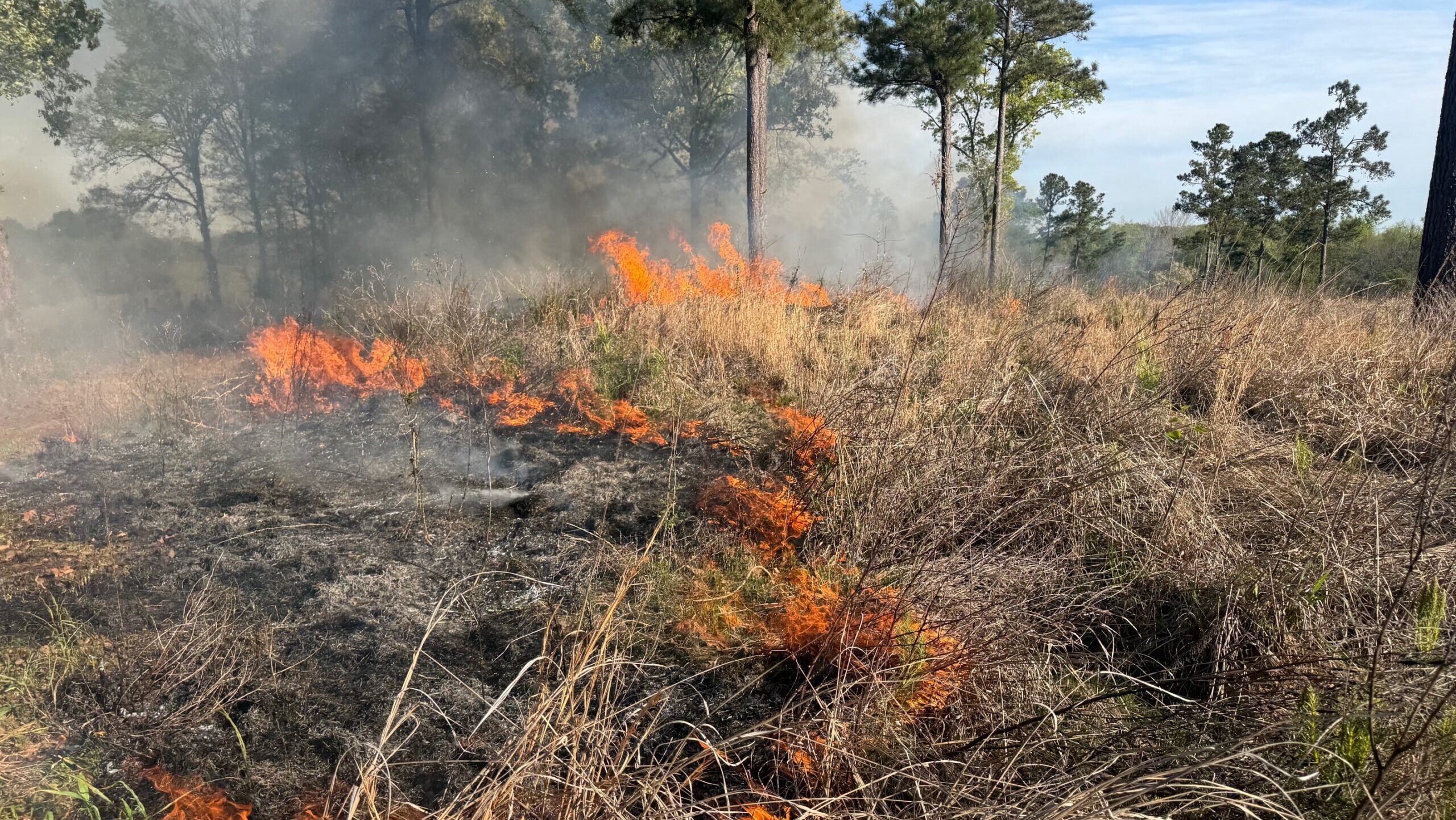
For many landowners in Alabama, fire isn’t something to fear—it’s something to understand.
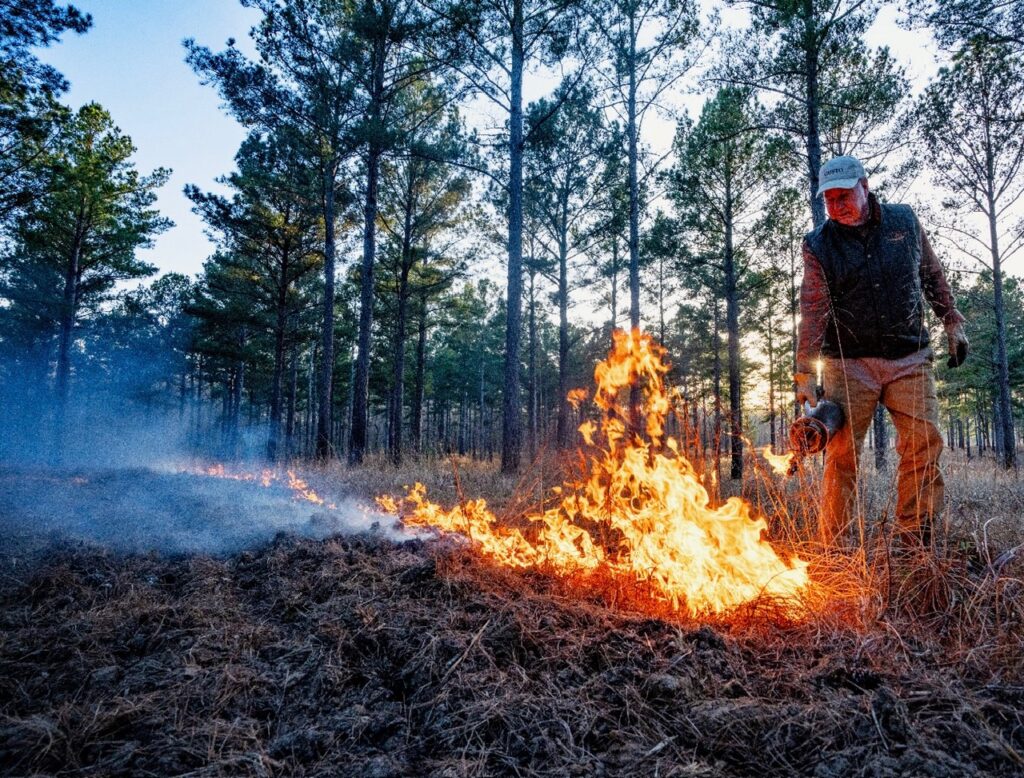
“I’ve been burning the edges of my pond for over 10 years,” says Kyle Lybarger, founder of Native Habitat Project. “And because of that, I have tons of wildflowers that just come up on their own. Some of these species are extremely rare, even federally endangered. But that’s not the reason I do it. I do it because I want to promote wildlife diversity.”
What might look destructive at first glance is, in reality, part of a much larger and carefully managed system. Prescribed fire—intentionally set and controlled burns—has long been used to maintain the health of Alabama’s ecosystems.
The Ripple Effect of Restoration
(Thomas Harris/Contributed)
For Lybarger, the results are visible all around his pond. “Everything is connected,” he explains in a recent video. “The more wildflowers and native grasses I have growing, the more insects and pollinators I have—which means more food for fish. It also creates habitat for frogs, salamanders, and crawdads.”
That connection is at the heart of prescribed burning. Fire clears away dense underbrush and forest litter, allowing sunlight to reach the forest floor and stimulate new growth. Native grasses, forbs, and legumes flourish, creating food and cover for species like white-tailed deer, wild turkey, and quail.
Some species, including the red-cockaded woodpecker and gopher tortoise, rely on fire-maintained habitats to survive.
A Tool for Health—and Prevention
Prescribed fire also plays a critical role in preventing catastrophic wildfires. By reducing excess fuel like leaves, branches, and thick vegetation, controlled burns lower the risk of more dangerous, uncontrolled fires that can threaten both people and wildlife.
According to the Alabama Department of Conservation and Natural Resources, prescribed fire is a safe way to apply a natural process that benefits habitats and supports a wide range of wildlife.
Rooted in History, Guided by Science
(Thomas Harris/Contributed)
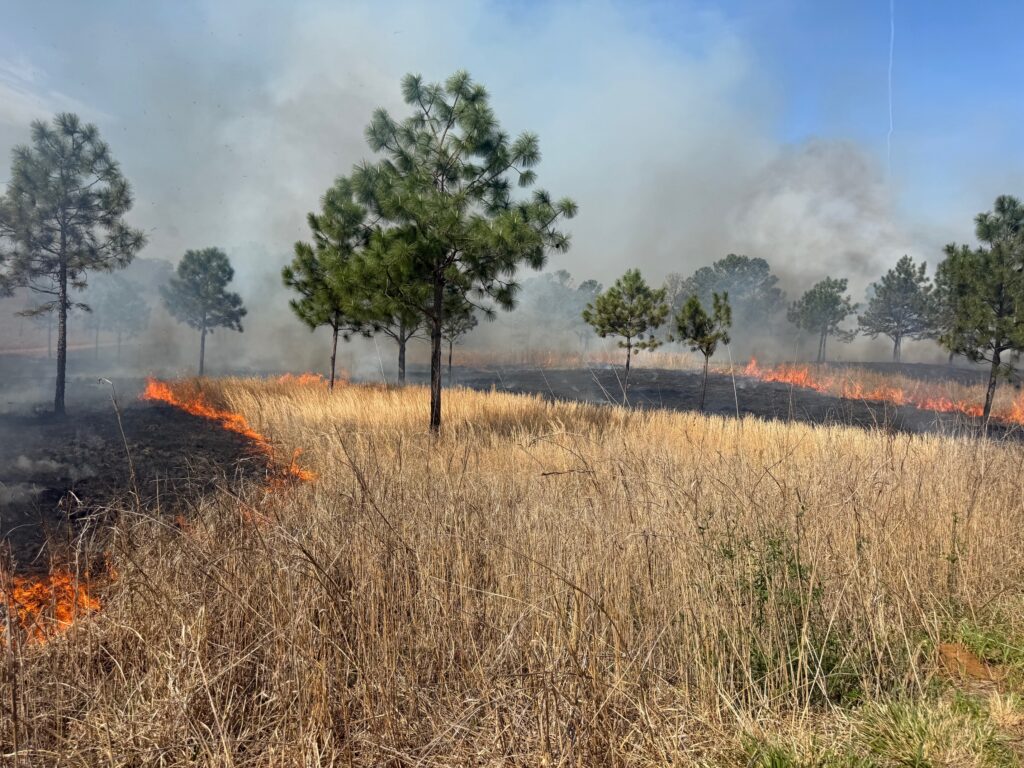
Fire has always been part of Alabama’s landscape. Long before modern forestry practices, natural forces and early inhabitants used fire to shape the land—clearing travel routes, improving forage, and attracting wildlife.
Today, prescribed burning follows that same principle, but with far more planning and precision.
“Prescribed fire is a complex management tool,” according to the Southern Group of State Foresters. Each burn is carefully planned with specific objectives, weather conditions, safety measures, and contingency plans in place. Land managers must also consider smoke management and coordinate with local authorities.
A Year-Round Practice with Lasting Impact
In Alabama, prescribed burns can take place throughout the year, depending on the goal. Cooler-season burns help reduce forest litter and prevent wildfires, while growing-season burns control thick underbrush and promote healthier plant communities.
For landowners like Lybarger, the practice is both practical and personal. It’s not just about managing land—it’s about restoring it.
What follows the flames isn’t destruction, but renewal: more wildflowers, more wildlife, and a more balanced ecosystem. In a landscape shaped by fire for centuries, prescribed burning remains essential to keeping Alabama’s natural systems thriving.
Learn More About Prescribed Burning
For landowners interested in using prescribed fire, working with trained professionals is essential. Prescribed burns require careful planning, the right weather conditions, and proper safety measures.
The Alabama Forestry Commission recommends consulting with a certified burn prescriptionist before conducting any burn. Local county offices can provide guidance, help develop a burn plan, and connect landowners with certified professionals.
Additional resources and information are available through the Alabama Forestry Commission, Outdoor Alabama, and the Alabama Land Conservation Assistance Network. These groups offer guidance on best practices, safety requirements, and how prescribed fire can be used to meet specific land management goals.
Love this story? Subscribe to our newsletter and get the best of Alabama delivered to your inbox every Friday.