When Antiques at the Gardens opens October 1, it will mark two decades of a show that has grown from a local fundraiser into an event that draws designers, collectors and guests from well beyond Alabama. This year will be its biggest yet. But when Penney Hartline, director of development at the Birmingham Botanical Gardens, and Lauren Bledsoe, who is stepping into a lead role with the show, sat down to talk about what has made Antiques at the Gardens endure, neither began with its size.
Instead, they talked about the people.
At its heart, Antiques at the Gardens is a community effort. Designers donate their time. Businesses contribute materials. Volunteers build, paint and transform spaces. Sponsors and ticket buyers return year after year. The antiques and design may be what initially draw people in, but it is the willingness of so many people to contribute that has allowed the show to grow and become an established part of Birmingham’s cultural and philanthropic community.
An ever-evolving show
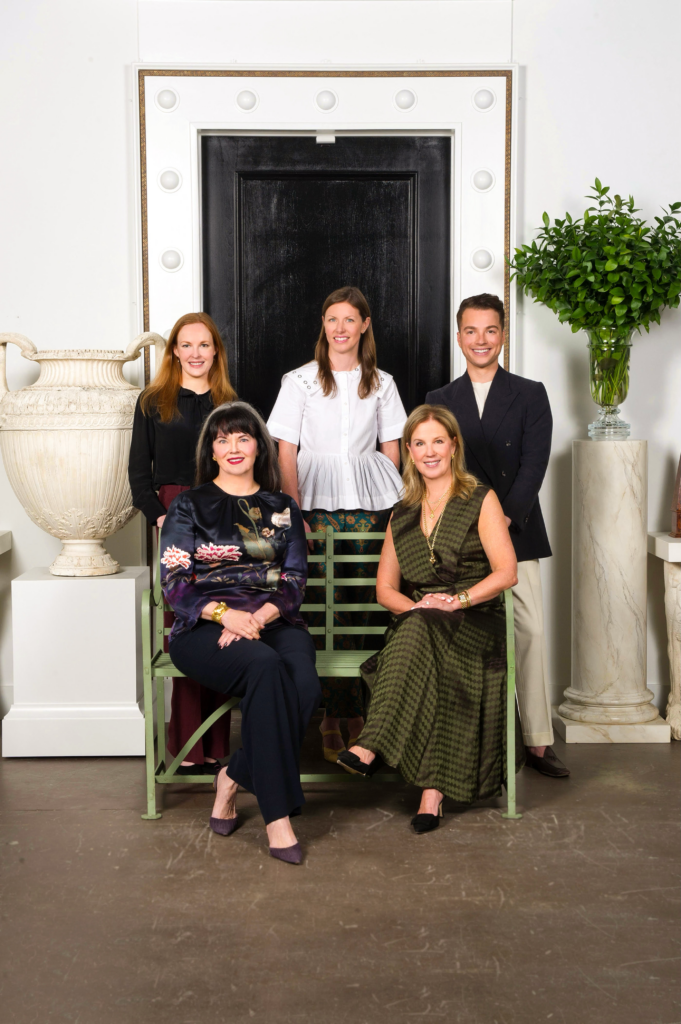
This year’s Antiques at the Gardens chairs, helping bring the 20th-anniversary show to life. (Contributed)
Antiques at the Gardens has changed considerably over the past two decades. During the pandemic, the event moved its programming outdoors, opening new opportunities to expand its footprint and incorporate more of the Gardens’ pocket gardens. Florists from around Birmingham became part of the experience, while design partners brought another layer to the show.
Sister Parish was a textile partner in 2022, and designer Jeremy Clark eventually became one of the show’s chairmen. As the event grew, design sponsors became another important part of its production, contributing materials that helped bring the displays to life.
The organizers have also continued to adapt to changes in the design world. As interest in traditional “brown furniture” declined, the show introduced Tastemakers, inviting local designers to create vignettes. The format continued for roughly a decade and gave Birmingham designers another way to participate.
Even the timing of the weekend has evolved. Organizers adjusted the show’s dates to establish a distinct place on the fall calendar and avoid competing with the major antiques market in Round Top, Texas.
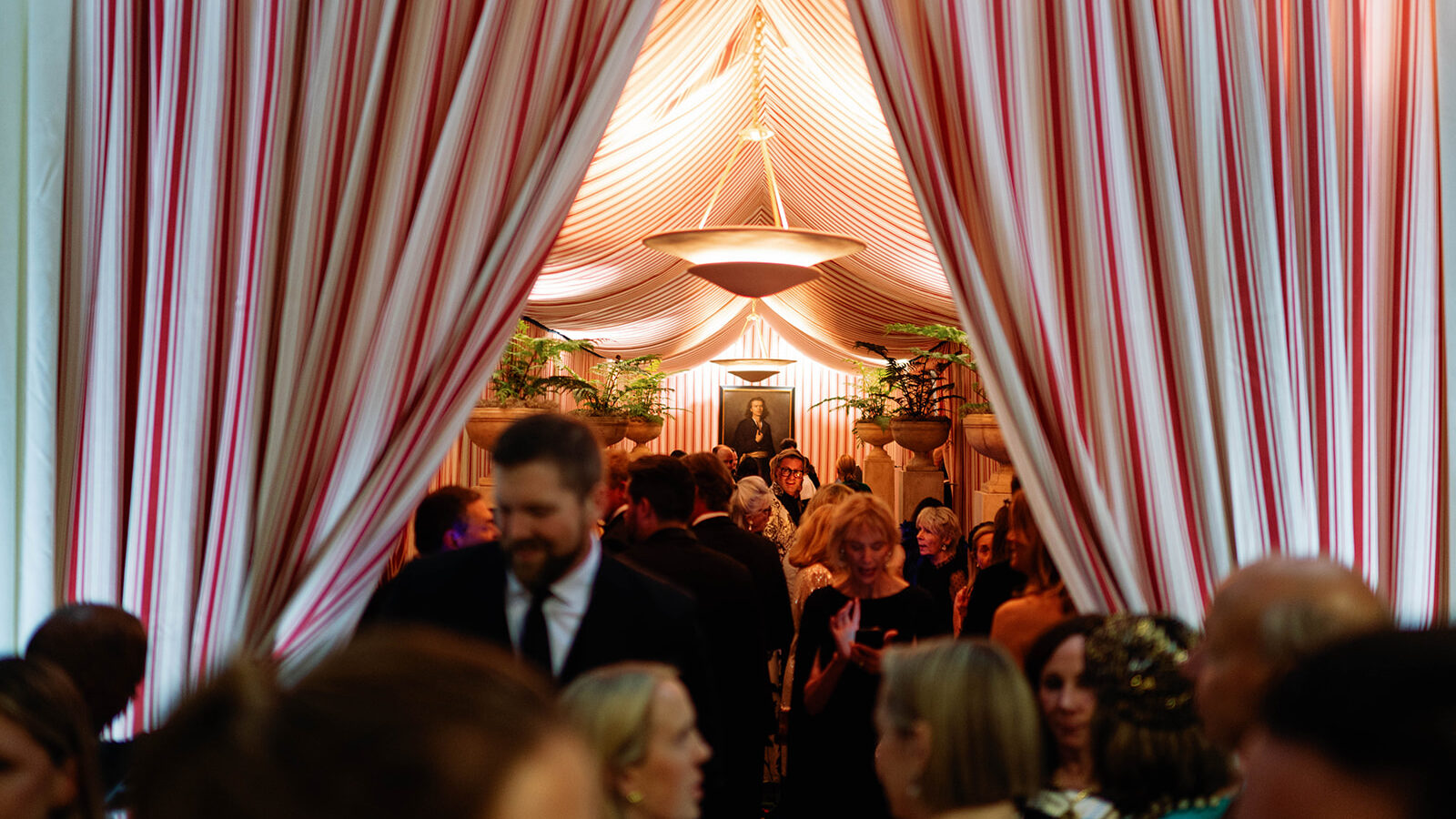
Today, the gala looks different, too. Rather than a traditional seated dinner, guests move throughout the Gardens, where food stations, outdoor furnishings from Summer Classics and a large tent create a setting that feels more like a roaming cocktail party. This year’s landscaped entrance was designed by landscape designer Zachary J. Westall, who propagates his own plants.
The details change, but the goal remains the same: to create something the community is proud of and wants to experience together.
A network of support
(Antiques at the Gardens/Contributed)
Ask Hartline or Bledsoe how the show actually comes together, and the answer is remarkably simple: relationships.
Bledsoe describes a process in which people call on the people they know. Someone can donate flooring. Someone else can paint it. Another person can build a component. A designer has an idea, and someone in the community figures out how to help make it possible.
Hartline enjoys watching Birmingham rally around the event each year. “The show provides an incredible opportunity to showcase the city’s design talent,” she says, though its ultimate purpose remains supporting the Gardens.
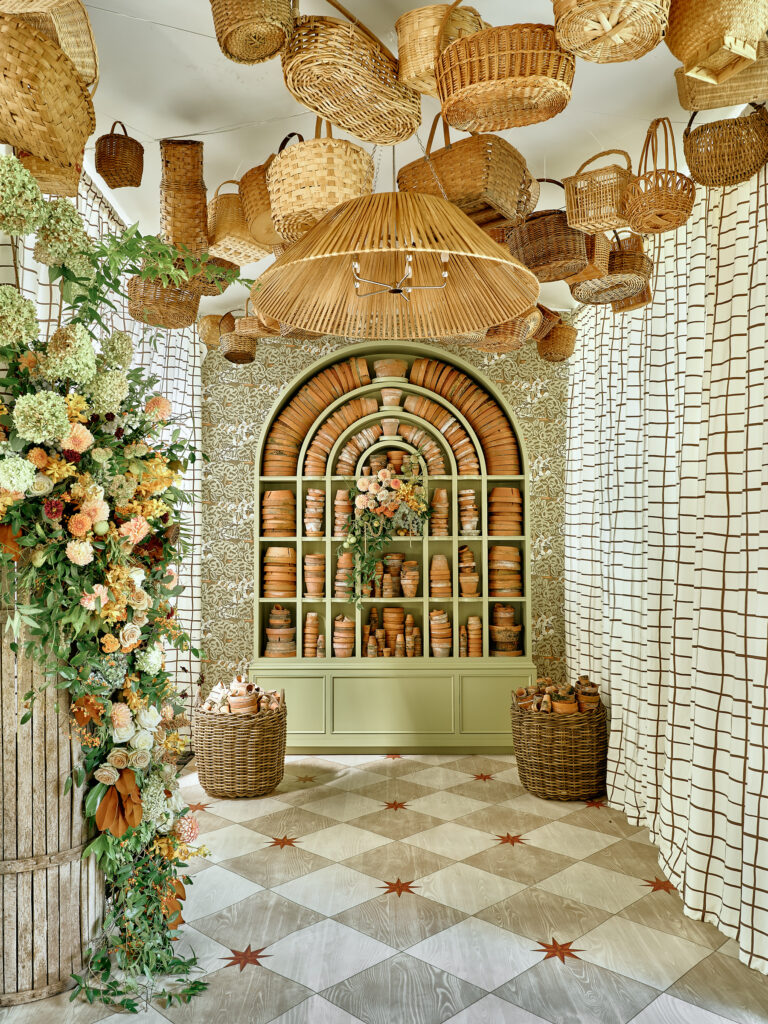
Last year’s “pots wall” offered one example. Organizers saw a collection of pots sitting on the ground and began imagining what they could become. Heather Chadduck Hillegas and other local design and construction partners helped transform the collection into a masterful showpiece.
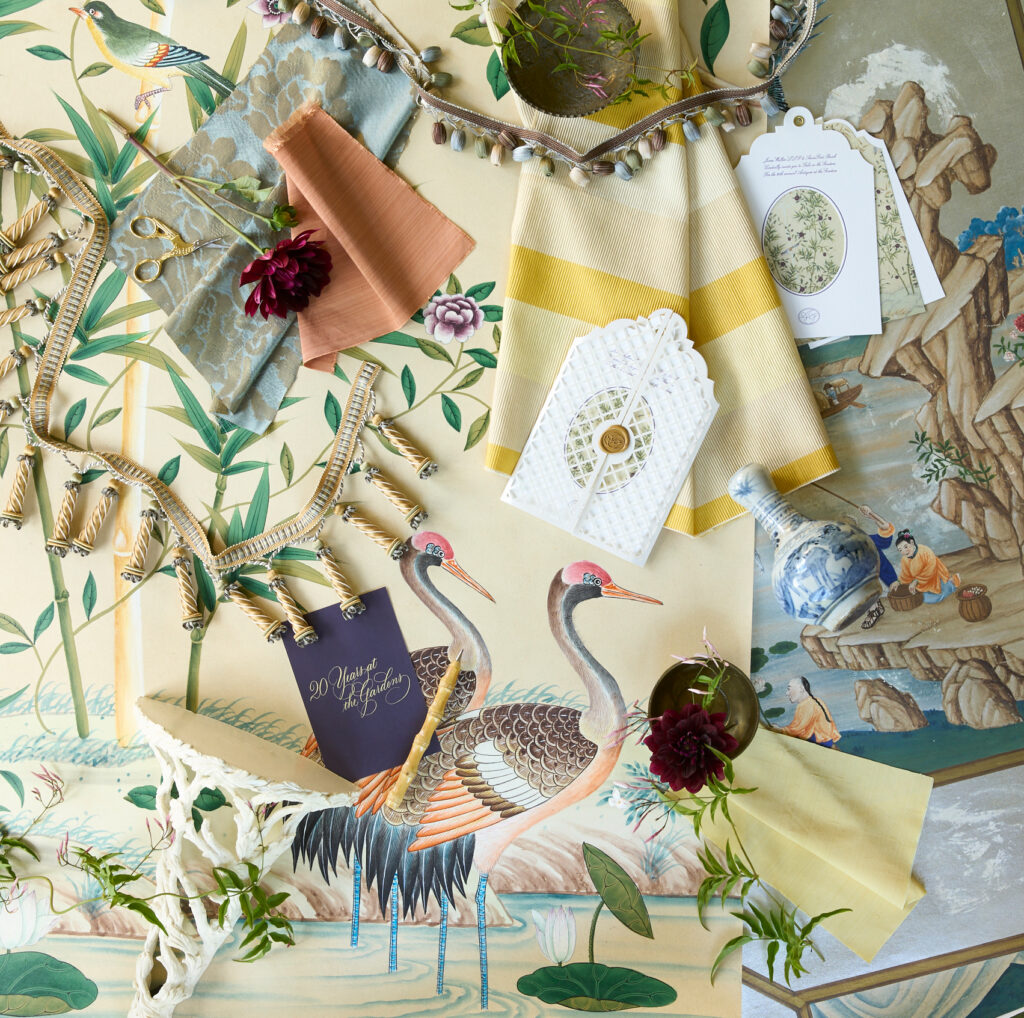
This year, Gracie, the company known for its intricate hand-painted wallpapers and fabrics, has donated more than 170 panels for the show. The contribution reflects the international influences shaping this year’s displays. McGuire Construction is building the catwalk, which will feature a bamboo grove in one of Gracie’s iconic patterns, drawing on the botanical designs for which the company is known.
The same spirit extends to the speakers and designers who participate. They donate their time, and the show has welcomed a number of prominent names from the design world over the years. Hartline remembers the excitement surrounding speakers such as Miles Redd, whose career has continued to grow beyond his appearance at the event. New York interior designer Keith Langham, now the show’s ambassador, joined the event several years ago and has become part of its extended community.
The connections, through and through, are an integral part of what makes the weekend possible.
Keeping something big feeling small
(Antiques at the Gardens/Contributed)
For all of its growth and a reputation that now reaches internationally, Antiques at the Gardens has intentionally held on to a sense of intimacy.
The lecture hall accommodates about 300 guests. Visiting speakers and designers are invited to dinners in private homes, and organizers use the weekend as an opportunity to introduce them to Birmingham’s museums, landmarks and architecture. More than once, visitors have arrived expecting one version of Birmingham and left surprised by what they found.
Some guests have become annual visitors. A group from Dallas, for example, has returned every year and is already planning for the next show.
For Hartline, success is less about numbers than atmosphere. She likes seeing people smiling, talking with friends and enjoying a drink together. She also enjoys watching students from Alabama, Auburn and Samford, many studying design or architecture, experience the show for the first time.
The impact extends beyond the Gardens, too. Visitors stay in Birmingham hotels, fly into the city, eat at local restaurants and spend time exploring the community. What began as a fundraiser has become an event that creates connections throughout the city.
Twenty years
Bledsoe came to Antiques at the Gardens from a career in law, and she has been surprised by how much the two worlds have in common. Both, she said, are built piece by piece and layer by layer. Neither can be accomplished alone, and both can involve deeply personal decisions.
“There’s nothing more personal than someone’s home,” she said.
She expected the collaborative nature of the show, but the experience has exceeded those expectations. Hartline has been generous with her time and guidance, and Bledsoe has found herself learning not only about the mechanics of the event but also about the network of relationships that makes it work. Hartline laughed when the subject came up, noting that the design world is full of former attorneys.
That sense of collaboration comes through in the way the two women talk about the show itself. When asked to describe its 20th anniversary in a single word, they arrived at different answers that ultimately point to the same thing.
Hartline chose “amazing.”
She was thinking about the transformation, the success and the talent that have become part of the event. “Who would’ve ever thought?” she said with a smile.
Bledsoe chose “community.”
Community is what makes the event happen, she said, and what continues to drive it. People want to gather; they want to celebrate beautiful things. And sustaining something like Antiques at the Gardens takes people willing to give their time, resources, creativity and attention.
That may be the most meaningful measure of what the show has accomplished in 20 years. Its growth is visible in the size of the event, the designers it attracts and the people who travel to Birmingham for the weekend. But underneath all of that is something much less tangible and, perhaps, more lasting: a group of people who keep showing up.
The volunteers, sponsors, designers, businesses, students, ticket buyers and longtime supporters were part of the show when it was still finding its footing. Twenty years later, they are still part of what makes it possible. Antiques at the Gardens may have become a signature Birmingham event, but its foundation remains remarkably simple.
It takes a community.
Love this story? Subscribe to our newsletter and get the best of Alabama delivered to your inbox every Friday.