Wear an Alabama shirt through any airport in America and someone will say it to you, and you know exactly what to say back. “Roll Tide” is a hello and a goodbye. It’s a cheer and sometimes a condolence. But where did it come from? The definitive origin may be lost to the tides of time, but we can get pretty close, and the trail starts more than 100 years ago.
It Started With Mud
Between the two words, “Tide” came first. In 1907, Alabama faced off against a heavily favored Auburn team on a rain-soaked, muddy field. The game ended in a 6-6 tie, and the Alabama squad left the field caked in red mud.
Hugh “Doc” Roberts of the Birmingham Age-Herald wrote that they looked like a “Crimson Tide,” and the Paul W. Bryant Museum credits Roberts and his article as the source of the team’s now notorious nickname. Before that, the team had been nicknamed the “Thin Red Line.”
As we now know more than 100 years later, that new nickname from Roberts ended up sticking, even though Tuscaloosa is hours away from the nearest shoreline and an actual tide. As an added bonus of history, the aforementioned 1907 Iron Bowl ended up being the last Iron Bowl played for 41 years due to a disagreement between the schools over player expenses and game logistics.
A Rose Bowl and a Fight Song
(The University of Alabama)
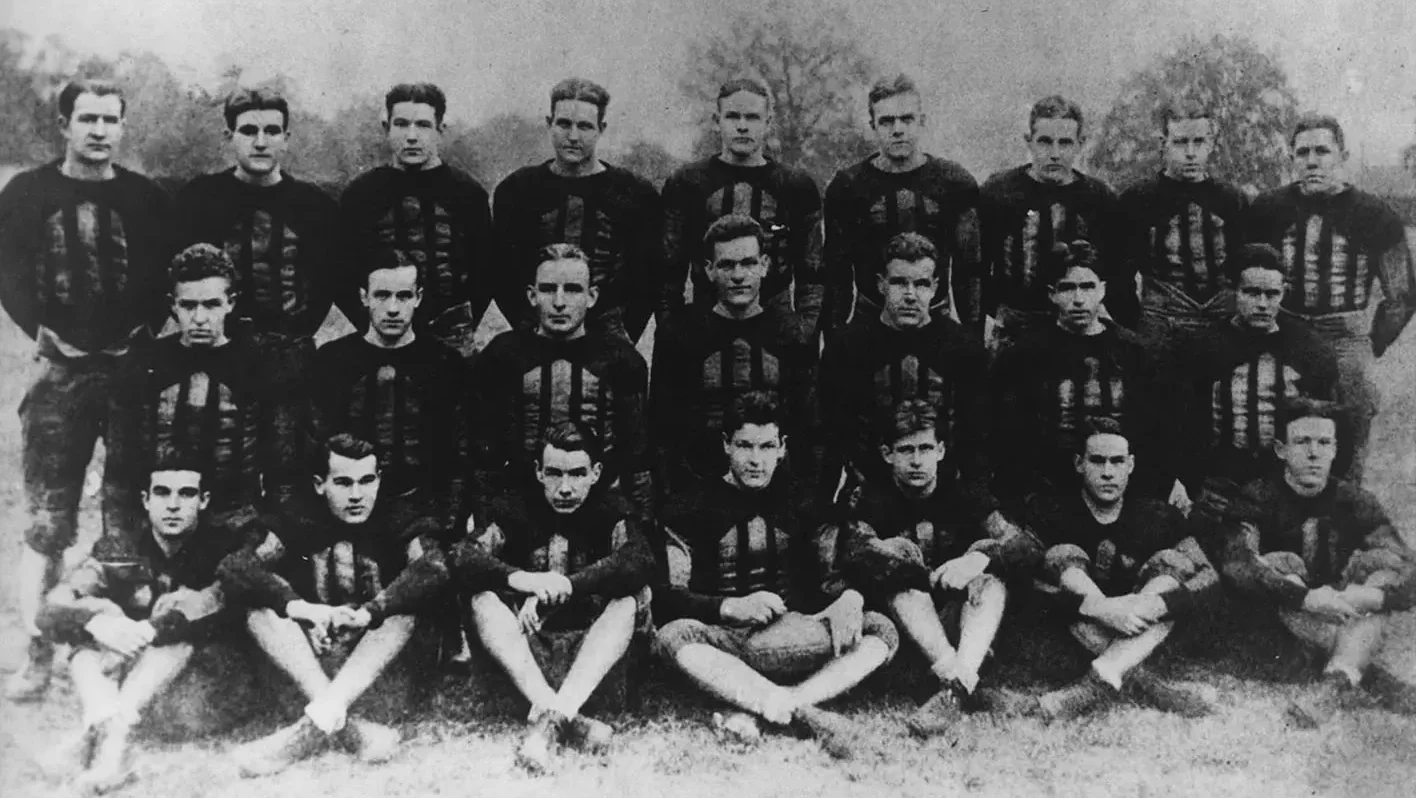
Now join me for New Year’s Day 1926. Coming off an undefeated 1925 regular season, Alabama’s team made the cross-country trip to Pasadena to represent Southern football. They rallied to beat Washington 20-19 and claimed the school’s first national championship.
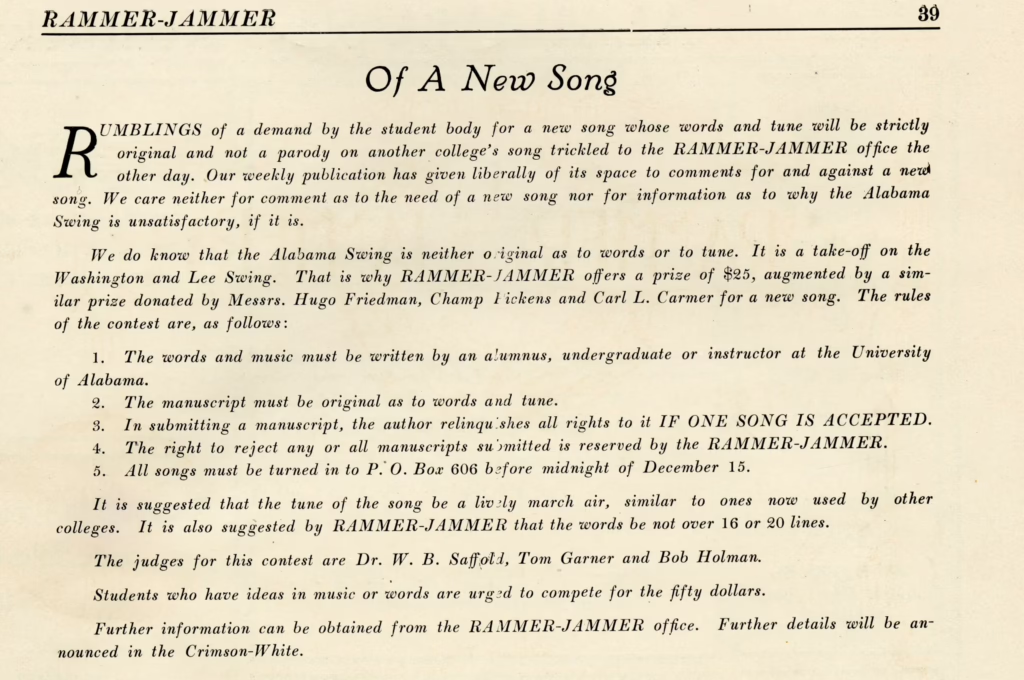
As school pride grew, so did the desire for a fight song of Alabama’s own. Until then, the university had used “Alabama Swing,” a song that borrowed heavily from the fight song of Washington and Lee University.
In November 1925, the campus humor magazine Rammer-Jammer announced a contest for a new fight song, offering a $50 prize with the help of three other sponsors. The contest was already underway before Alabama’s Rose Bowl victory, which helped put the team and its traditions on the national stage.
The winner was Ethelred “Epp” Sykes, an engineering student, musician, and editor of The Crimson White. Sykes called his song “Yea, Alabama!” When he won the contest in 1926, he donated his prize money toward an arrangement of the song for the Million Dollar Band. He later donated the copyright and future royalties to the university. A century later, “Yea, Alabama!” remains the school’s fight song.
So Where Does the “Roll” Come From?
(The University of Alabama/Contributed)
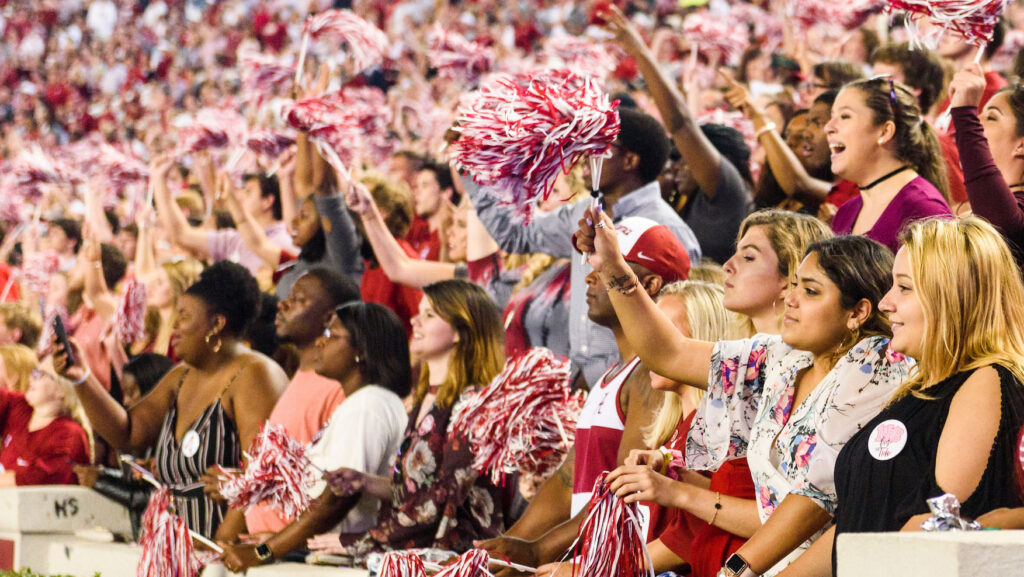
Here’s where the waters of history get a little muddy. Today’s version of “Yea, Alabama!” ends with “Roll Tide,” but the song also includes the line “So roll on to victory.” Some reports claim the cheer grew out of that line, with fans shortening it and adopting the phrase themselves.
Others offer a simpler explanation: fans watched their team roll over opponents, so the word just fit. Neither explanation fully settles the question of how “Roll Tide” became a standalone cheer and greeting. Pick your favorite theory and find someone to argue about it with at your next tailgate!
More Than a Cheer
Regardless of the actual truth behind its origin, the phrase became a beast of its own. Alabama’s mascot is an elephant named Big Al, but you’ll rarely hear fans say “Go Elephants!” It’s always “Roll Tide” — or any number of colorful variations.
As the program stacked up championships under Bear Bryant, and later Nick Saban, the phrase became synonymous with winning and football greatness. The university holds trademark registrations for “Roll Tide” covering certain goods and services.
Nick Saban heard it in Venice, Florence, Rome, and on the Amalfi Coast during a vacation to Italy. He called it proof of how strong the brand is.
A muddy field, a student songwriter, enthusiastic fans, and a whole lot of winning turned two simple words into something much more. It means hello, good luck, we’re on the same team, and really, it means whatever you want it to mean. Regardless of how it started, it’s here to stay.
Roll Tide.