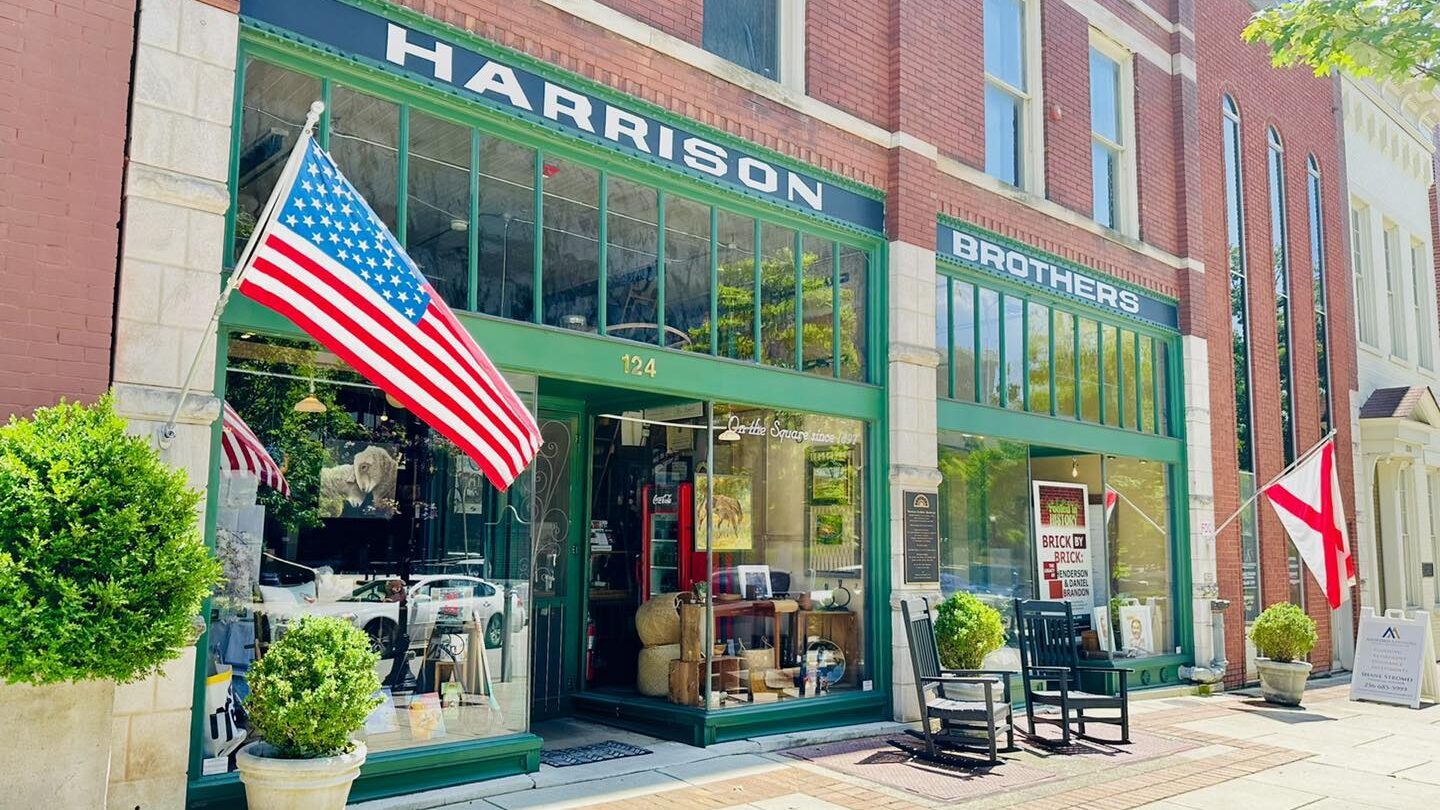
There are places in North Alabama that do not just sit in the past–they carry it with them. You walk through the door and the pace changes. The light feels different. The floor creaks under your feet in a way that reminds you history is not an abstract idea. It is something you can still touch. On Huntsville’s historic Courthouse Square, Harrison Brothers Hardware is one of those places.
At first glance, it is easy to call it a store. But after spending time with Donna Castellano, executive director of the Historic Huntsville Foundation, I started to think of it as something else entirely. Harrison Brothers is a landmark, a memory keeper, a gathering place, and in many ways, a living museum that still welcomes the community the way it always has.
Where History Lives Beyond Books
Donna’s passion for preservation began in a moment that felt both simple and profound. She was studying Alabama history, reading about influential figures, and spending long hours learning from books and archives. Then one day, while walking through her neighborhood near downtown Huntsville, she passed a home built by a governor she had been researching. It dawned on her that history is not only found on paper. It is also found in the landscape. It lives in the buildings that still stand where people once worked, dreamed, and shaped a city. That belief sits at the heart of Harrison Brothers. The past is not tucked away behind glass. It is under your feet and in the stories still unfolding inside those walls.
What Makes Harrison Brothers Feel So Special
(Visit Huntsville/Contributed)
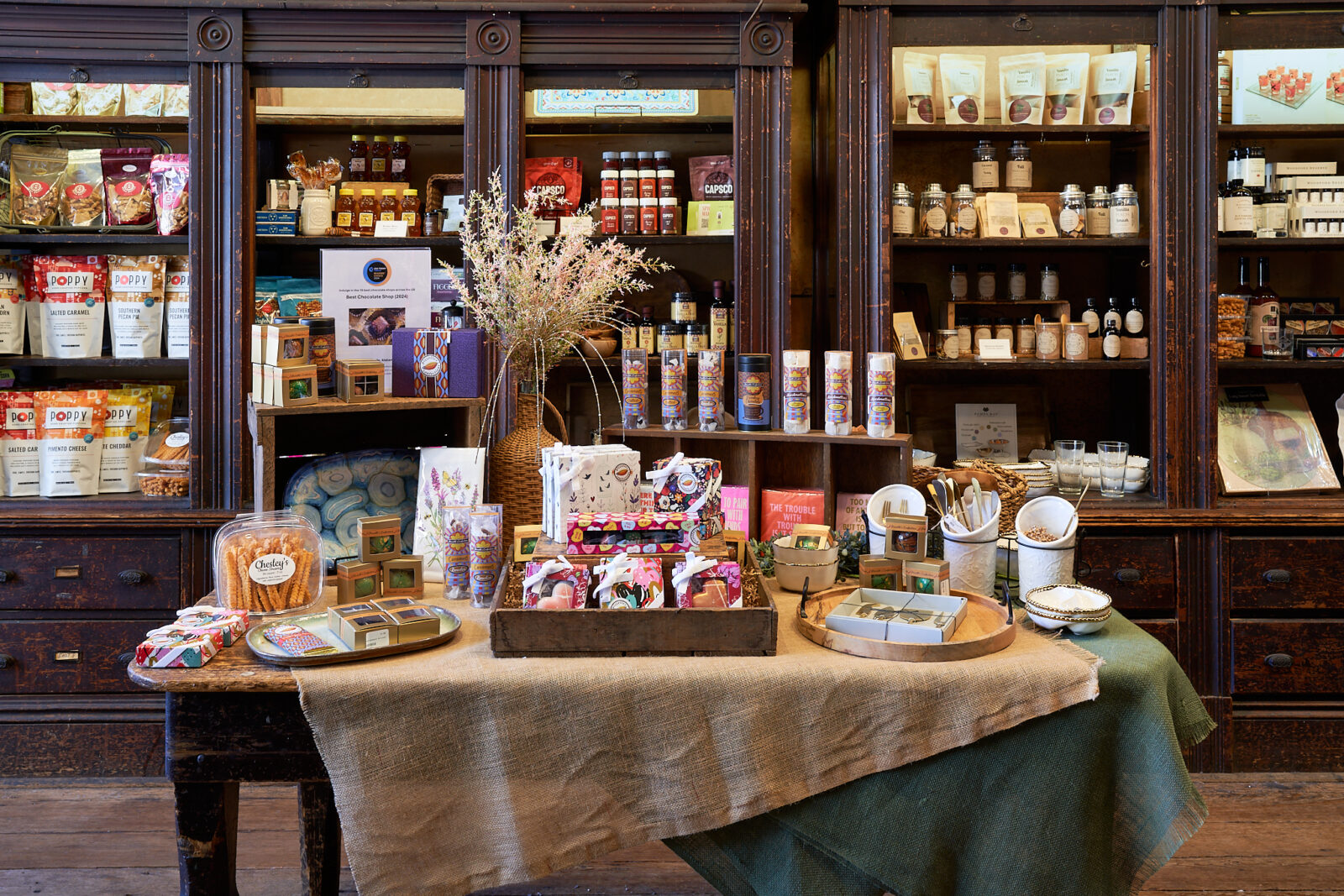
Donna describes the store differently depending on who is visiting. For some, especially those who remember tagging along to the hardware store with a parent or grandparent, Harrison Brothers feels like childhood. The original wood floors, the old fixtures, the high ceilings, and even the smell of the building bring back a time when errands were slower and the world felt smaller. For others, it feels like stepping into a place unlike anything they have experienced, not because it is polished, but because it is authentic. Harrison Brothers shows its age. And it does so beautifully.
One of my favorite stories Donna shared was about bringing her granddaughter to the store when she was just two or three years old. Donna wondered if anything there would resonate with a child growing up in such a modern world. Her granddaughter walked straight to the marble bin and stood there for fifteen minutes, completely captivated. It was a small moment, but it says something important. We underestimate how much children still respond to tactile, curious, simple things. Sometimes the past holds a kind of magic that screens cannot replace.
The Details That Tell the Story
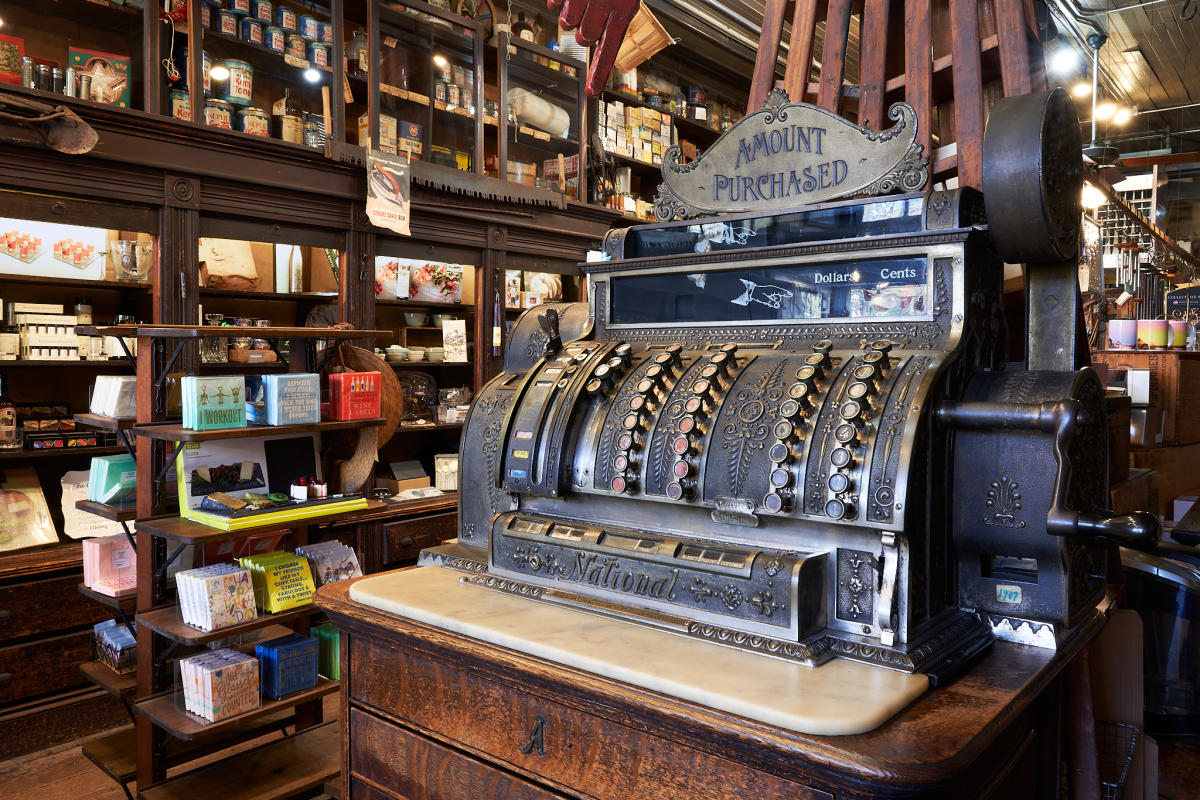
When you take time to look around, you start noticing objects that quietly hold entire chapters of Huntsville’s story. There is a massive safe embedded into the wall, the kind of feature that makes you stop mid-step. That safe once stored more than money. It also held ledger books, because long before credit cards, customers purchased on account. Their names and purchases were written down, creating a record of everyday life. The Harrison Brothers never threw much away, and those ledger books stretch back to the 1890s. Today they are preserved at the University of Alabama in Huntsville, and families still come looking for familiar names, hoping to see proof that their story is woven into Huntsville’s history.
(Harrison Brothers Hardware/Facebook)
Nearby, visitors notice a coal burning stove that once heated the building, and a hand cranked elevator that carried items between floors. Donna also points out a small object that sparks a lot of curiosity: an old rotary phone with a pinned address book beside it. When she gives tours, she calls it the iPhone of 1950, and watching people imagine life before instant convenience is part of the fun.
A Story Still Being Discovered
One of the most meaningful parts of this conversation was hearing Donna explain how the story of Harrison Brothers continues to evolve. In 2022, the foundation learned that the store’s iconic 1901 facade was built by a Black brick mason named Daniel Brandon. That discovery expanded the way the store’s story is told and deepened its role as a place where North Alabama’s history can be seen more fully.
Donna shared that the confirmation came through community partnership. A Black historian, Ollie Conley, heard Donna speak about Brandon and returned with the newspaper article that confirmed it. Today, the historic marker outside the store includes Brandon’s story, and tours now highlight buildings he helped construct around the square. It is a powerful reminder that history is not finished. It grows as we keep asking questions and make space for more voices.
Harrison Brothers still plays the role it always has. It is a place people come to gather, to browse, to learn, and to feel connected. Donna described it as a hub, and that word fits. The foundation highlights local artists and makers, bringing the best of North Alabama under one roof. Some are well known. Some are just beginning. And because the store is owned by a nonprofit, it is not meant to feel exclusive. Harrison Brothers hosts free events nearly every week, and when Santa visits, he is out on the sidewalk so families can participate without needing a ticket. That welcoming spirit is part of what makes it such a beloved landmark.
Planning Your Visit
Harrison Brothers is located at 124 Southside Square on Huntsville’s historic Courthouse Square.
A few practical tips Donna shared:
- Parking is free on Saturdays
- There is free parking after 5pm
- If the downtown garages feel confusing, there is also free parking a couple blocks off the square on Gates Avenue, and on Green Street and Lincoln
And if you just want to soak it in, Donna’s advice is simple. Come by on a Sunday around 11; there is often something happening.
This story originally appeared on northalabama.org.
Join our newsletter for more stories rooted in Alabama, delivered to your inbox every Friday.