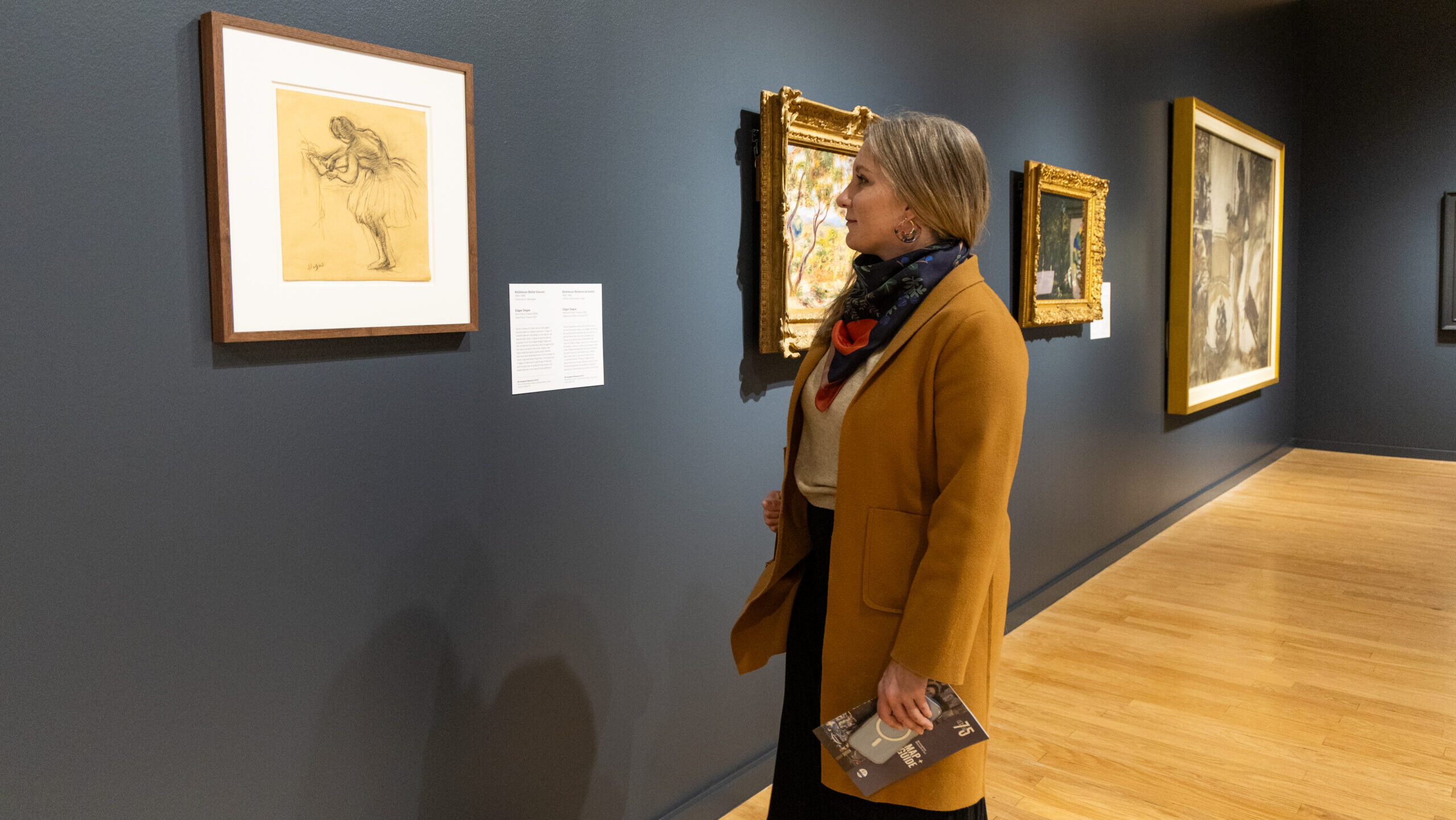
Dr. Maggie Crosland, the Birmingham Museum of Art’s Curator of European Art, guides me through the museum’s newest exhibit with a sense of curiosity and warmth; it’s clear that she is immensely proud of the collection before me.
The exhibit? The much anticipated Monet to Matisse: French Moderns, which traces the evolution of French art while exploring France’s role as the epicenter of Modernism at the turn of the 20th century.
The art is set against ruby-red and deep blue walls, an intentional choice that immediately heightens the experience. The gallery pulls me into a world of Impressionist and Post-Impressionist masterpieces; the effect is quietly transportive, as though Birmingham has momentarily folded into Paris.
“That sense of invitation is no accident,” Crosland explains. “The show has been traveling for a while now—57 works from the European collection. What’s so unique about our iteration of the show is that we were given the unique opportunity to add to the show, and we’ve added 43 works from our own permanent collection.”
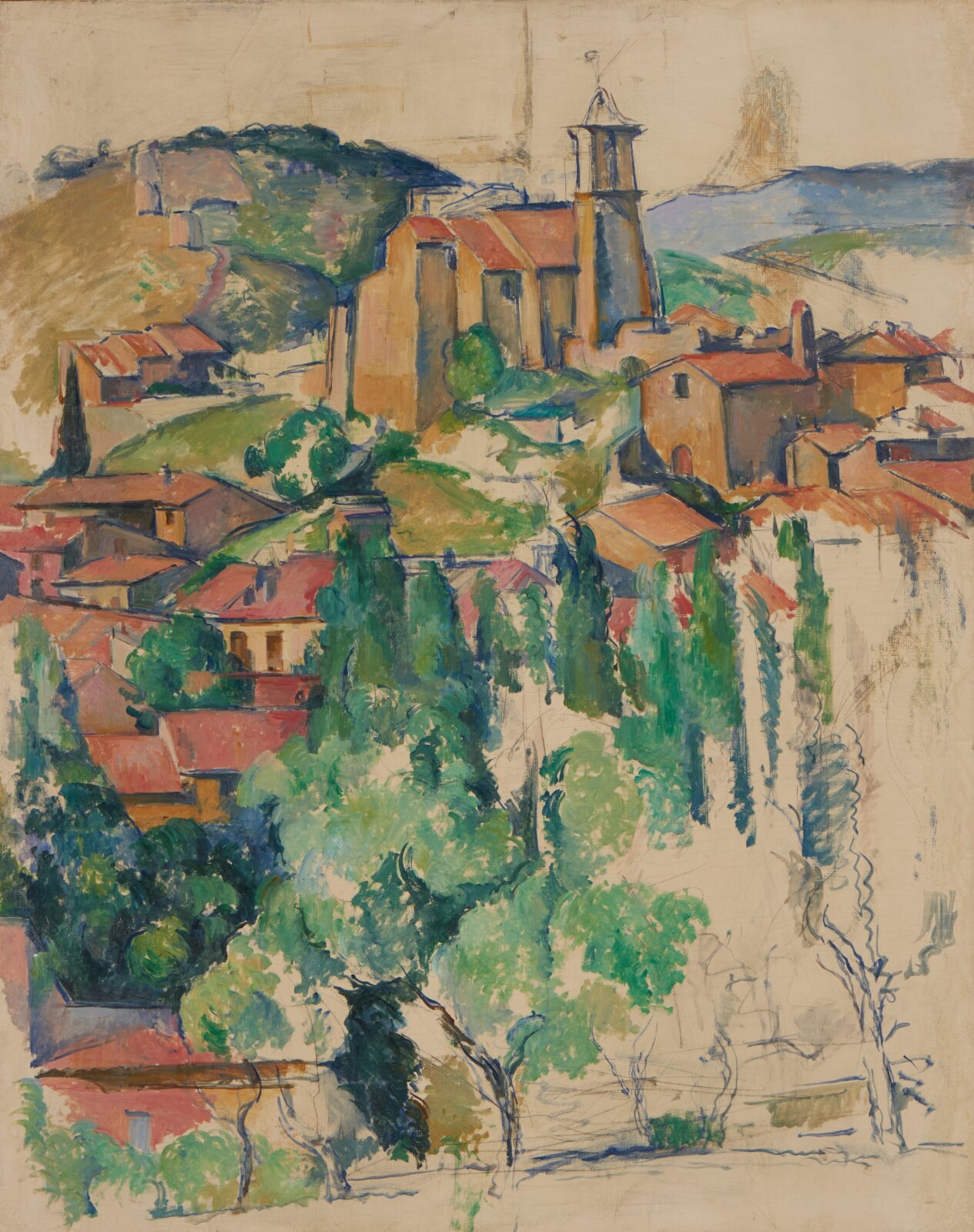
Paul Cézanne, The Village of Gardanne (BMA/Contributed)
That addition nearly doubles the size of the exhibition and subtly shifts its center of gravity. While Monet to Matisse draws heavily from the Brooklyn Museum’s esteemed European collection, Birmingham’s contribution gives the show a new dimension, grounding global art history in a distinctly local place.
“It’s one of the things that we’re most proud of in the show,” Crosland says. “Not only does it explore French Modernism or European Modernism, but it also explores Americans’ involvement in those movements—and particularly exciting for us is Alabama’s involvement.”
That Alabama connection comes vividly to life through the work of Carrie Hill, a Birmingham painter who maintained a studio in Five Points and traveled to France to study during the height of European Modernism. Crosland points to Hill’s painting hanging in the gallery, positioned deliberately beside a work by Paul Cézanne—the artist who most deeply influenced her.
The pairing is striking. Hill’s work holds its own visually and conceptually, not as an echo but as a conversation.
“I hope she sees how we’re viewing her,” Crosland says, “as someone who wasn’t simply going and copying, but rather who was responding and adding to the story.”
That idea—artists responding rather than replicating—forms the exhibition’s backbone. Though the title highlights two towering figures, the show spans far beyond them in both scope and style.
“This is an exhibition that runs the dates between 1850 and 1950,” Crosland explains. “It includes some of the most famous artists from those time periods such as Monet, Cézanne, and Renoir, but also includes styles held in those periods—not just Impressionism, but also Post-Impressionism, Surrealism, and Fauvism.”
(Ginny Gray/SoulGrown)
Organized into four thematic sections—Landscape, Still Life, Portraits and Models, and The Nude—the exhibition traces the evolution of modern art from the birth of plein-air painting through the experimental impulses of the early twentieth century. Visitors encounter works by Paul Cézanne, Mary Cassatt, Edgar Degas, Claude Monet, Camille Pissarro, Pierre-Auguste Renoir, Henri Matisse, and many others, alongside sculptures and works on paper that deepen the narrative.
Yet for Crosland, the exhibition’s true through line isn’t a visual one.
“The real through line of the exhibition is not necessarily anything visual,” she says, “but more how these artists, in a period of huge technical, political, and societal change, were responding to the world around them and finding new ways to create beauty, and to react and respond.”
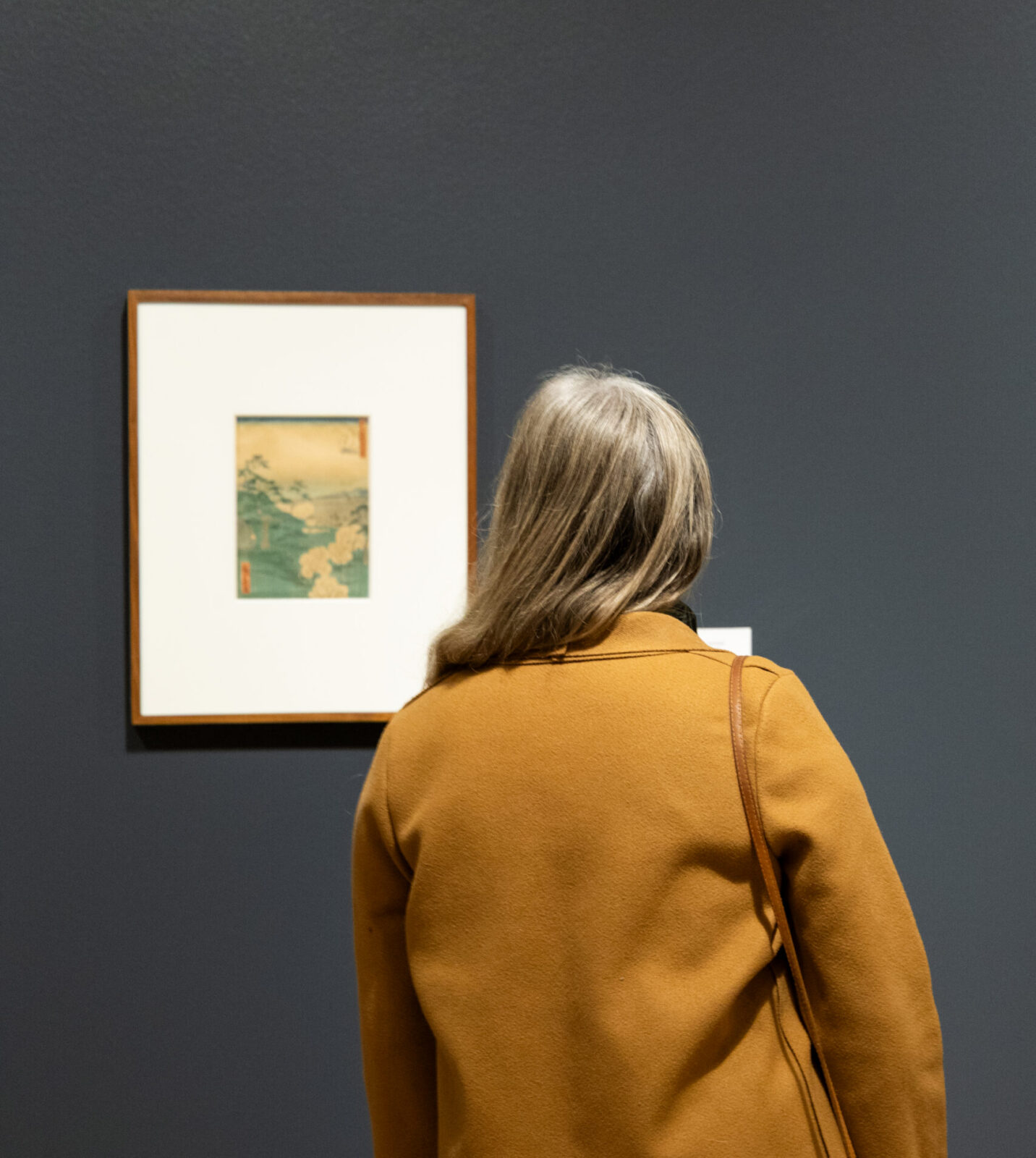
That response is especially evident in one of the exhibition’s most surprising and illuminating elements: the influence of Japanese art on French modernism. “You cannot have modern art in Europe without the inclusion of Japanese art,” Crosland explains.
In the late nineteenth century, Japanese prints flooded European markets, captivating artists who were eager for new ways of seeing. “Artists like Claude Monet and Mary Cassatt are voraciously collecting Japanese art,” Crosland notes, “and they talk amongst themselves about how Japanese arts are effectively like Impressionists.”
She gestures toward a Japanese print of a cresting wave hanging beside Monet’s winter scene in the gallery.
“We know that Claude Monet owned a copy of this print,” she says. “And so when you look at the two side by side, you really see how Monet is responding and reacting.”
Moments like this–quiet and revelatory–are where Monet to Matisse truly shines. Rather than presenting Modernism as a fixed canon, the exhibition frames it as a living exchange: between cultures, between generations, and between global movements and local voices.
Monet to Matisse: French Moderns, 1850–1950 runs through May 24th, and offers Birmingham visitors not just a chance to see masterworks, but to understand how art travels, transforms, and ultimately finds new meaning—right here at home.
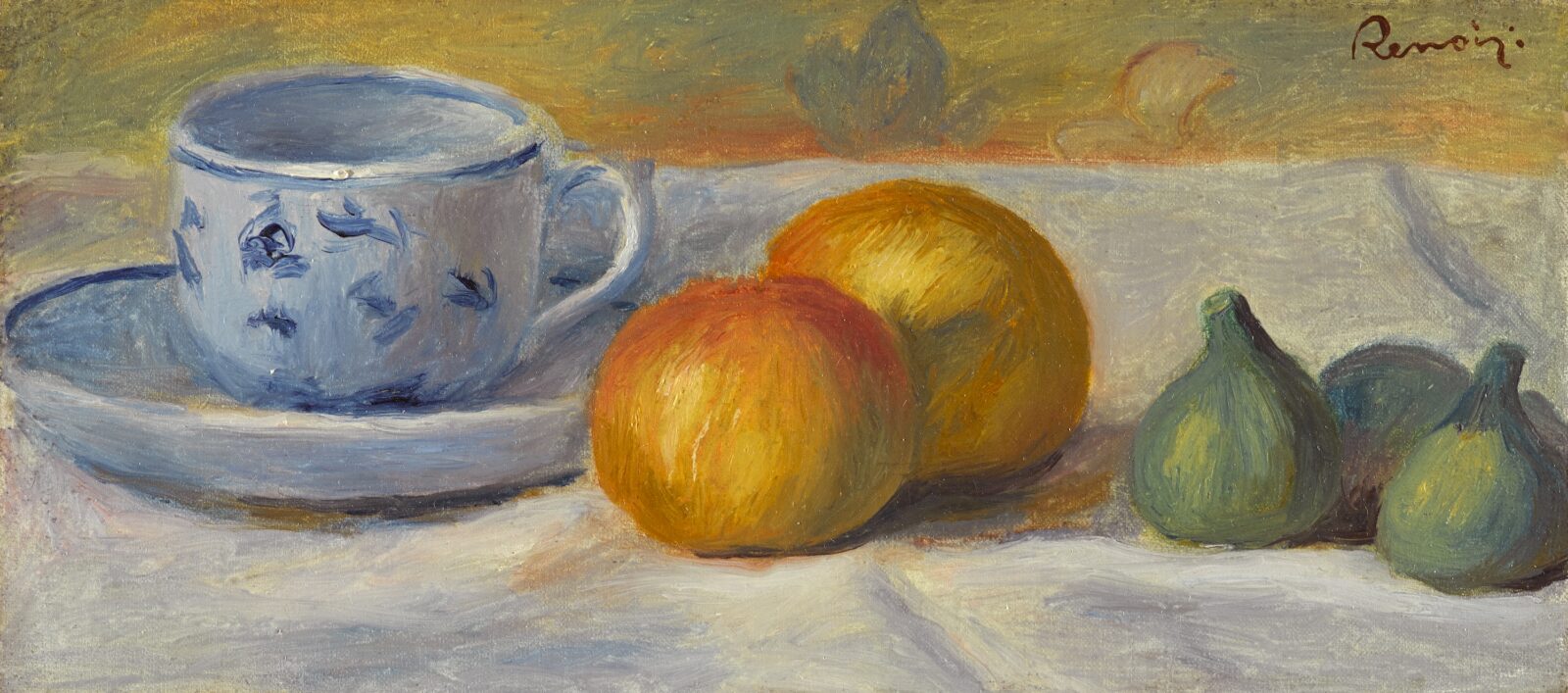
Pierre-Auguste Renoir, Still Life with Blue Cup (BMA/Contributed)