“Incurvatus in se,” Nathan Green tells me. “It means ‘curved in on ourselves.’”
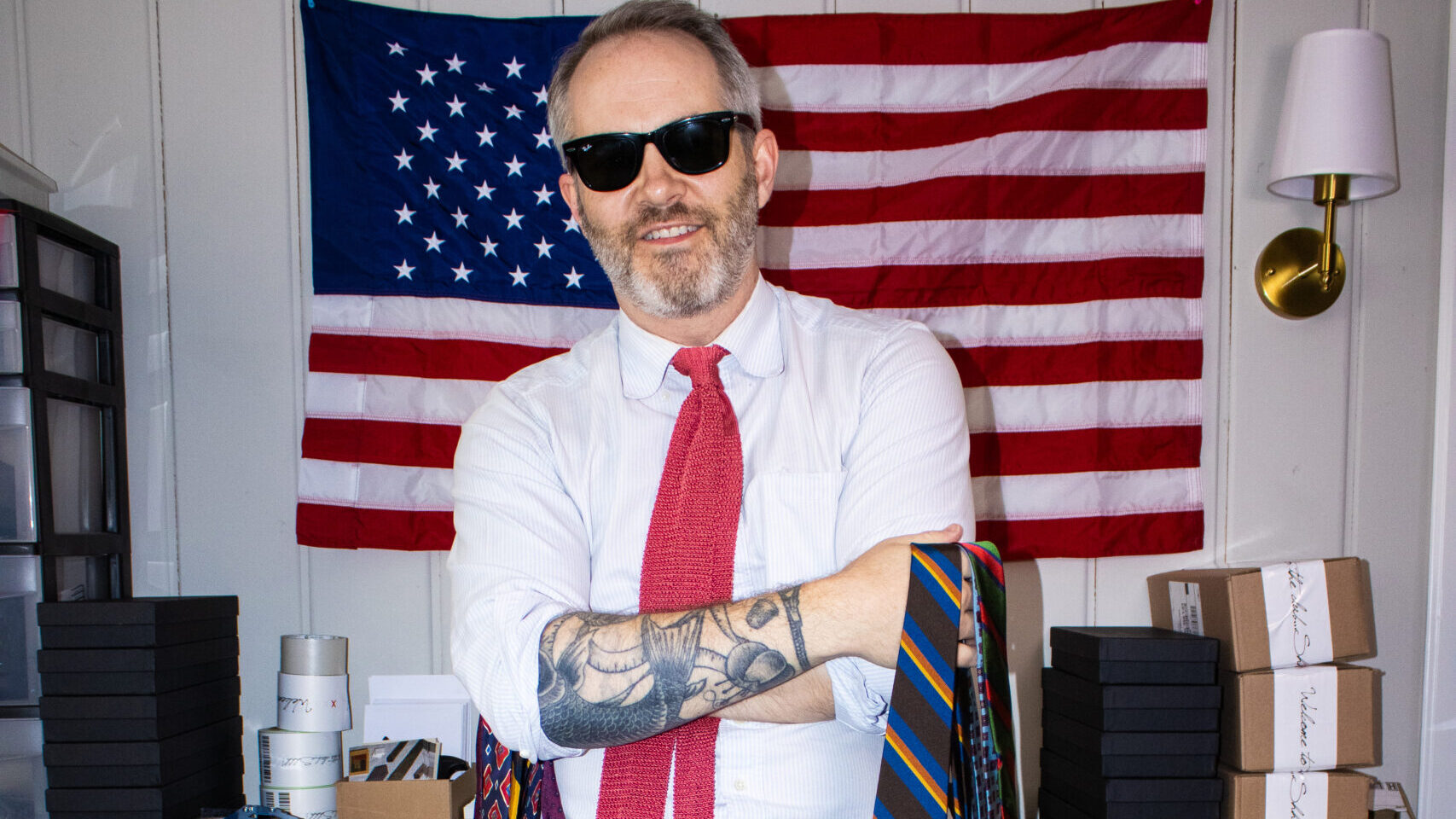
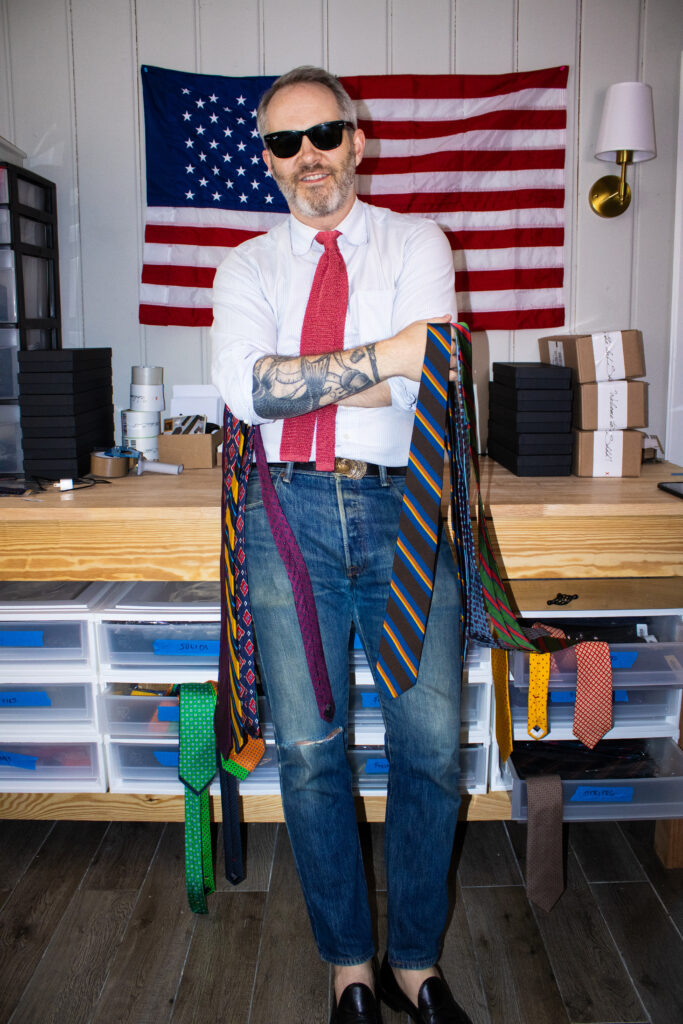
Green has thought more about ties than most people ever will. As the founder and owner of Secret Society Neckwear, that’s not surprising. Still, the Latin catches me off guard. I’ve just asked him about the value of wearing a tie in a world gone casual, and I expect his conclusions to mirror the answers I’ve landed on in my own “dressing up as an adult” journey.
For me, quality clothing is essentially manufactured confidence. It lets me give off the air that I know what I’m doing, which for a twenty-something young professional who most definitely does not know what she’s doing is, frankly, essential. Green mentions effects like this—decorum, self-respect, opening doors that might otherwise be harder to crack.
But the core of his philosophy is much more outward-focused than a self-improvement model. Instead, Green emphasizes the collective good that dressing up could bring, especially in our fragmented social sphere.
The Case for the Comeback Tie
(Secret Society/Contributed)
“The priest who married my wife and me actually worked for me at another men’s store,” Green explains. “He was a full-time priest, but also a full-time clothing guy. He always talked about Augustine’s ‘incurvatus in se,’ and that stuck with me in regards to clothing… As the world got more connected via social media, we became less connected to people. We got a little more selfish.”
One result, he says, is that people stopped thinking about how to put themselves together for those around them.
More Than a Style Choice
Green has been an avid tie guy for years. He wasn’t raised that way—he describes his family’s attitude toward clothing as “utilitarian.” He has always been interested in clothes, but college opens his eyes to the world of luxury lines.
He starts with bowties—he initially likes their uniqueness—before shifting to ties. Now, his personal collection boasts more than 100. He wears one to almost everything, the most notable exception being time with his kids (peanut butter hands and silk do not mix, apparently).
He likes ties because, compared to other luxury menswear, they’re relatively egalitarian. The price point for a quality tie is much more attainable—and versatile—than Goodyear-welted leather Oxfords or sterling-silver and mother-of-pearl cufflinks.
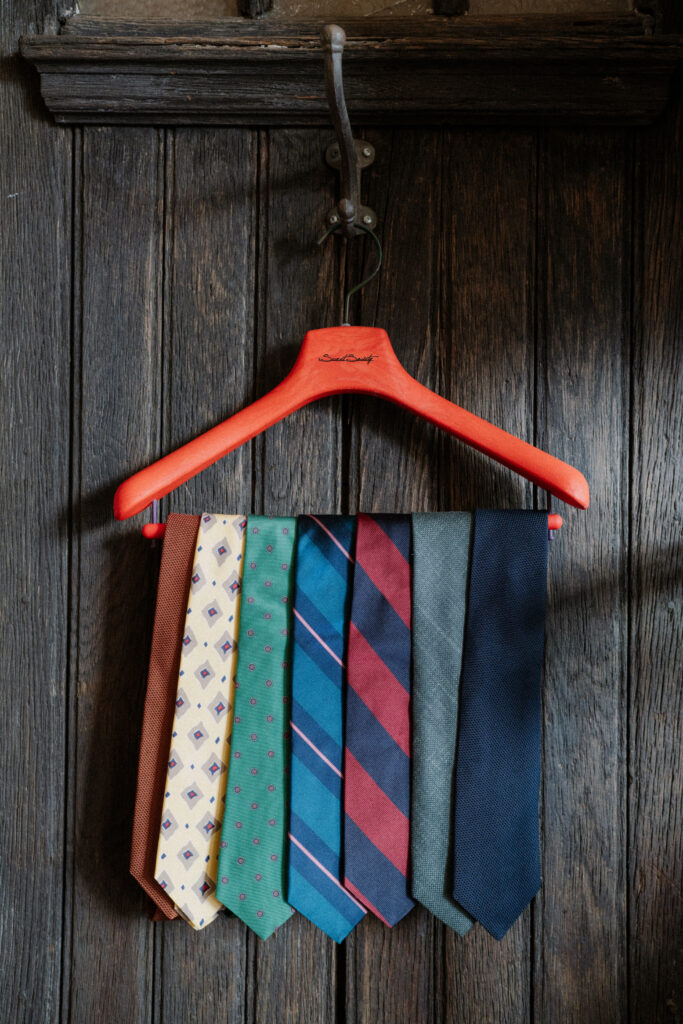
Unlike other menswear items, ties don’t have a true function. They’re purely for fun, which means they can do a lot to showcase someone’s personality. Ties are also a little more off the beaten path than they used to be, which is where the “Secret Society” name comes from.
“You feel a little like you’re in a secret society when you wear one,” he says.
The Secret Society of Tie Wearers
(Secret Society/Contributed)
Green admits he has a romantic view of ties, but he doesn’t let that stop him from doubling down.
“I really like the idea that you dress for others,” he says. “I put on a tie, I put on a coat—hopefully that tells someone, ‘You’re important. You matter to my day.’”
I hadn’t really considered dressing up as a social good before talking with Green. But afterward, I start to wonder: what if we saw our clothing as a choice with collective consequences?
Would we be more inclined to avoid fast fashion? Would we prioritize items crafted locally? Would we want closets filled with pieces that reflect something about our relationships with one another—both local and global?
Green never goes quite that far in our conversation, but his business model reflects the idea. His ties are made in America wherever possible, and his long-term goal is to produce them entirely in-house.
Dressing Like It Matters
Green is kind enough to gift me a tie of my choice. Because he seems particularly excited about his knit offerings, I choose one of those.
(He recommends knit ties in general, but especially for dates. “It’s the most versatile. It transcends genre.” He also promises that I will receive no fewer than three compliments on it during its first outing.)
For a man who believes in first impressions, he doesn’t disappoint. The matte-black box it comes in has a satisfying weight. Inside are a set of matches, a postcard, a handwritten note with an embossed header—and, of course, the tie. As a stationery nerd, I find the embossed detail deeply endearing.

(Secret Society/Contributed)
The tie is heavier than I expect, but when my husband tries it on he says it feels “surprisingly comfortable.” My dad runs his hand over the careful weave of the silk and immediately recognizes that it’s handmade—growing up, he wore a tie every day, so he would know.
My husband won’t wear it to class or work—“peanut butter hands” aren’t just a kid problem, though in his case it’s more a carbon-fiber issue—but we’re excited to see if we can get those three compliments the next time we go out on a date. The oxblood red is versatile and evenly dyed, and I could easily see him wearing it to a job interview or a big dinner out.
As I write this, I have my own nice clothes coming in: handmade, 100-percent tropical wool pants. They’ll be burgundy, close enough in color to the oxblood of my husband’s new tie.
When I buy them, I see them as an investment in myself—my career, my style, my sense of ethical and pragmatic fashion. They’re the kind of purchase meant to last for years.
But after talking with Green, I realize those values, while they require a sense of personal style, also have an outward-facing component. These pants will work because Green is right: they show respect toward my boss, my coworkers, and the people I interview. They tell them that they matter—that they’re worth dressing up for.
And as I hold the tie and imagine my husband wearing it for me while I wear my new pants for him on some future date, the colors almost matching, I can’t help but smile.
Love this story? Join our newsletter for more stories rooted in Alabama, delivered to your inbox every Friday.