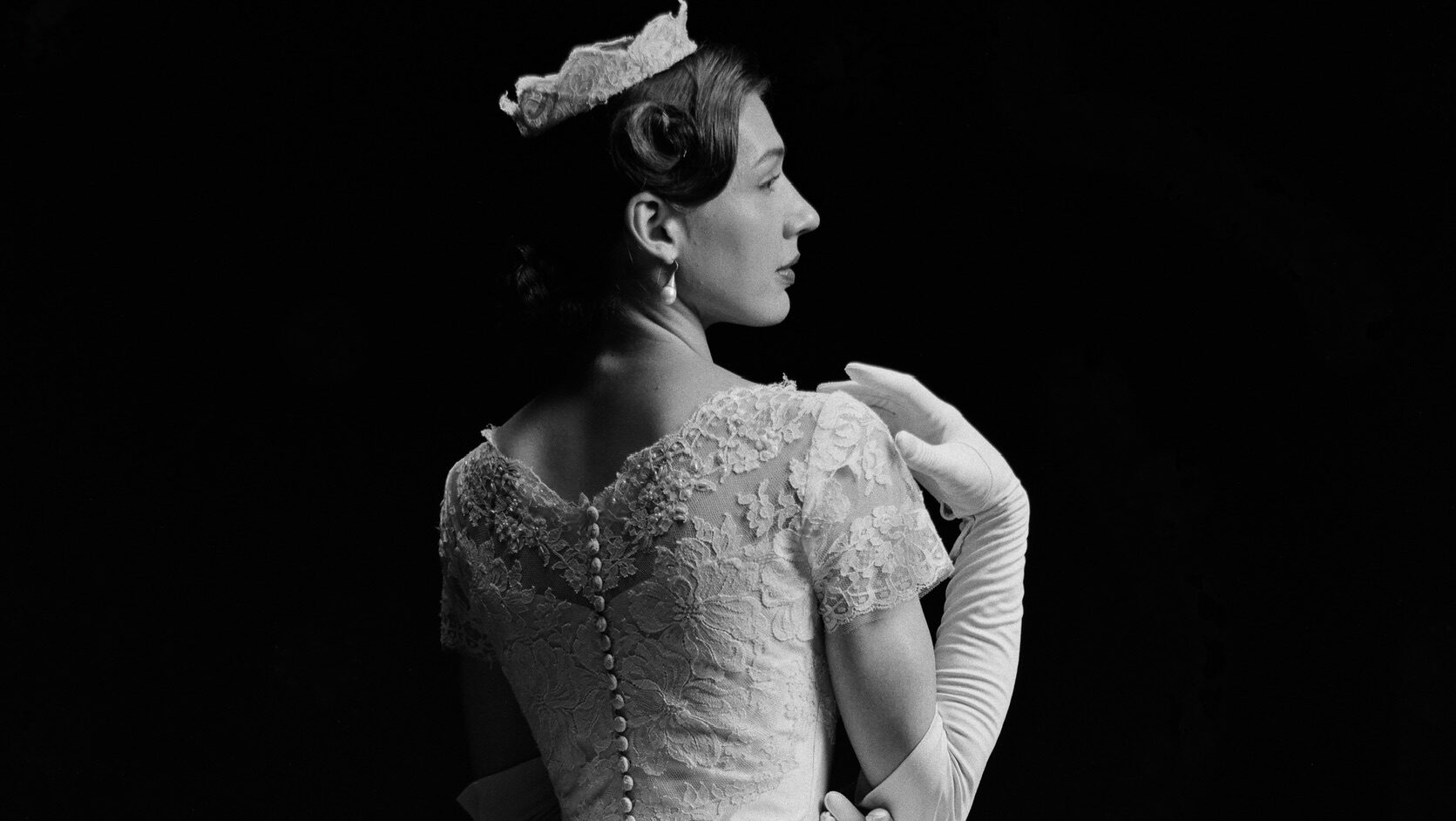
Behind every beautiful dress is the story of the woman who once wore it. The seams were stitched specifically for her body, the lace carefully hand-sewn, the hem brushing against dance floors decades before it found its way into another woman’s hands. Maybe there is still a faint stain from a wedding reception long ago, a small trace of a champagne spill or a night spent twirling around the room.
Inside Estelle Amore Vintage Bridal, founder Estelle Straate and bridal specialist Lauren Smith spend their days surrounded by these memories. Together, they carefully restore vintage gowns, repairing delicate lace, removing stubborn stains, and preserving the craftsmanship that has endured for decades. While signs of age are carefully mended, the history of each dress remains, and is just waiting to be shared with its new owner.
For both Straate and Smith, the work is about much more than preserving old clothing. They strive to honor the women who wore these gowns first while helping a new generation of brides find a dress that feels uniquely theirs. Each gown, they believe, is simply waiting for the right person to walk through the door and continue its story.
A House Full of History

(Blake Calhoun/Contributed
Nestled inside a historic home in Hueytown, just outside of Birmingham, Estelle Amore carries all of the elegance of a bridal boutique while also feeling reminiscent of years gone by. Sunlight pours through the tall windows onto the racks of silk and lace, restored hardwood covers the floors, and the walls seem to hold generations of the home’s history. Much like the gowns displayed inside, the house itself has been restored by Straate and given a new chapter. For her, continuing that story was part of the appeal. The home was once a pageant shop, a place Straate visited as a child accompanying family members in search of dresses. Growing up just minutes away, she was captivated by the house long before she ever imagined owning it.
“I loved old things from a very young age,” Straate said. She believes this is due to the time she spent at her grandmother’s home, where vintage treasures were not tucked away in storage boxes. Her Aunt Tootsie’s prom dress was tacked to the wall on display. Pillbox hats rested atop lampshades. Family keepsakes filled closets and corners, turning ordinary rooms into living collections of the memories that the objects held. “I always enjoyed looking at them,” Straate said. “Even my aunt’s pageant dresses—putting on a big dress as a child, I was like ‘Ooh I like that. I like feeling glamorous.'”
When Estelle learned the home’s longtime owner was preparing to retire, she saw an opportunity to give both the house and its history a new chapter. “I wanted a location that was just as beautiful and meaningful as the dresses themselves,” she said.
From Thrift Stores to the Altar
(Blake Calhoun/Contributed)
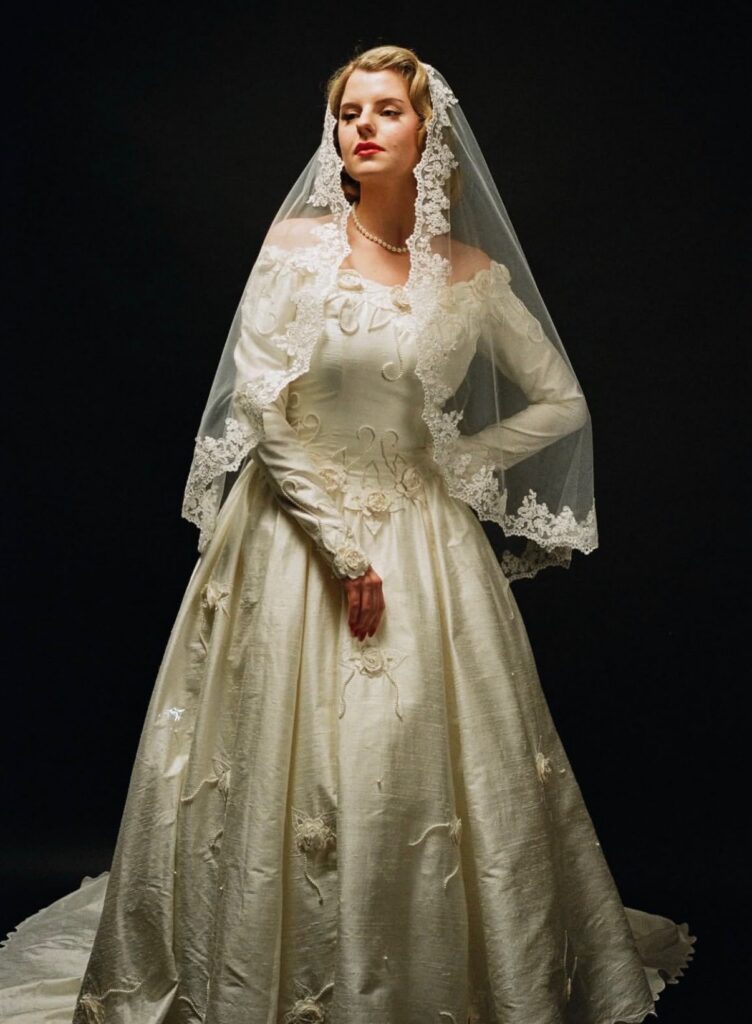
Throughout her life before Estelle Amore, Straate spent her time combing through thrift stores in search of hidden treasures in the form of vintage clothing. She altered pieces herself, wore them to school and quickly discovered that other people were just as drawn to them. “Girls were starting to ask me, ‘Where’d you get that?'” Straate said. “So I started selling to my friends at school.” What started as casual sales soon expanded into vintage markets across Alabama. At the time, Straate was still uncovering the world that she would eventually build her career around. “When I first started my business, I wasn’t aware of how big the vintage community was,” she said. “I kind of thought I was in my own bubble.” Each weekend, she met collectors, sellers, and fellow vintage enthusiasts who shared her appreciation of 20th century styles. At the same time, her own interests were evolving. The sundresses and denim she initially sold gradually gave way to older pieces, until one category began to take center stage. “I’ve always had a love for fine dresses,” Straate said. “That’s kind of been my passion.” As she shared vintage gowns online, she found an audience equally captivated by their unique beauty.
Straate incorporates vintage formal wear into her everyday life, wearing pieces that connect her with some of her favorite decades of fashion. “Every Sunday when I go to church, I wear vintage,” Straate said. “Especially the older ladies there, they’ll tell me stories. I’ll have a flower in my hair and one of them will come up and say, ‘When I was in high school, I would pluck a rose out of the garden every day and put it in my hair.'” These interactions often spark inspiration for Straate and her work. A dress, a hairstyle, or a small detail can spark memories that might otherwise remain tucked away. “These days, so many people are on their phones or not communicating. Wearing vintage really makes people interested and want to come talk,” she explained.
Secrets Hidden in the Seams
(Blake Calhoun/Contributed)
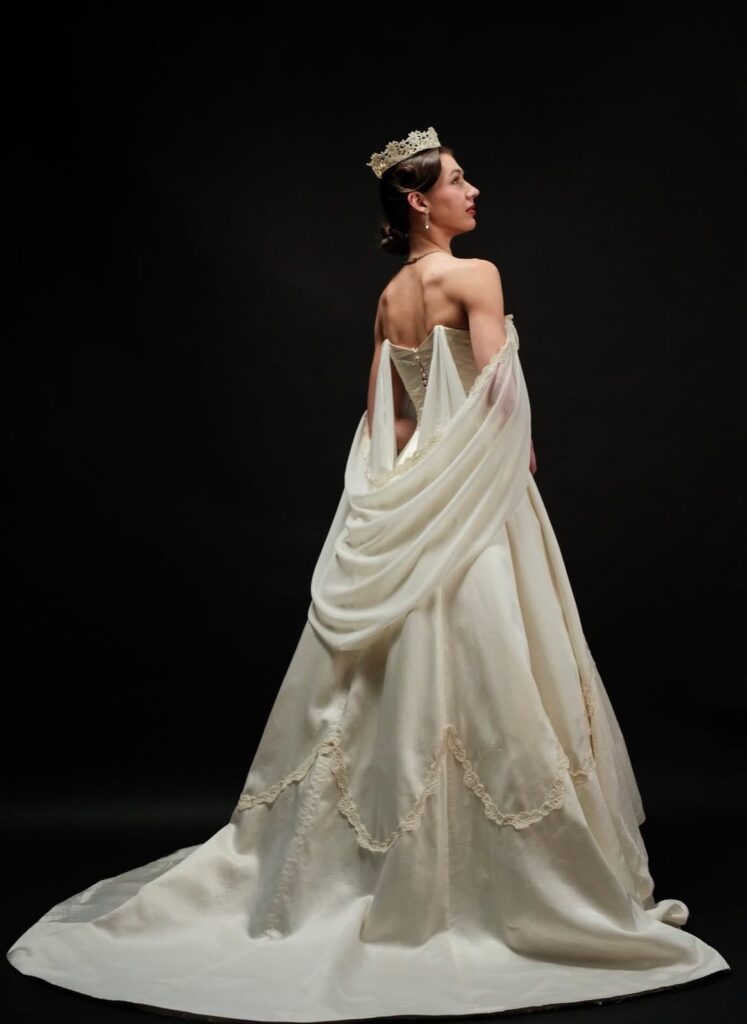
Although Lauren Smith joined Estelle Amore just a month ago, her connection to the work feels like it has been years in the making. Smith spent years studying garment construction and working with vintage clothing in both theater costuming and vintage retail. Along the way, she developed a deep appreciation for the craftsmanship hidden inside older garments—the details most people never see. “I love looking at the inside of dresses,” Smith said. “Seeing the seam allowance, seeing the way the seams are bound and just how everything is very specifically crafted to fit a woman.” The way she described these details proved that Estelle Amore was a natural fit for her. For Smith, the dresses are more than beautiful pieces of fabric. They are works of art created by skilled hands decades ago, each carrying traces of the person who made them and the women who wore them.
Preserving those traces is a careful process. Before a gown ever reaches the racks, it often undergoes extensive cleaning and restoration. Straate is quick to point out that she has not learned alone. Learning that craft has been guided in part by her mentor, Essie, a former bridal shop owner whose decades of experience continue to influence the work done at Estelle Amore. “She’s such a graceful woman,” Straate said. “She’s so intelligent, and she’s just a plethora of knowledge.”
Sometimes this work reveals new stories hidden within the dresses themselves. “We’ll have a dress for years, and then we’ll look again and realize something was hand-sewn,” Straate said. “You just keep finding more secrets.”
Straate sources dresses from across the United States and occasionally from overseas, but her favorite discoveries often come directly from the families who have cared for them for decades. “That’s my goal, to find it from a relative,” Straate said. “Because then you still get the story, you get photos or the exact year it was worn.” Among Straate’s most treasured discoveries is a gown worn by Patricia Huddleston when she represented Alabama at the Miss America pageant in 1956. Covered in hand-sewn sequins and accompanied by an enormous hand-painted silk train, the dress remains one of the most remarkable pieces she has encountered. “When I found that dress, I was crying for days,” Straate said. “I couldn’t believe I was holding it.”
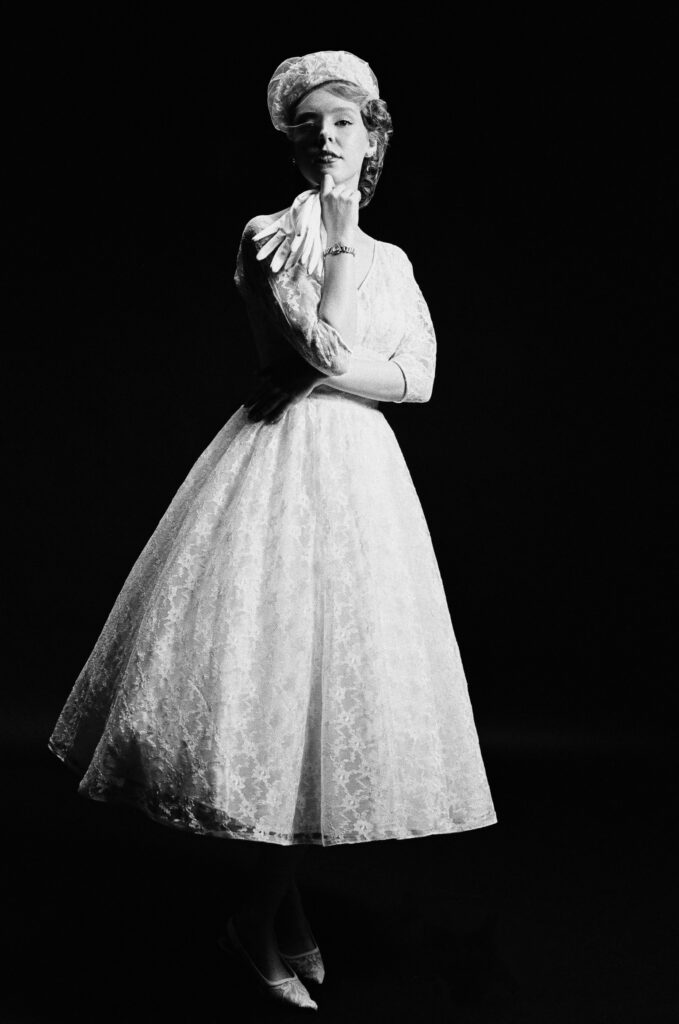
(Blake Calhoun/Contributed)
While uncovering a gown’s history is one of Straate and Smith’s favorite parts of the job, they are equally invested in the stories that come after it leaves their care. They recalled one bride who was immediately drawn to a gown adorned with lily-of-the-valley lace. After trying it on, she revealed that lily of the valley was her birth flower and the subject of a tattoo she carried. In that moment, the dress became more than a beautiful garment. “It became really special to her,” Smith said. “You could see everything just click.”
Moments like that have reinforced Straate’s belief that every gown is waiting for the right person. For Straate and Smith, the true beauty of vintage bridal lies not only in preserving the past, but in allowing it to continue. Neither woman believes those stories end when a gown is packed away. Instead, they see themselves as caretakers, preserving each dress until it finds the person it has been waiting for.
While many of the gowns were created decades ago, Straate wants the beauty and glamour they represent to feel accessible to every woman who walks through the door. Whether a bride dreams of feeling like an Old Hollywood star, a duchess, or simply the most beautiful version of herself, Straate hopes she leaves knowing that kind of elegance is not reserved for someone else or another era. “I have some dresses I’ve had for three years,” Straate said. “But one day, the right girl is going to walk through the door, and it’s all going to click.” And when it does, the dress begins a second life, carrying its history forward while becoming part of another woman’s story.
Love this story? Join our newsletter for more stories rooted in Alabama, delivered to your inbox every Friday.