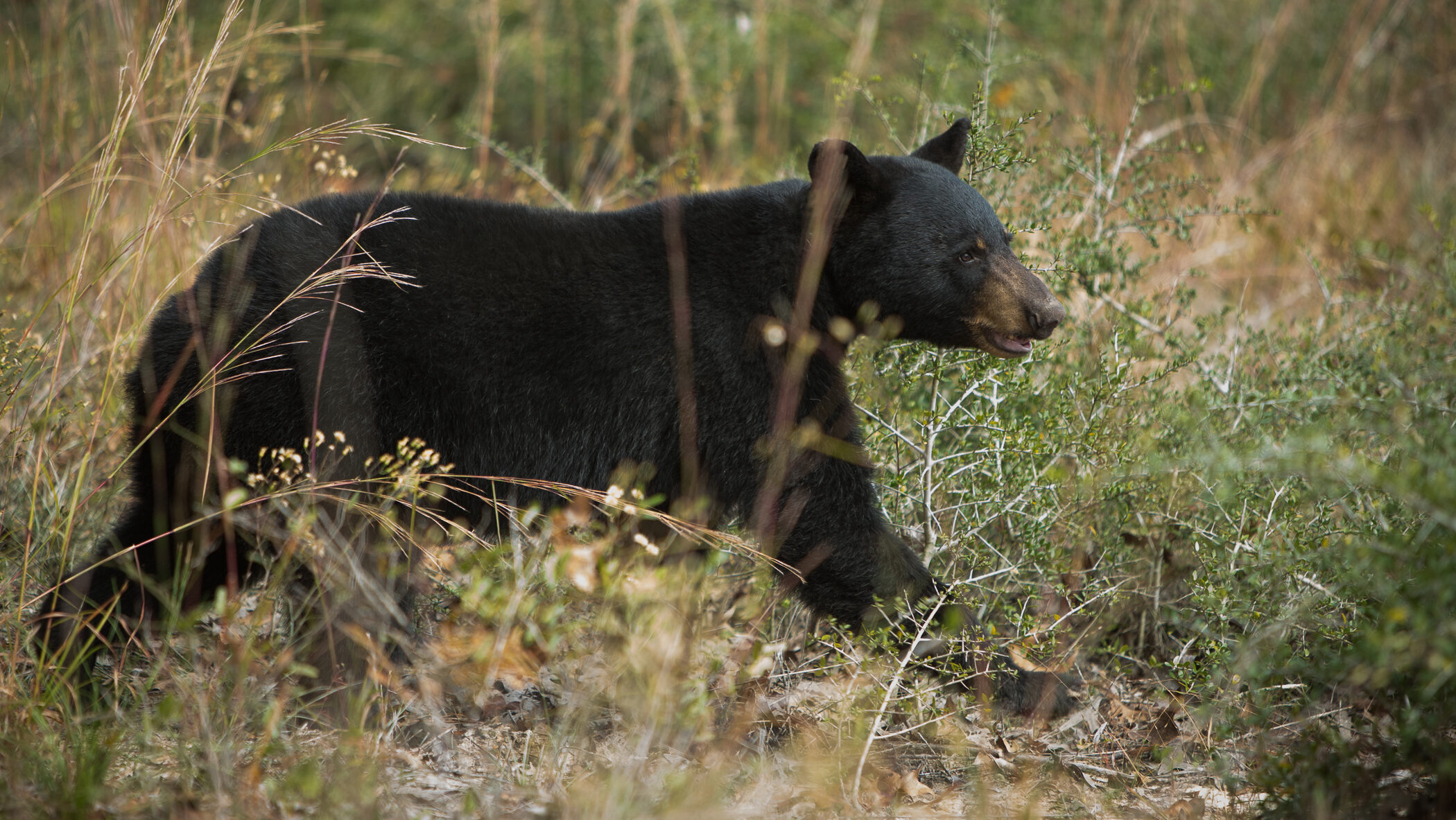
There is something deeply reassuring about knowing that the forests of North Alabama are still wild enough to shelter one of the South’s most magnificent native creatures. Long before highways crossed the ridges and neighborhoods reached into the valleys, black bears wandered these Appalachian foothills, following ancient game trails beneath towering oaks, hickories, and pines. Their presence today is not the beginning of a new story, but the continuation of one that has quietly unfolded for centuries.
A Healthy, Growing Population
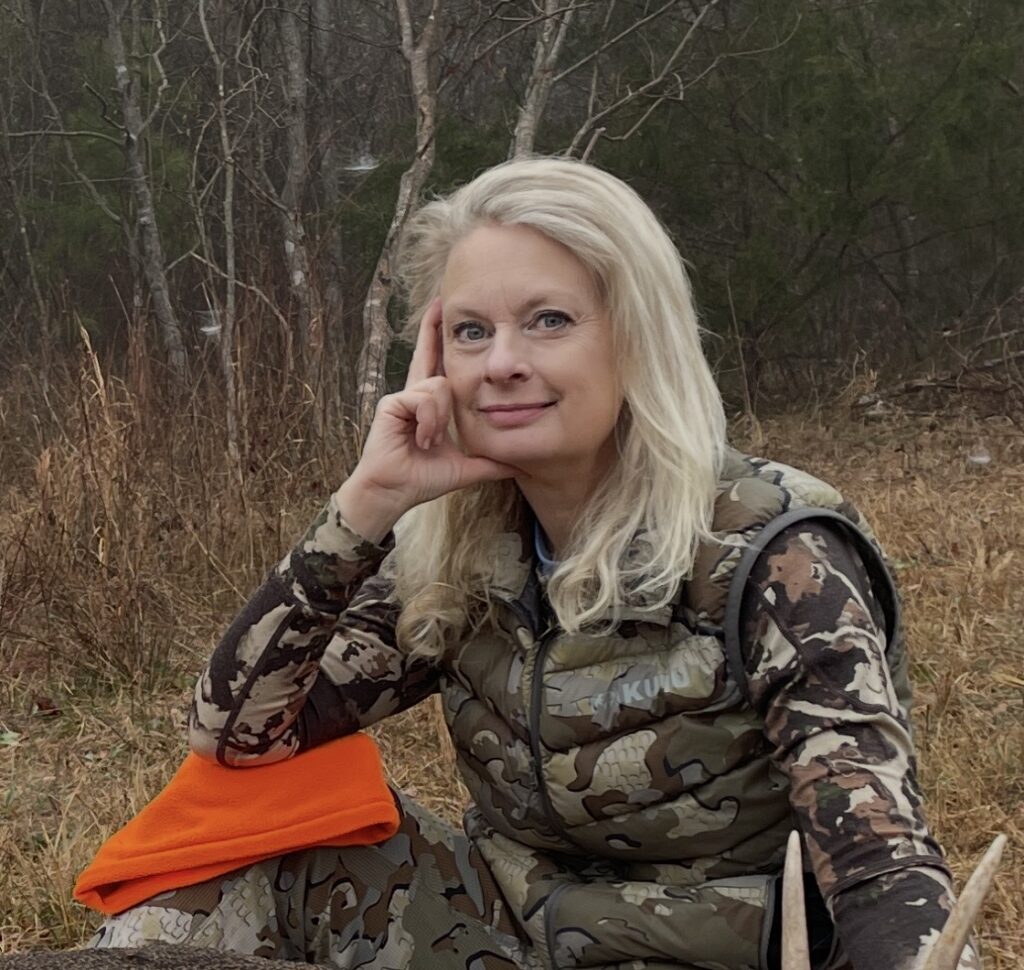
Marianne Gauldin (Alabama Department of Conservation and Natural Resources/Contributed)
Today, those ancient footsteps are becoming a little easier to see. According to Marianne Gauldin, a Montgomery-based wildlife biologist with the Alabama Wildlife and Freshwater Fisheries Division, Alabama’s permanent black bear population is healthy and growing. The state’s native northeastern population continues to increase, while additional bears naturally disperse into Alabama from neighboring Georgia. Even so, the growing number of sightings across the state does not mean resident bear populations are suddenly appearing everywhere. The core population remains centered in Cherokee, Calhoun, Cleburne, DeKalb, and surrounding counties, where large expanses of connected forest continue to provide the habitat bears need to thrive.
Two Subspecies, Two Regions
Outdoor Alabama also reports that black bears have established a small but viable population in the northeastern part of the state, including the Little River Canyon area. The bears there are classified as the American black bear, Ursus americanus americanus, a different subspecies from the Florida bears of southwest Alabama.
Historically, the state’s black bear population was concentrated there, particularly in Mobile, Washington, and Clarke counties. Outdoor Alabama identifies those bears as the Florida subspecies, Ursus americanus floridanus. While their numbers remain low in Alabama, the same subspecies is abundant across many parts of Florida.
On a broader scale, that healthy bear population tells an encouraging story about Alabama’s natural landscape. Black bears require extensive forests, abundant food sources, and relatively undisturbed habitat. When their numbers remain stable and continue to grow, it reflects an ecosystem that is functioning as nature intended. It also means that as young bears disperse from those healthy populations, more Alabamians may occasionally catch a glimpse of one quietly moving through the countryside.
“It’s completely natural this time of year to see black bears anywhere in Alabama,” Gauldin says. “There’s nowhere in Alabama where I would be surprised to hear that a black bear was sighted in the summertime, and that’s because in the late spring, throughout the summer months, and sometimes even early fall, young black bears are on the move. These are black bears that are not old enough to breed, and they’re not old enough to hold an established territory. But they are too old to be with their mother. A black bear’s natural behavior is to disperse away from the mother, and then to wander long distances, sometimes 100 miles or more, and eventually settle on the outskirts of another bear’s established territory until he is old enough to compete for mates.”
The Alabama Cooperative Extension System describes the broader return of the state’s resident population of American black bears as a conservation success story. After decades of decline driven by unregulated hunting and human-caused habitat loss, black bear populations are increasing in Alabama and other states, aided by game laws and wildlife management practices.
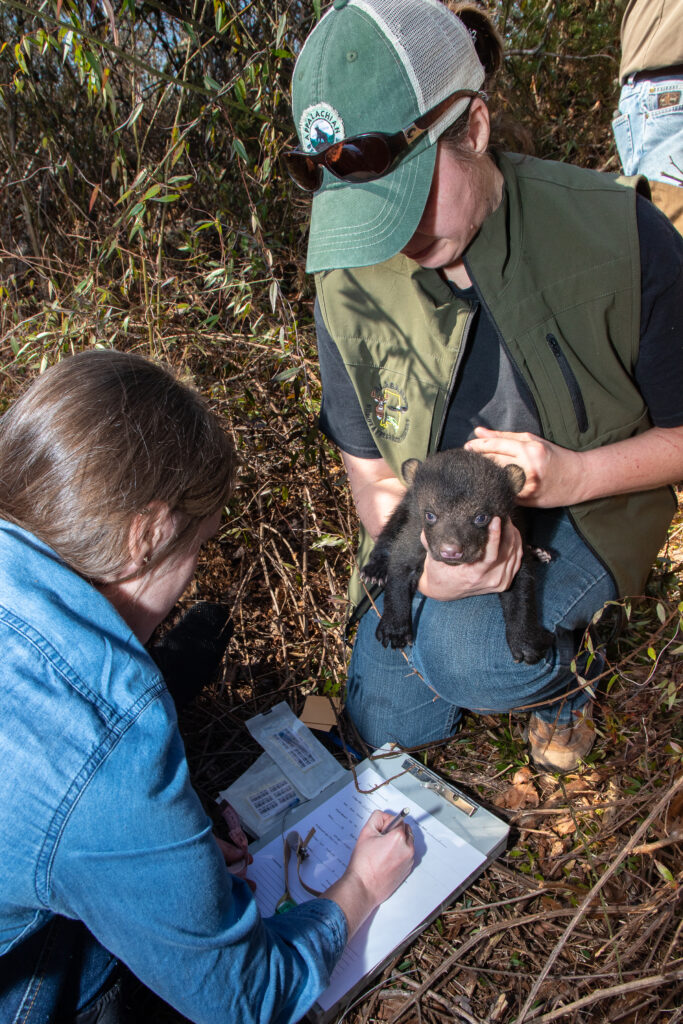
Outdoor Alabama’s research with Auburn University is helping document Alabama’s populations, their density, demographics, and subspecies, while also providing insight into how large carnivores recolonize landscapes.
While that northeastern population is growing, there is no established resident population in central Alabama.
Just Passing Through
(Adobe Stock)
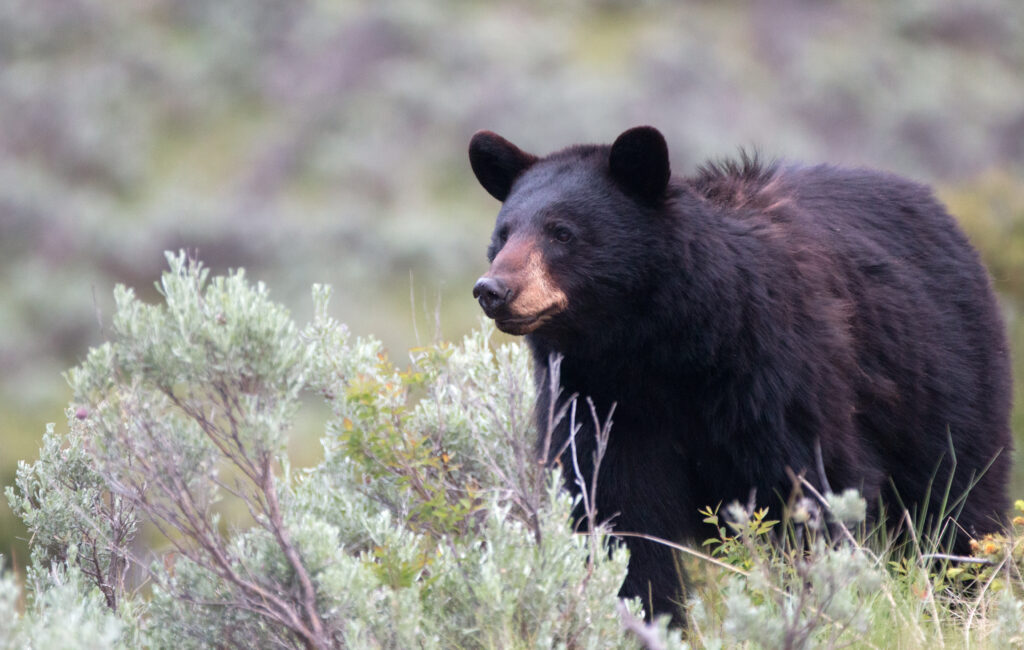
A black bear can make an ordinary Alabama landscape feel entirely different. A parking lot, a neighborhood street, the wooded edge of a Birmingham suburb — places that seem thoroughly familiar suddenly become part of something older and wilder. The bear moves through, people reach for their phones, and then, almost as quickly as it appeared, it is gone.
A juvenile male made headlines and was featured in social media and neighborhood posts in late July and early August. Nicknamed “Shelby” during its movement through North Shelby County, Gauldin says the mammal’s presence was consistent with the behavior wildlife officials expect from dispersing bears.
“This dispersal of young male black bears is a phenomenon that occurs every summer, and it is something that is also not unusual to be documented in the Birmingham area,” Gauldin says. “In fact, the whole Birmingham area is a natural corridor for young bears.”
She has watched the pattern play out before.
“Just since I have been in this position, we’ve had black bears in Centerpoint. We’ve had black bears in Birmingham, in Tarrant, in Irondale, in Leeds, on Grants Mill Road, and that was all prior to this year,” she says. “It’s completely normal. Some of our urban areas, including Birmingham, are situated within a larger landscape of wildlife habitat. Our communities sometimes exist within a much bigger picture, and that is definitely the case when it comes to black bears.”
Nature’s Great Migration
It is one of nature’s great migrations that most people never realize is happening. Young males leave the only home they have ever known and travel incredible distances across mountains, rivers, forests, and even suburban neighborhoods. Their journey is driven by instinct, not by development or habitat loss, and each summer they quietly follow pathways their ancestors have traveled for generations.
“The whole Birmingham area is a natural corridor for young bears dispersing from the well-established northeast population,” Gauldin explains. “Black bears move in from other states as they disperse and wander. This is a yearly occurrence. It’s completely normal for black bears to be on the move this time of year, and some of our urban areas are situated within a much bigger landscape of wildlife habitat, including black bear habitat.”
As quickly as they appear, these travelers continue.
“Typically, black bears get on a semi-westward trajectory,” Gauldin says. “They sometimes cover long distances and then circle back to settle on the outskirts of another bear’s territory until they’re old enough to compete with that bear for breeding rights.”
That distinction is important because these wandering bears are not establishing permanent populations wherever they are seen.
“At this time, there are no permanent resident bears in the Birmingham area,” Gauldin explains. “What there is annually are transient bears that are simply crossing through the area.”
Their movement is not a sign that development is forcing wildlife from shrinking forests. In fact, the opposite is true.
“The bears that we’re seeing are not being pushed out of their natural areas by development,” Gauldin says. “They’re participating in natural dispersal of juvenile males that is expected for this species.”
Hidden Travelers of the Night
(Billy Pope/Contributed)
Perhaps the most remarkable part of the story is how often these quiet travelers pass completely unnoticed. Just as people can spend an entire day swimming in the ocean, often surrounded by sharks they never see and that have no interest in them, Alabama residents frequently go about their daily lives while black bears pass silently through the surrounding landscape. In both cases, the animals are simply following their natural behaviors rather than seeking encounters with people. The bears typically move under cover of darkness, slipping through forests, creek bottoms, and wooded corridors while most of us are asleep.
“Most of the time these black bears are moving in the evenings,” Gauldin explains. “As hot as it is, they’re probably resting somewhere in the shade during the day, and they’ll move at night and in the evening. The times when we’re most active are usually when the bears aren’t moving. There are black bears that move through the area that you never even hear, see, or get photographs of.”
When asked how long bears have been making these quiet nighttime journeys through Alabama, her answer is beautifully simple.
“For centuries,” Gauldin says.
That single phrase changes the entire perspective. Today’s bear sightings are not evidence of something unusual. They are simply moments when our busy human schedules briefly intersect with a much older natural world that has always been around us.
Foragers, Not Hunters
Despite their size and powerful appearance, Alabama’s black bears spend surprisingly little time hunting. Instead, they are among the forest’s great foragers, living largely on nature’s seasonal bounty. Throughout spring, summer, and fall, they feast on berries, acorns, hickory nuts, soft mast, fruits, grasses, insects, and other native vegetation. Their diet shifts with the seasons, following whatever foods the forest provides in abundance.
“Black bears in Alabama and in this part of the country are primarily vegetarian,” Gauldin explains. “Ninety percent or more of their diet is plants. However, they are what we call chance-upon predators. Black bears in Alabama aren’t known for being active hunters. If they chance upon something like a nest of eggs on the ground or a fawn lying on the ground, they’re going to eat it. But they’re not considered significant predators of deer in our state because they are not actively hunting deer.”
That opportunistic lifestyle helps bears play an important role in the forest ecosystem. As they consume fruits and berries, they disperse seeds across great distances, helping regenerate woodlands. By feeding on insects, nuts, and seasonal vegetation, they contribute to the intricate balance that has sustained Southern forests for thousands of years.
What to Do If You See a Bear
Equally reassuring is their natural desire to avoid people whenever possible.
“If you see a black bear, make sure the black bear sees you,” Gauldin says. “Do not approach the bear. Make yourself big, wave your arms, holler, clap your hands, and make sure the bear recognizes you as a human. A black bear that’s behaving normally will turn tail and move away from you. Allow the bear an open escape route. Don’t corner a black bear, and don’t run from one.”
She also emphasizes that dogs deserve special attention.
“It is very important that you never insert yourself between a dog and a black bear,” Gauldin explains. “A dog can rile a black bear up, especially if it is pursuing the bear. Keep dogs leashed anywhere bears may be present, and never put yourself between a bear and a dog.”
Keeping Bears Wild
(Cheaha State Park/Facebook)
Perhaps the greatest responsibility belongs not to the bears, but to us.
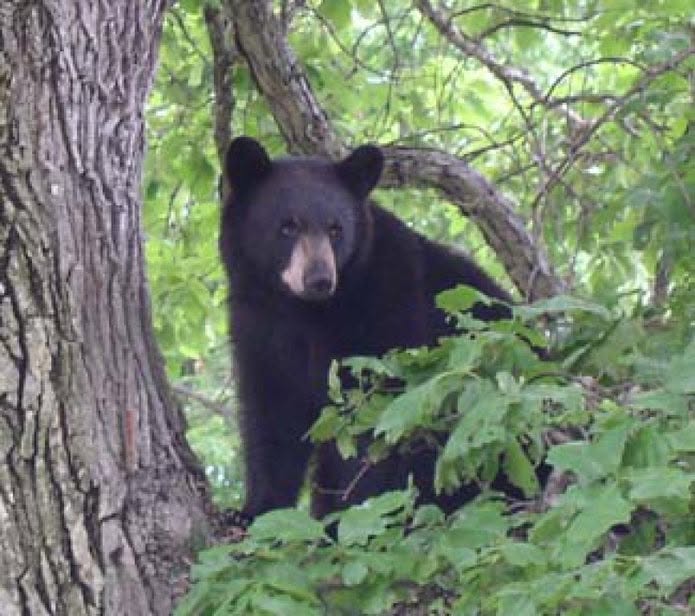
“Black bears that are behaving normally will move away from anything associated with humans,” Gauldin says. “The way that this gets skewed is when black bears learn to associate humans with food. We have the responsibility to keep black bears wild by not unintentionally feeding them. Pet food left outside, bird feeders, deer feeders, and garbage can all attract bears. If you feed a bear, it’s going to linger. If you want a bear to continue on its natural dispersal route, removing attractants is one way we can help keep bears wild.”
If a bear wanders through the neighborhood, Gauldin says that, in most cases, there is no need to call anyone.
“If you see a black bear that’s behaving normally, we don’t need to know about that,” she explains.
Bear sightings are still useful to wildlife biologists, however, because reports contribute to a database that helps the state understand habitat use and travel routes. Residents can submit sightings through Outdoor Alabama.
“If you report it, it doesn’t mean that we’re going to move the bear or come get the bear,” Gauldin says. “There’s no reason why these bears need to be relocated. They’re exactly what they need to be. They’re doing exactly what they should be naturally doing.”
If a bear is behaving abnormally, trapped, or otherwise in an extremely unsafe situation, Gauldin advises calling Alabama Wildlife and Freshwater Fisheries’ 24-hour dispatch line at 1-800-272-4263.
Black bears are fully protected in Alabama. There is no open hunting season, no tags are issued, and illegally killing one can result in fines approaching $10,000 or more, depending on the circumstances.
A Testament to Alabama’s Wild Heart
As North Alabama’s healthy bear population continues its slow, natural growth westward, occasional sightings will likely become more common. Rather than something to fear, those fleeting encounters are reminders that Alabama still possesses landscapes wild enough to sustain one of its most iconic native mammals.
Ultimately, black bears offer Alabama something far greater than exciting headlines. They remind us that beneath the canopy of our oldest forests, ancient instincts still endure. Long after sunset, while most of us sleep, these quiet wanderers continue along pathways worn by generations before them — a testament to Alabama’s wild heart, still very much alive. Somewhere, after the skies have grown dark and the neighborhoods have gone quiet, a juvenile male black bear may be following ancient corridors.
For homeowners living in bear country, BearWise offers practical guidance on securing garbage, removing food attractants, and peacefully sharing the landscape with bears.
Never miss a story. Subscribe to our newsletter and get the best of Alabama delivered to your inbox every Friday.