Ask any Alabamian about Golden Eagle syrup, and they’ve likely got a story behind it. Mine was from childhood—in my great grandma’s kitchen, on a chicken farm in rural Alabama. Long before I knew anything about regional food traditions or iconic Alabama brands, I knew the taste of a warm biscuit with butter and Golden Eagle syrup.
We’d make the drive from Birmingham and arrive just in time for breakfast. My great-grandmother, whom we lovingly called Ma Cash, was usually elbow-deep in White Lily flour. We’d push open the screen door to find her standing over her wooden biscuit bowl, carefully turning out each ball of dough onto a baking sheet like little powdered jewels. She’d hug us tight, and then my sister and I would wait impatiently as the biscuits baked.
There is still nothing in this world that tastes better than those mornings at Ma Cash’s house. Once the biscuits came out of the oven, we’d crowd around a rickety card table with plastic-covered chairs for a breakfast that was deceptively simple: coffee, a few slices of country ham, and soft, pillowy biscuits served with butter and Golden Eagle syrup. Our family even had our own name for the butter and Golden Eagle mixture: soppin’ syrup.
For years, I never gave much thought to the syrup itself. It simply belonged on the table, as familiar as the biscuit bowl, the White Lily flour and Ma Cash’s hand-sewn apron. It wasn’t until much later that I learned the golden syrup had its own Alabama story—one that began nearly a century ago in a small town about 80 miles west of where we sat eating breakfast.
A recipe that found its way onto Southern tables
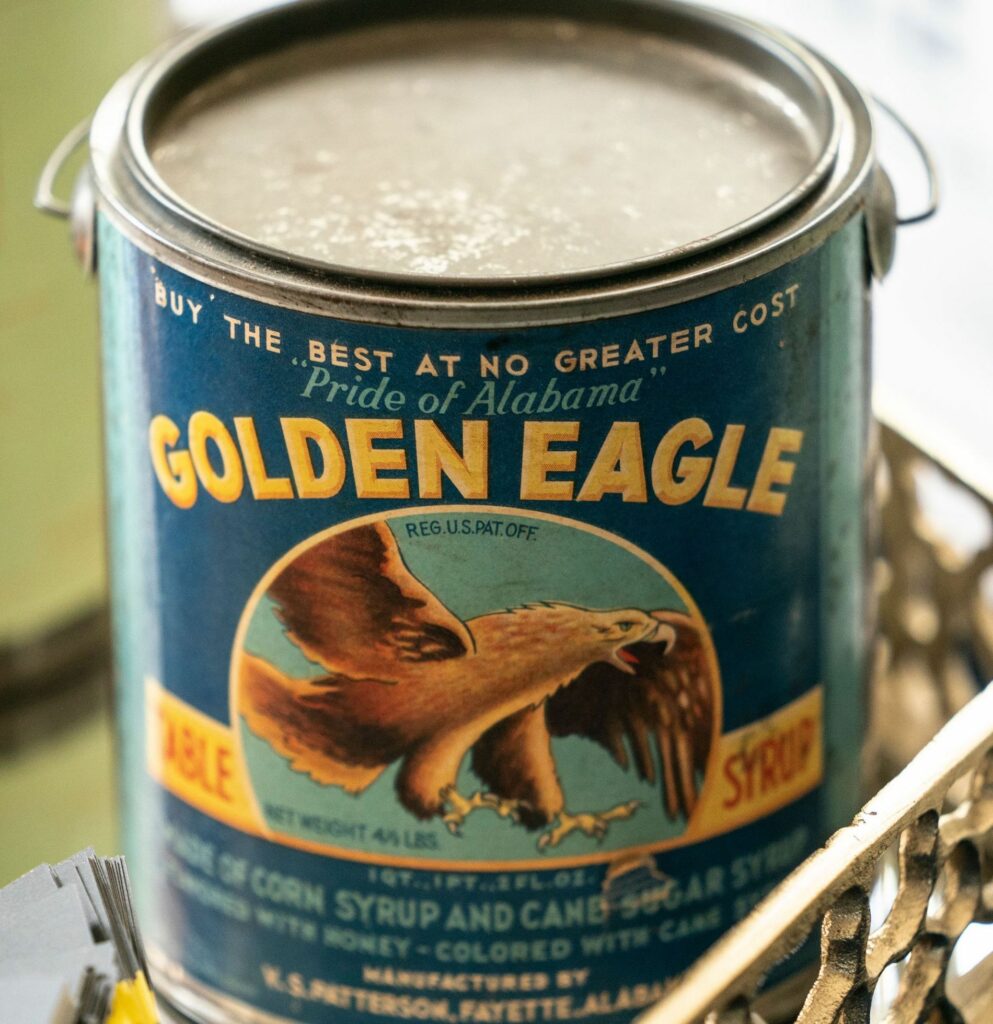
(Golden Eagle Syrup/Contributed)
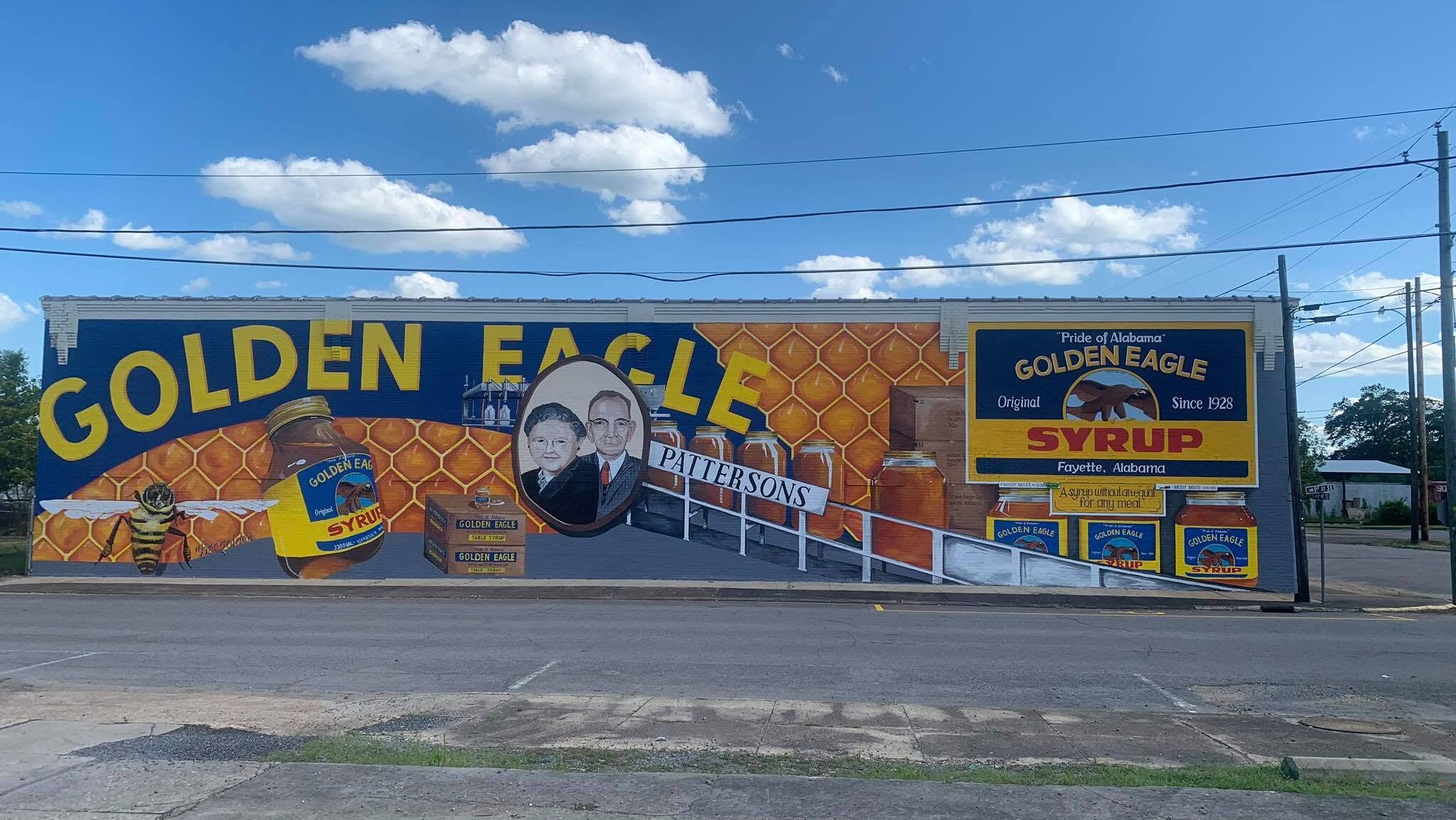
Golden Eagle Syrup was first created in 1928 by Victor and Lucy Patterson, who began producing it in a small wood-frame building behind their home in Fayette, Alabama. At a time when many Southern families relied on cane syrup or molasses, the Pattersons developed something different: a proprietary blend of corn syrup, cane sugar syrup, cane molasses and pure honey.
The recipe quickly found a following. As demand grew, the family outgrew its backyard operation and, in 1944, moved production into a factory in downtown Fayette. More than 80 years later, that same building remains home to Golden Eagle.
The business stayed in the Patterson family for decades before passing to its current owners, Temple Bowling and John Blevins, whose families continue to operate the company today with a focus on preserving the traditions established nearly a century ago.
Nearly a century, remarkably unchanged
Food companies often reinvent themselves to keep up with changing tastes, but much of what made Golden Eagle recognizable in 1928 remains the same today.
The syrup is still made using the original recipe. The factory still stands in downtown Fayette. And each jar is still hand-tightened before leaving the building—a small detail that has become part of the company’s commitment to doing things the way they always have.
That sense of continuity has made Golden Eagle more than just another pantry staple. For generations of Alabamians, it has become woven into family traditions, finding its way onto biscuits before church, and stacks of pancakes on Saturday mornings. Every Thanksgiving at my house, it’s a homemade pecan pie. It never lasts long.
Perhaps that’s why Golden Eagle has endured while so many regional food brands have faded away. For nearly a century, it has occupied kitchen tables across Alabama in an unassuming way, and yet it’s become a staple in so many family memories.
And for me, it will always be Ma Cash’s kitchen: that little card table piled high with biscuits, soppin’ syrup, our family stories in the making.