Alabama Sawyer is a Birmingham-based design and manufacturing studio founded and run by Cliff and Leigh Spencer that creates modern, environmentally sustainable furniture from fallen urban trees. Working exclusively with urban timber—trees removed due to storms, development, or natural decline—the company mills and crafts each piece in-house, diverting hundreds of logs from landfills and transforming them into award-winning furniture, architectural elements, and objects for homes and businesses. Because Alabama Sawyer uses urban timber rather than farmed wood, every piece features distinctive variations in grain and color, reflecting both the life of the tree and the place it grew.
In the newest episode of Afield, host Christiana Roussel visits Alabama Sawyer’s Birmingham workshop to tour the studio and sit down with the founders to talk about the origins of their work, their commitment to urban timber, and how a shared respect for material and place has shaped the company’s evolution. Surrounded by stacks of drying slabs and freshly milled logs, Cliff Spencer gestures around the space and sums it up simply: “We really have a wood problem.” It’s a problem, he explains, that Alabama Sawyer was built to solve.
From Working with Hands to Working with Wood

(Alabama Sawyer/Contributed)
For Cliff, the path to furniture making began long before Alabama Sawyer existed. A Birmingham native, he grew up working outdoors, cutting firewood and building alongside his father. After college, he moved to New York City with aspirations in theater, building sets and taking any job he could find in the entertainment world. To pay the bills, he began working in woodshops—experience that eventually redirected his career entirely.
Despite living in major cities, Cliff’s connection to the outdoors remained constant. “My contact with the outdoors and with trees has always been the through line,” he says. His favorite part of the process is still the beginning—sourcing logs, determining how they should be milled, and seeing the wood for the first time when it’s freshly cut. “The wood is never as beautiful as when it comes straight from the log,” he adds, explaining that every step afterward is an effort to return to that natural state.
Urban Timber and the Craft of Stewardship
That approach is central to Alabama Sawyer’s use of urban timber. When trees come down in cities, Cliff explains, they are typically treated as waste—cut, hauled away, and left to rot in landfills. Instead, Alabama Sawyer works with tree services and arborists to salvage those trees and put them to use. Cliff often consults before a tree is removed, measuring the trunk and estimating its potential yield so homeowners and clients can understand what their tree might become.
Once delivered, the logs are milled as quickly as possible, then carefully stacked and air-dried for months before being kiln-dried. Only after moisture levels are properly reduced does the material move into milling and fabrication, allowing the grain, color, and character of each board to emerge.
Building a Design Practice
Leigh Spencer, who grew up in California, brings a complementary perspective to the work, managing the broader strategy of the business. Moving to Birmingham was never part of the original plan, but over time—and especially after the couple had children—the city’s pace, access to the outdoors, and growing design community became central to their decision to stay.
After relocating, Cliff and Leigh found an early creative home at Make Birmingham, a shared makerspace that helped anchor them in the city’s creative ecosystem. Working alongside photographers, architects, ceramicists, and designers provided both collaboration and momentum, relationships that continue to shape Alabama Sawyer today.
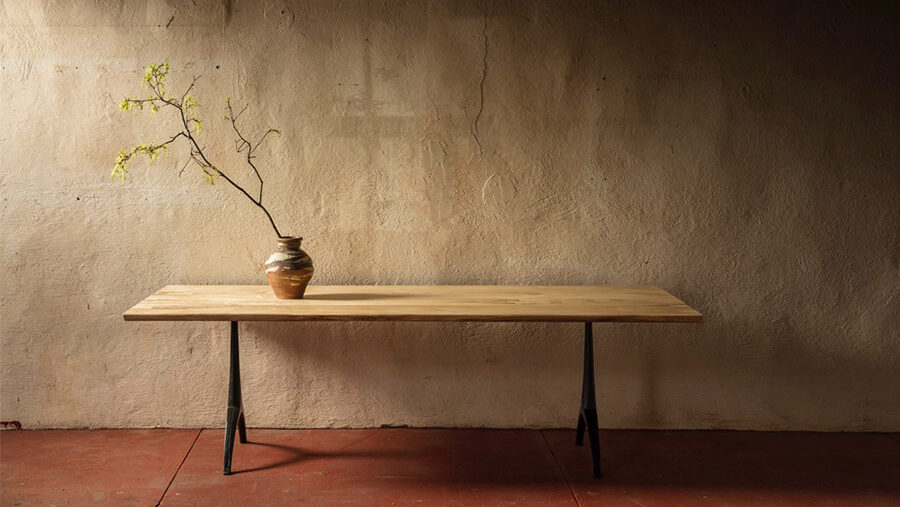
Throughout the episode, Cliff and Leigh emphasize that Alabama Sawyer’s work is driven by material first. The studio produces a full line of dining, coffee, console, and side tables, as well as nationally recognized designs like the Rustic Beam Bench and the Noaway Countertop Compost Bin, while continuing to experiment with custom projects and unexpected materials.
In this episode of Afield, listeners will hear how Alabama Sawyer balances craft and business, why working with urban timber matters, and how a commitment to place continues to shape the company’s work.
You can listen to the full episode of Afield here.