They say that travel shapes you in profound ways, layering experience upon experience until it begins to influence how you think, work, and create. For Chef Luke Joseph, that global perspective has become foundational in shaping his culinary identity.
Now leading the kitchen at Current Charcoal Grill, Joseph brings that perspective to one of Birmingham’s most ambitious dining rooms—drawn in part by a city that felt, in many ways, reminiscent of home. His résumé includes time in acclaimed kitchens, and most recently, a Michelin recommendation for Current in the inaugural American South Guide, where precision, creativity, and curiosity are held in equal measure.
A City That Felt Like Home
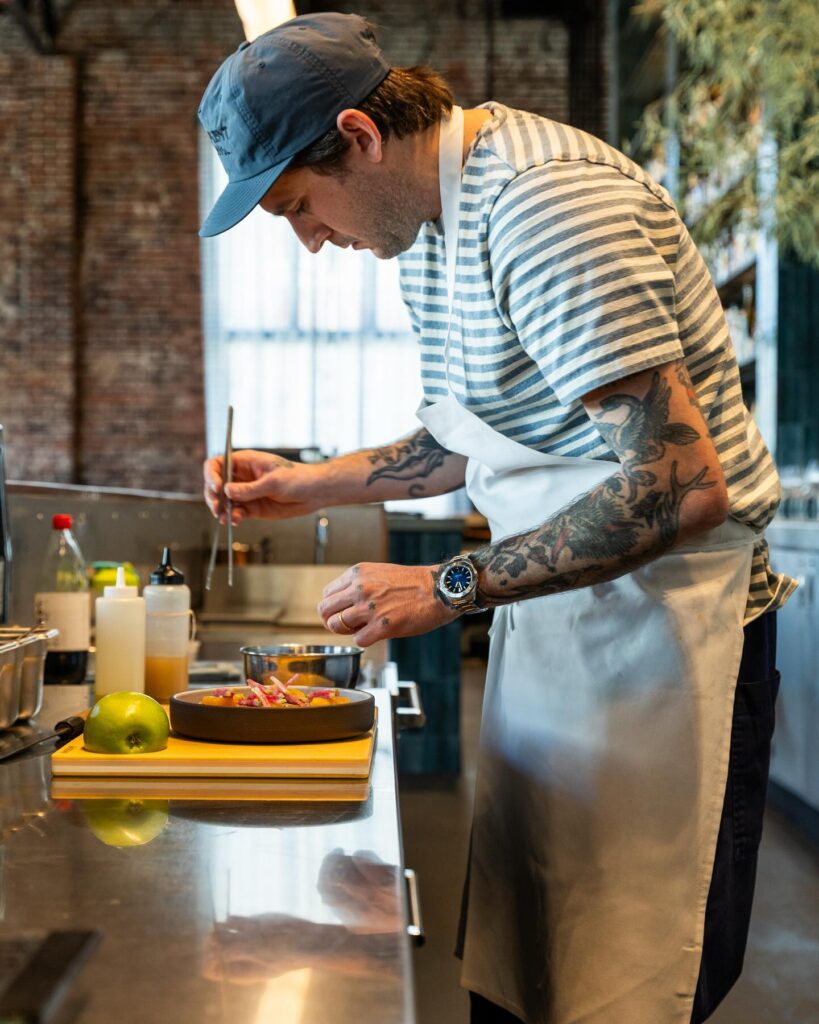
(Caleb Chancey/Contributed)
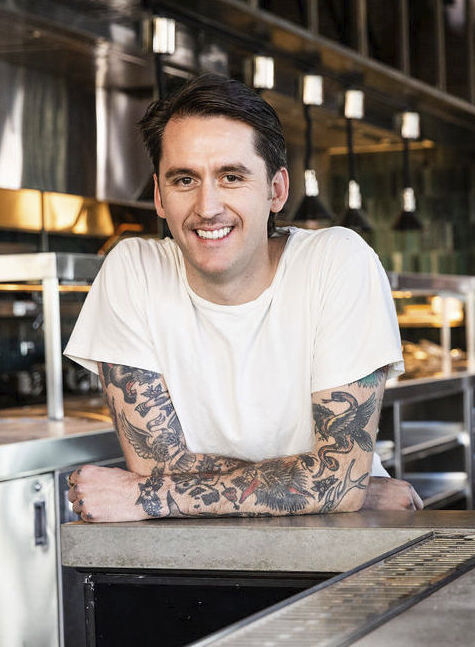
From New Zealand to Japan, Joseph’s life as a chef has taken him all over the world—yet Birmingham’s food scene is where he and his family landed.
“My wife is from Birmingham—we were both living in Australia at the time, and I was working in a pretty intense restaurant environment,” he says. “Birmingham reminded me a lot of where I grew up. It’s slower here. People take time to go on walks when the weather’s nice. I think I had lost sight of that for a while. So we packed everything up, moved over with our cat, and started fresh.”
Before that move, Joseph’s path had been anything but linear. He briefly worked in biomedical engineering before realizing it wasn’t where he was meant to be. Cooking, which had always been part of his life, offered something more rewarding—and something he could trace back to his childhood.
“I actually went to school for biomedical engineering and got a job in that field, but it just wasn’t what I thought it would be,” he says. “My family has always loved food—we grew up around gardens and fresh produce—and I think, like most cooks, I just couldn’t sit still.”
The Education of Repetition
What followed was a somewhat informal but rigorous education, built not in classrooms but in kitchens, where repetition and discipline formed the foundation of his craft. He spent months on the most basic tasks, working long stretches in high-pressure environments, while absorbing the philosophies of chefs who valued both precision and people.
“I didn’t have a lot of classical training, so I learned by doing—peeling onions for six months, working long stretches in really demanding kitchens,” he says. “But I was lucky to work for some incredible chefs who invested in their teams. That showed me you can have high standards and still create an environment where people grow.”
(Caleb Chancey/Contributed)
That balance, between rigor and hospitality, would come to define his approach, particularly as his travels expanded his understanding of what food could be. Time spent in Japan left a lasting impression, not because of any single dish, but because of the philosophy that underpinned it.
“In Japan, what really stayed with me was the simplicity,” he says. “You’d have these small setups—just a couple of people, incredible produce, cooking over charcoal right in front of you. It teaches you restraint. If the ingredient is good and the technique is right, you don’t need to do much else.”
Building Current
That idea—of doing less, but doing it better—now runs through the menu at Current, the Birmingham restaurant Joseph co-created with Chef Adam Evans. The two connected after Joseph’s wife encouraged him to visit Automatic Seafood, Evans’ restaurant, and what began as a conversation quickly evolved into a shared vision.
“My wife actually pushed me to go try Automatic Seafood, and that’s how I got connected with Adam,” Joseph says. “I sent him my resume, and we kind of clicked right away—we had similar backgrounds and ways of thinking about food. I started by helping develop a brunch program, and over time we began talking about opening something together. We kept coming back to the kind of food we actually like to eat, and a lot of that had Asian influence.”
At Current, those influences are not presented as a departure from Southern food, but as an extension of it—an invitation for diners to engage with something both familiar and new. The approach is deliberate, built on the belief that curiosity cannot be forced—but it can be gently encouraged.
Inviting Curiosity to the Table
(Current/Facebook)
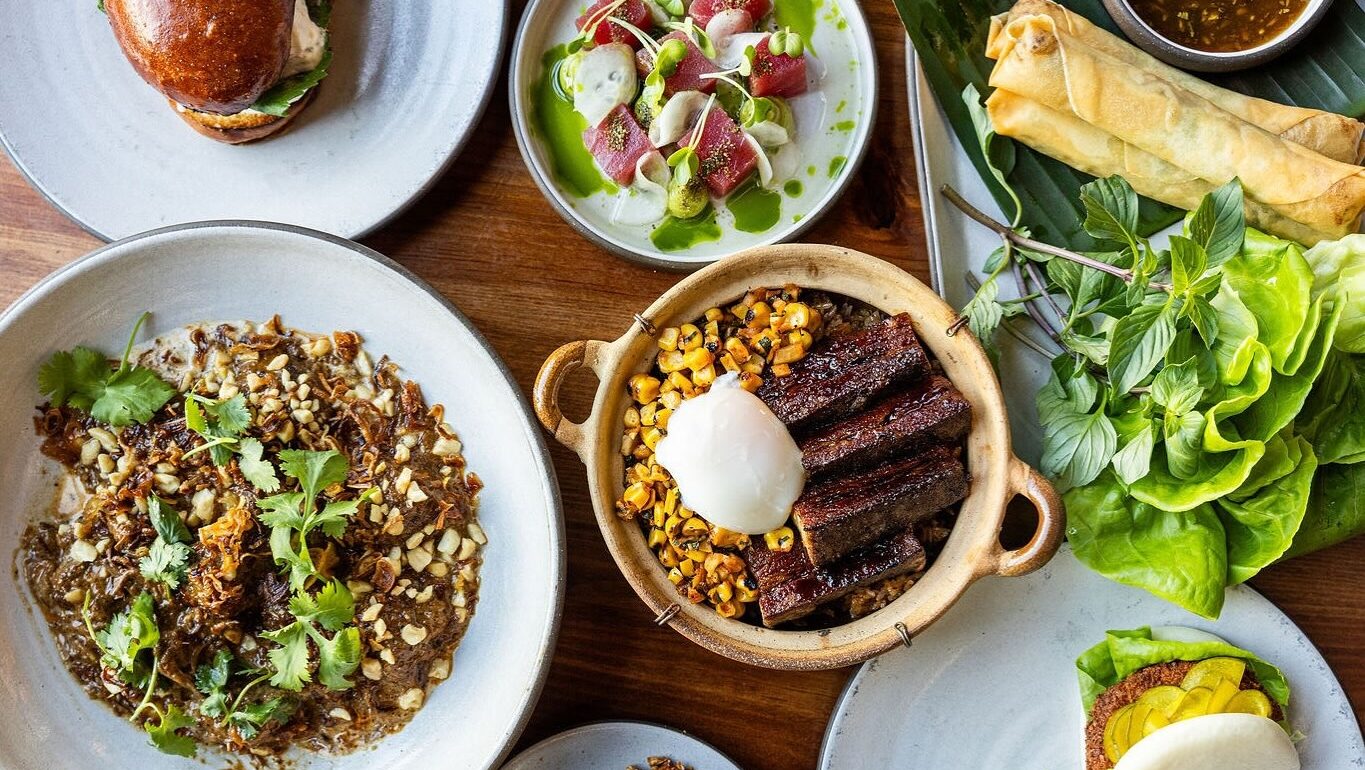
“We’re always trying to introduce people to new ingredients, but in a way that doesn’t feel intimidating,” he says. “It might be something familiar with a small shift—like a crudo with kombu-cured fish, or using a different style of soy sauce. That’s usually where the curiosity starts.”
That sense of curiosity is central to the experience, and it often begins with conversation. Whether it’s explaining the difference between types of soy sauce or walking a guest through the nuances of a dish, Joseph sees the menu not just as a list of offerings, but as a form of education.
“I think a menu can absolutely be a way to educate people,” he says. “Not in a heavy-handed way, but just by exposing them to different ingredients, different techniques, different ways of thinking about food.”
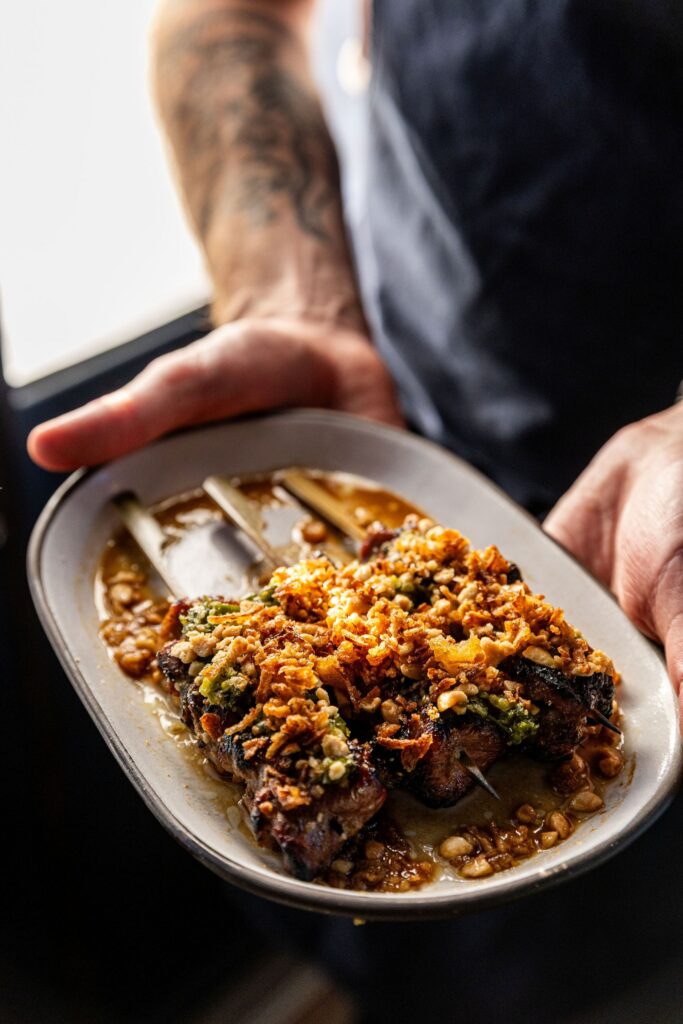
Even techniques that might seem unfamiliar—like cooking over binchotan charcoal—become entry points rather than barriers, moments where explanation gives way to understanding.
“The binchotan charcoal burns really clean and hot,” he says. “It doesn’t give off that heavy smoke you’d expect. When fat hits it, it vaporizes and goes back into the food, so you get this really even, clean flavor. It’s a small detail, but it changes everything.”
Of course, not every ingredient lands immediately. Dishes that incorporate fermented shrimp paste or more assertive fish sauces can push diners outside their comfort zones, and Joseph is attentive to those responses, adjusting where necessary without compromising the integrity of the food.
“There have definitely been moments where something felt a little too far outside of what people are used to,” he says. “But we learn from that. It’s about finding that balance where you’re still introducing something new, but people feel comfortable trying it.”
Less, But Better
(Current/Facebook)
Underlying it all is a philosophy that values intention over excess, and quality over quantity—a belief that extends from the plate to the sourcing behind it.
“Our approach has always been less is more,” he says. “We focus on the quality of the ingredients and the technique behind them, rather than putting a lot on the plate. It’s about doing a few things really well.”
That same thinking shapes how the restaurant sources its ingredients, with an emphasis on sustainability, whole-animal use, and minimizing waste wherever possible.
“We try to be really intentional with what we use,” he says. “A lot of our seafood is wild—we use a lot of redfish—and we focus on cuts that might be overlooked. With proteins and vegetables, we try to use everything. There’s very little waste. Fermentation plays a big role in that.”
A More Curious Dining Culture
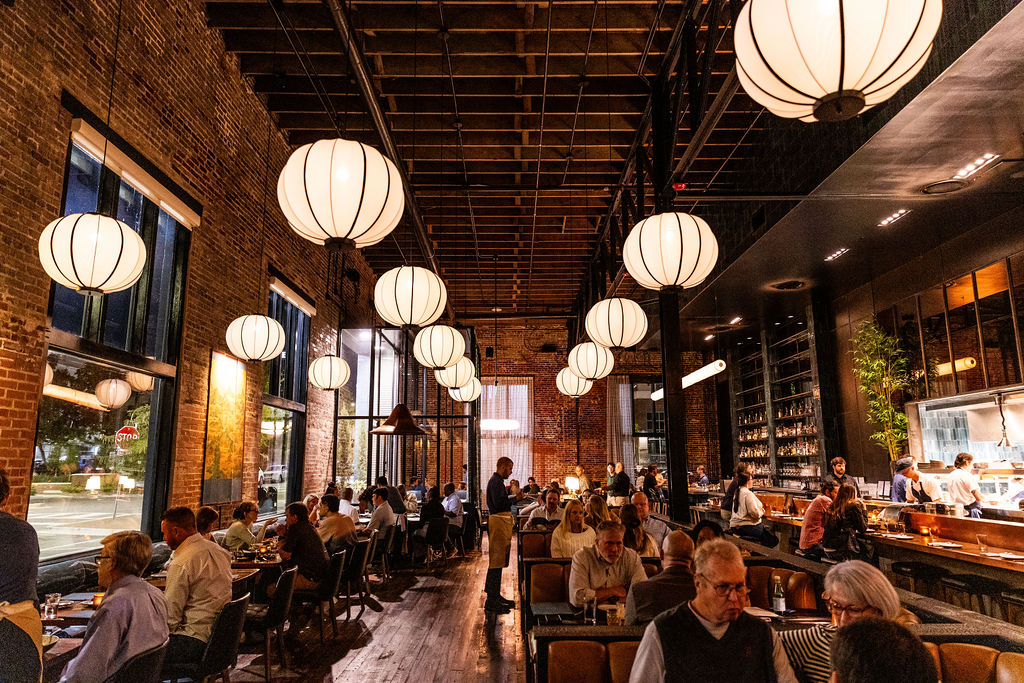
While the food itself is thoughtful and precise, the atmosphere is anything but rigid. At Current, the goal is not to create distance, but to invite people in—to make the experience feel both elevated and approachable.
“We want people to feel comfortable,” Joseph says. “We play the music a little louder, keep the energy up—it’s still thoughtful food and service, but it’s meant to be fun.”
In a city where dining traditions are still evolving, that balance—between refinement and accessibility, between the familiar and the unexpected—feels particularly resonant. For Joseph, the hope is not just that diners enjoy the meal, but that they leave with something more lasting: a willingness to try, to ask questions, and to return with a little more curiosity than they arrived with.
“If people leave having tried something they wouldn’t normally order, or learned something new about an ingredient,” he says, “that’s a win for us. That’s how you build a more curious dining culture.”
Love this story? Subscribe to our newsletter and get the best of Alabama delivered to your inbox every Friday.