Hugo said we’d start at 7am. Clearly for him, the work starts early, and he doesn’t let any daylight go to waste.
So I loaded up my sons, grabbed a coffee, and we made the drive from Mobile to Bayou La Batre to visit the Point aux Pins oyster farm, just as the sun was peeking through the sky. When I pulled up next to a warehouse off the main road, I thought we’d made it. I thought wrong.
(Holly Swafford/SoulGrown)
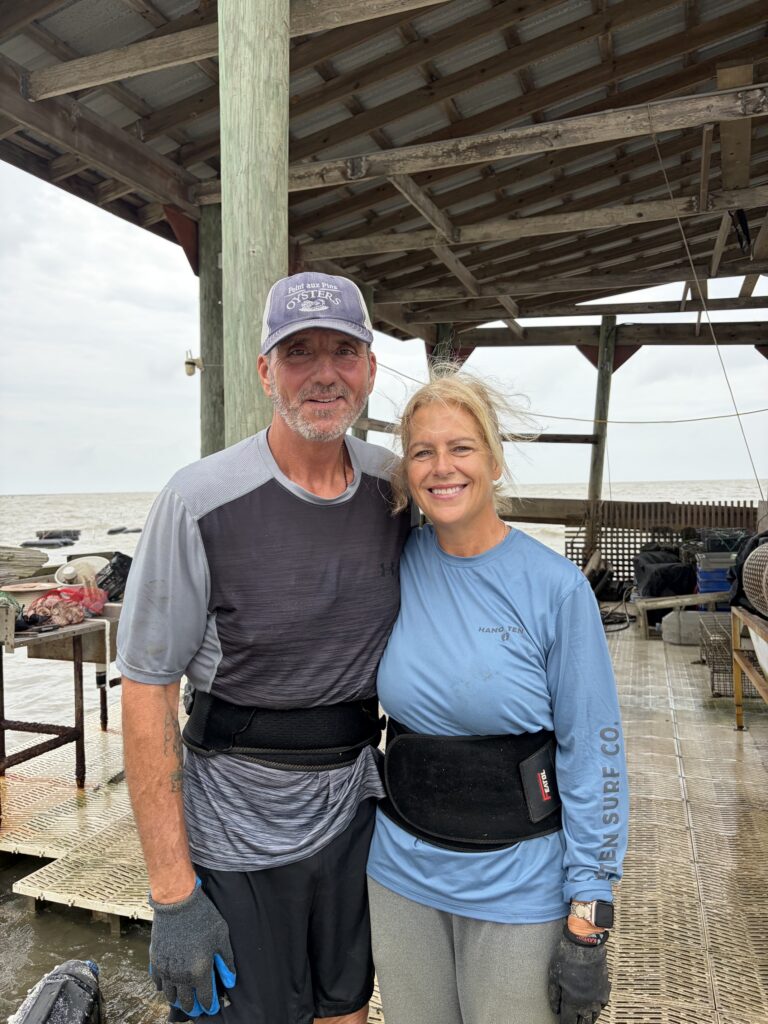
But there was Hugo McClure, alongside his wife Yvette, ready to start the work day, graciously letting my twin sons and me tag along. Yvette took one look at my sandaled feet. “Those probably aren’t gonna work,” she said with a smile. Hugo pulled an extra pair of boots out of the truck and I slipped them on. We piled in, and we were off.
I didn’t know what I was getting myself into, but we drove on—down a straight stretch of gravel road, the truck rocking with each bump. I made conversation as we went. “So how many are on your team?” I asked, thinking we’d meet several workers along the way. Yvette smiled again. “Well, there’s two of us!” she laughed. Her and Hugo—a spirited team working side by side, harvesting oysters for some of the finest restaurants in the South.
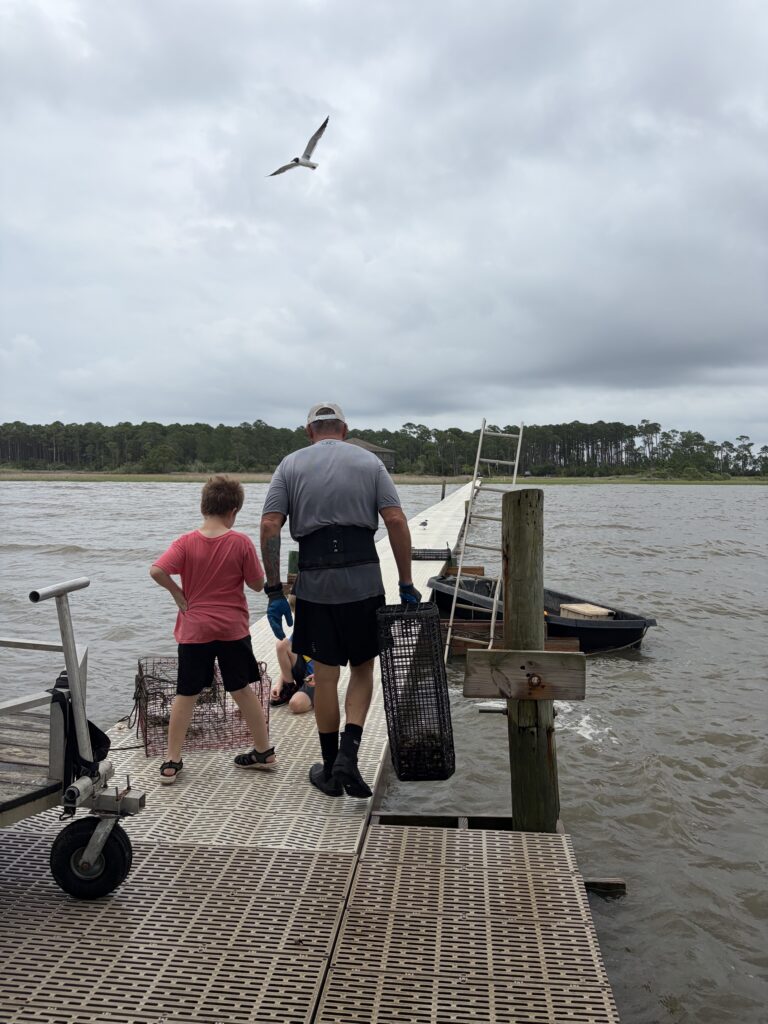
I soon understood why we needed the boots. A few miles in, the bay opens up ahead, drawn through with a long, outstretched pier. Before the end of it, the ground gives way to marsh, knee-deep water pooling in every low place. It’s overcast, wind whipping my hair across my eyes and mouth as we walk the stretch to the end of the pier, towing a wheeled cart behind us.
Muscle Memory
Hugo and Yvette get to work. They’ve done this thousands of times—muscle memory at this point. Hugo hops into the water, waist-deep, towing a small bobbing boat behind him as he wades from post to post, hoisting oyster baskets up and into it. Yvette moves busily around the dock, securing tools and organizing baskets.
(Holly Swafford/SoulGrown)
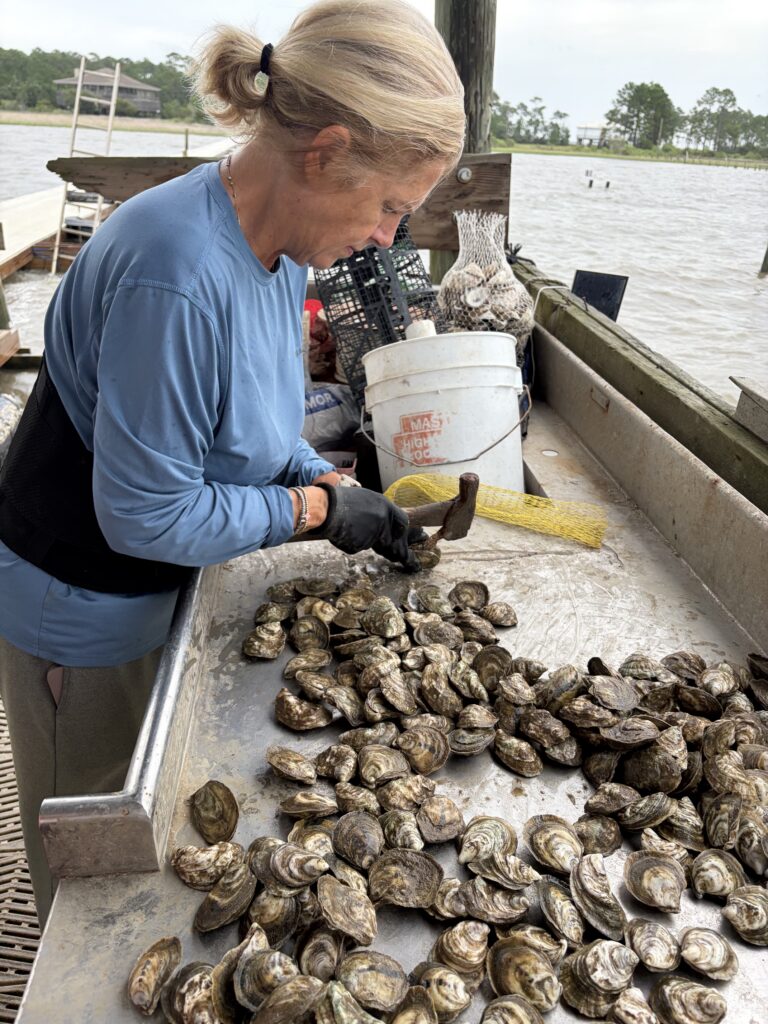
My boys find their newest entertainment: tiny, spindly crabs ducking and weaving around the dock pilings, slipping into any crack that’ll hide them. When Hugo arrives with the baskets, Yvette methodically turns each one out on a table. She knows exactly what she’s looking for—which ones aren’t ready, and which ones get thrown back.
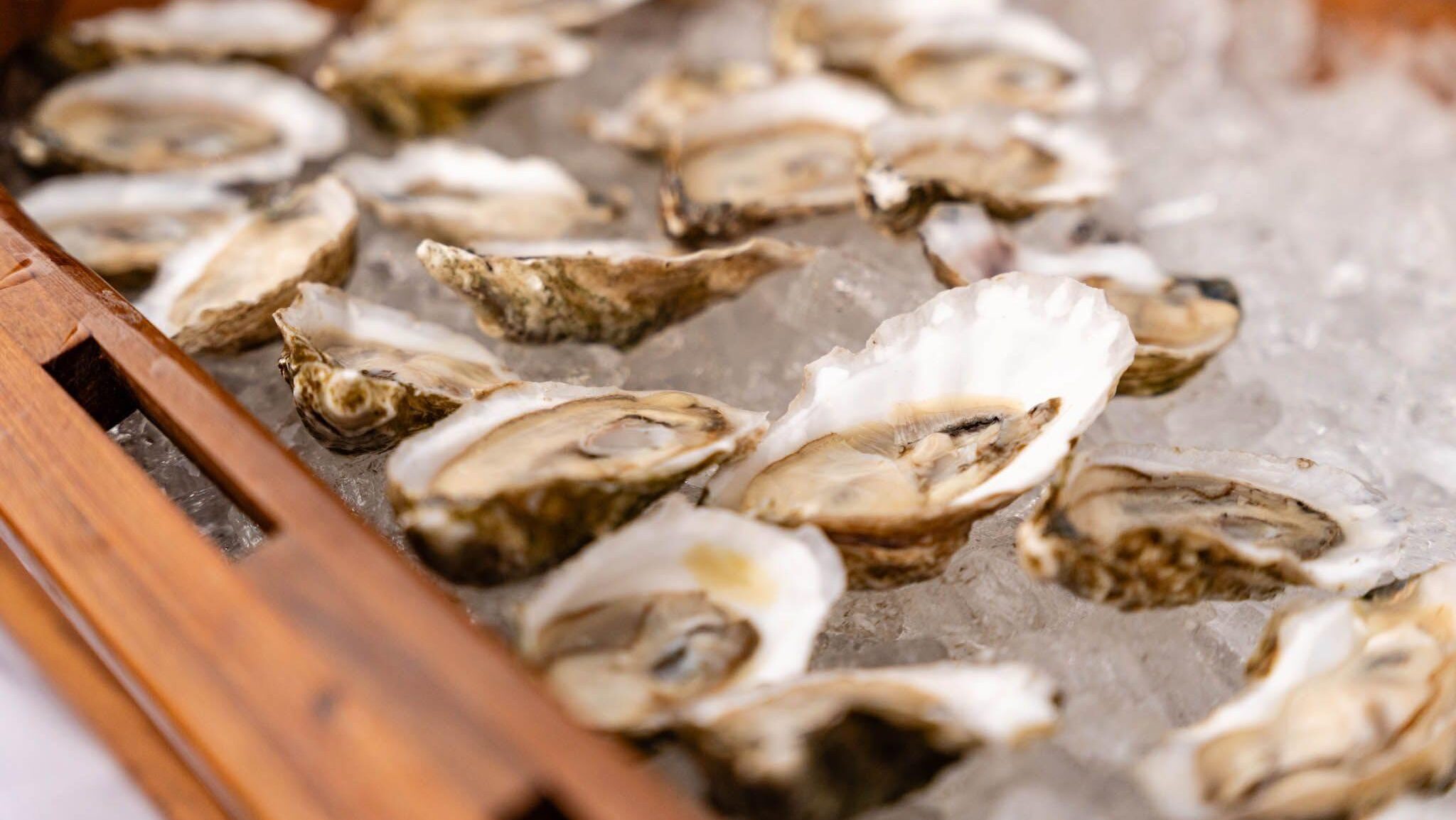
Hugo shucks one and hands it to me. Somehow, I’m thrown off that it’s not ice cold—and I realize this is the first oyster I’ve ever had straight out of the water, no refrigeration in between. The taste is clean and meaty, and if I’d had the forethought to bring a bottle of hot sauce, I would’ve parked myself right there on that pier and thrown back oyster after oyster.
A Business Handed Down
Between baskets, Hugo and I got to talking about the business. He didn’t start Point aux Pins—that was Steve Crockett, one of the first oyster farmers in Alabama, who founded the farm with his wife Dema back in 2009 and built it into something that landed on menus and raw bars across the country. Hugo came into it working alongside Crockett back in 2013, and took the reins himself in September of 2020.
He was candid about how unpredictable the work still is, even all these years in. “You’ll have a great month where you’re like, holy ****, I’m gonna go buy a Porsche,” he said, laughing. “And then you have another month where you say, holy ****, we’re eating bologna sandwiches.”
It was an easy thing to laugh about, standing out there with the water lapping at his waders. But I wanted to know what kept him coming back for the bad months, too.
His voice changed when I asked. It cracked slightly before he answered.
“I say oyster farming saved my life,” he said. “I came back from Iraq bad. I was suicidal, and I got into doing this. When I started, I was by myself. I got out here and got in tune with Mother Nature. I talk to the oysters. It did it—it saved my life. I’m so appreciative of Steve and Dema.”
Betting on the Water
(Holly Swafford/SoulGrown)
Listening to Hugo talk about the business, I realized he was both a farmer and a gambler, someone who plants his living in the water and then prays it’ll still be there tomorrow. “All it takes is one thing,” he said. “Nature is gonna do what she wants. Insurance won’t cover this.” A single storm, a single bad freeze, and the whole operation could be gone. No safety net. Just the water and whatever it decides to do.
So I asked him why. What keeps him betting on it, year after year.
“When we meet people who show up at events and they say, oh my God, I love your oysters—the people we meet,” he said. Then, after a beat: “It has its therapeutic moments. A beautiful day out on the water, seeing the stingrays, fish nibbling at my back… I love what I do.”
There’s something undeniable impressive about the two of them—a couple who risk everything, season after season, for the sake of doing the thing they love well.
I also asked Hugo about the old saying, the one about never eating oysters in a month without an R in it. He waved it off. “It’s largely a myth,” he said. The truth is more about biology than superstition. Most farmed oysters today, including his, are triploids—bred with three sets of chromosomes instead of two, which makes them sterile. They don’t spawn, so they don’t go through the soft, energy-drained state that wild oysters do during warmer months. Triploids sidestep the problem entirely, staying firm and full-flavored through the summer when their wild, diploid cousins are busy reproducing. More oysters for us, in any month of the year.
Boots off the Tailgate
By the time we made our way back down the pier, the sun had started to break through the clouds. We loaded into the back of the truck for the ride to dry land, boots dangling off the tailgate, the gravel road kicking up behind us. Nobody talked much on the way back. I think we were all just sitting with it.
It’s easy to forget, most days, what it actually takes to get food onto a plate. We pick up a dozen oysters at a raw bar and rarely think past the transaction; we rarely think about the hands, the water, the years of showing up before sunrise that made it possible. Hugo and Yvette do this every single day, rain or shine, storm season or not, betting everything on the bay and getting back up when it doesn’t pay off. There aren’t many people left willing to work that way, for something that could be taken from them overnight. I don’t think I’ll ever look at an oyster the same way again.
I knew, riding back with my sons on either side of me, that I’d given them something irreplaceable. I wanted them to remember the boots, the crabs, the quiet poetry of two people who loved their work enough to keep betting on it. Before we climbed out of the truck, I reached down and scooped up a few empty shells from the bed, and dropped them into my pocket.