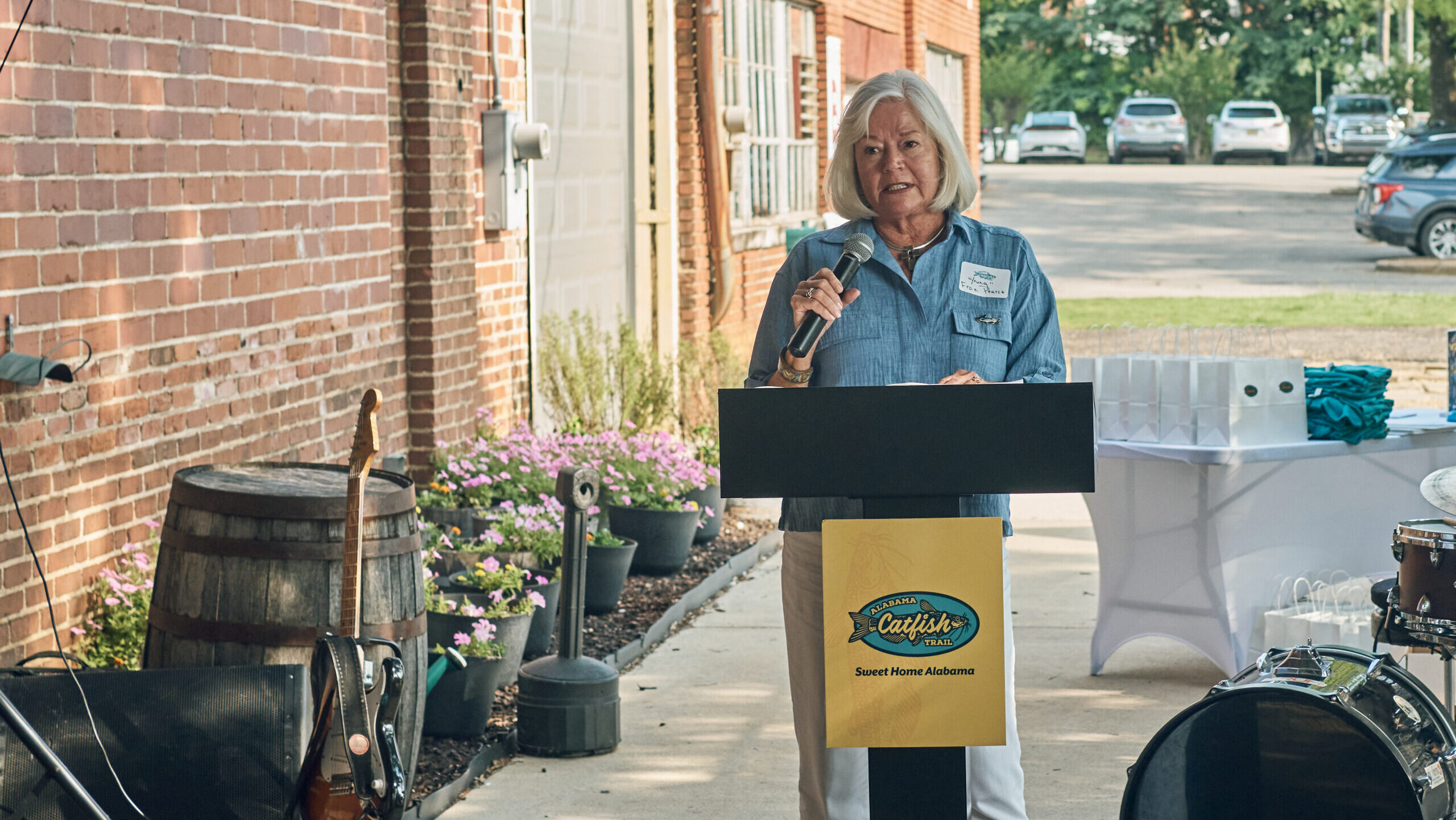
She wouldn’t answer to “Mrs. Pearce.” No, Pearce insisted on being called “Fran.” Or Franny, which is what her grandkids call her. This was all relatively normal. The other monikers that follow her around — “The Forrest Gump of Catfish,” “The First Lady of Catfish,” or, most frequently, “the Queen of Catfish” — those add a little more character.
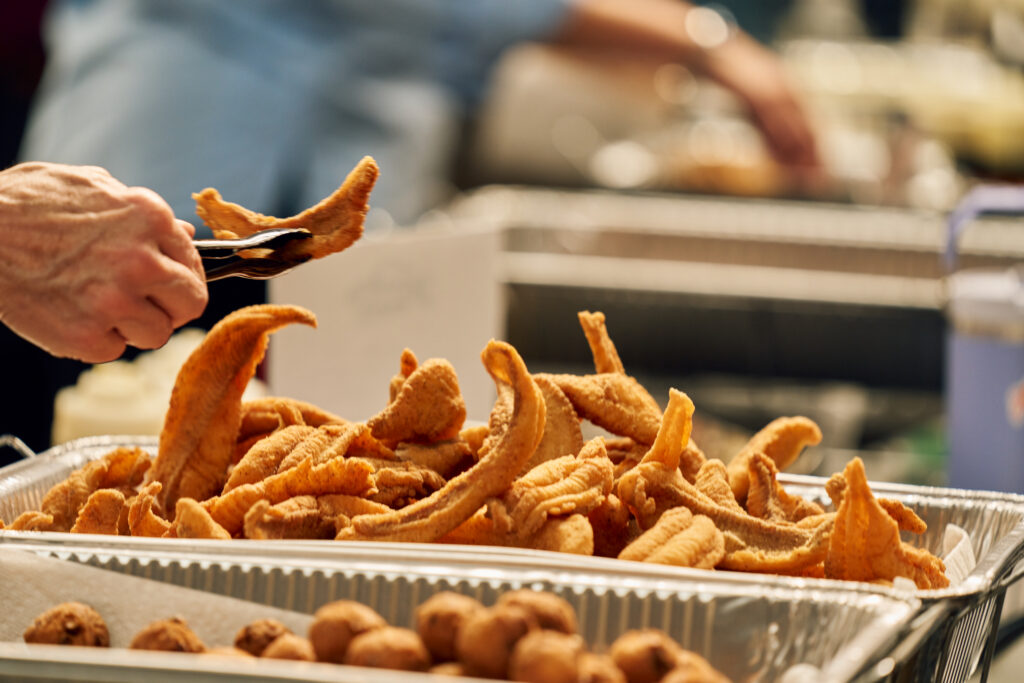
“The First Lady” bit, she assured me, was a new one. When the Alabama Catfish Trail opened this past summer, the son of a family friend introduced her as such to the crowd present (she’d been asked to speak). Journalists covering the event took it from there. The other nicknames have been around a bit longer. “Forrest Gump” refers to her versatility in the kitchen with a catfish fillet (she credits the annual ALFA catfish cooking contest for all her recipes, but nonetheless, she recommends this recipe in particular if you happen to be catfish curious). And “The Queen of Catfish?”
Fran Pearce laughed. “I want you to know that’s always been a joke. We’ve gone along with it over the years, but we have a lot of friends not involved in the catfish business, and they started calling me the queen … I don’t know what they called him sometimes,” she said, referring to her husband, David Pearce, who spearheaded the industry alongside her.
She called him “Big Dave.” While he never formally claimed the title of “king,” he might as well have been one, at least in her recounting of their time farming catfish.
From cotton to catfish
(Lucky & Co/Contributed)
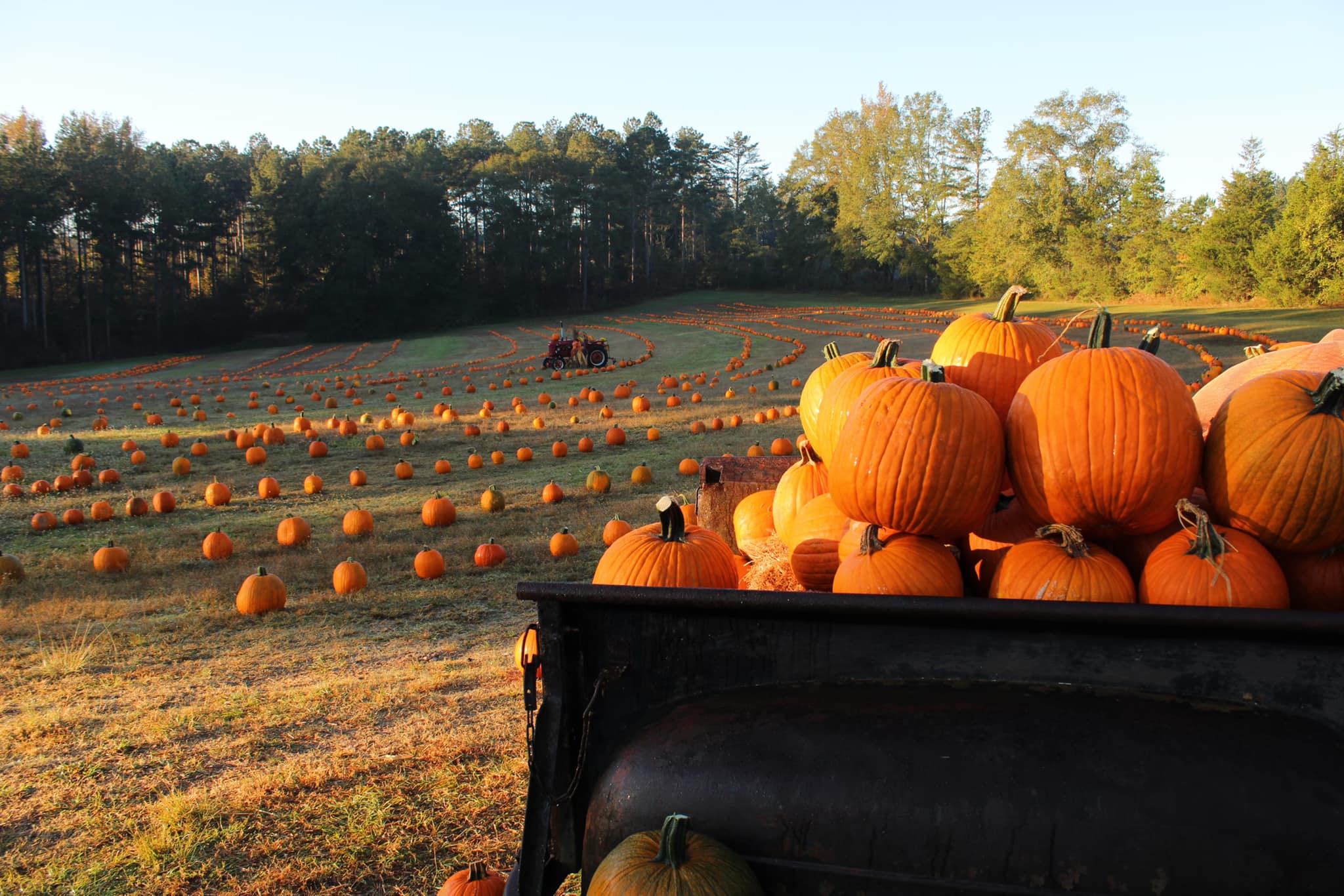
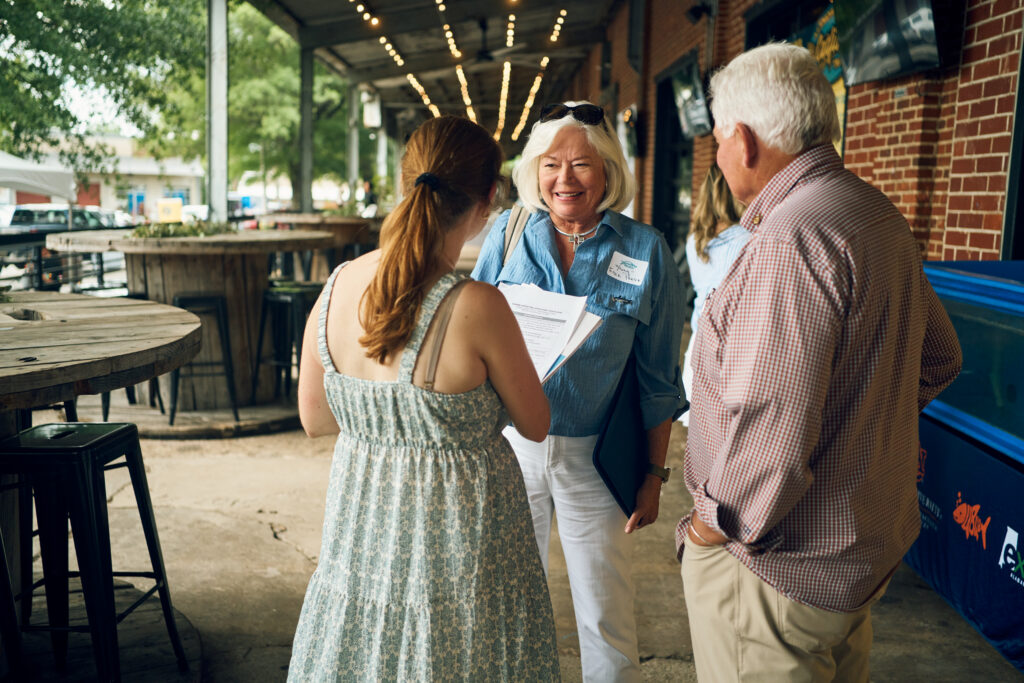
The Pearces were one of the first farms to transfer fully over to catfish, but that wasn’t until 1978. Before then, the family farm (which passed through Fran Pearce’s side and is now in its sixth generation, making their farm older than the state of Alabama itself) raised cattle, and before that, it raised cotton. But David Pearce was a “city boy,” a “young man, never been on a farm — the catfish industry intrigued him tremendously.”
Despite being the largest aquaculture sector of Alabama’s economy, catfish farming is a young industry. Birthed in the 1960s, it faced all the typical lows and highs of a new market: overcrowding, disorganization and a general lack of know-how. The risk often outweighed the reward; even interested farmers only took it on as a side hustle.
David Pearce changed that. He understood the value of cooperation, so he formed the “Alabama Catfish Group,” known today as the “Alabama Catfish Producers Association.” There, catfish farmers could meet up and talk shop. What followed was a series of grassroots innovations that could turn a part-time crop into a viable, full-time farm.
Building an industry together
(Lucky & Co/Contributed)
The Alabama Catfish Group was just as interested in the future of the fish as they were in the mechanics of farming. With the Alabama Farmers Federation (ALFA)’s help, they successfully lobbied for “U.S. Farm-Raised Catfish” to become a protected label. While that might not seem like a big deal, protected labels are not the norm in the United States (deciding that “peanut butter” needed to be at least 90% peanuts famously took a decade of congressional and judicial hearings, the cost of which was so exorbitant that the FDA decided protected labels were, in their own words, a “waste of time and money” and shifted gears toward consumer education). By protecting the term “U.S. Farm-Raised Catfish,” the farmers weren’t just protecting a phrase; they were protecting an entire sector of the United States economy.
Fran Pearce wasn’t idle during all this hubbub, either. Whenever David Pearce went to a meeting, Fran Pearce went with him. He might have joked that she was his “executive assistant,” but if her nickname is anything to go by, it’s clear that they ruled their kingdom together. She “paid the bills, kept the books, filed the files, and he did the thinking.”
They passed along their farm to their children when they came of age. While she hopes one of her grandchildren will take it up, that’s between them and the Lord. What’s more certain is that, even if one of them were to take the reins, change would be imminent.
A changing catfish industry
Projections for the American catfish industry aren’t bright. While the label “U.S. Farm-Raised Catfish” is a helpful marker, consumers are more and more drawn to the cheaper catfish coming out of East Asia, particularly Vietnam. When Fran Pearce’s son went to tour a Vietnamese catfish farm, the increased productivity he found wasn’t the result of grassroots innovations like the ones his parents worked so hard to cultivate. Instead, it was a startling disregard for health regulations. As Fran Pearce said, “we as American farmers would not be allowed to put into the water the filth that their fish swim in. And things that their fish are fed … you would not want to put that in your body.”
While the Alabama Catfish Trail — of which Fran Pearce spoke at this summer’s opening — highlights local farmers, its broader, more tourist-focused scope means that it is simply not engineered to encourage the kind of societal shift that would be required to fully revive the Alabama catfish industry.
While the Catfish Queen described the situation as “heartbreaking,” she doesn’t dwell on it. Instead, she preaches to her grandkids the value of change.
“This farm didn’t stay here by staying the same year after year … If you’re doing something the same way today that you were 50 years ago, you’re moving backwards. If this farm had stayed a cotton farm from the 1800s, I don’t know that we would’ve made it … for the farm to stay here, it’s going to take change.”
From catfish to community
As for herself, Fran Pearce has shifted her primary focus away from the catfish industry. She’s taken an interest in the local art scene. Various leadership seminars impressed on her the importance of “what art does in a community.”
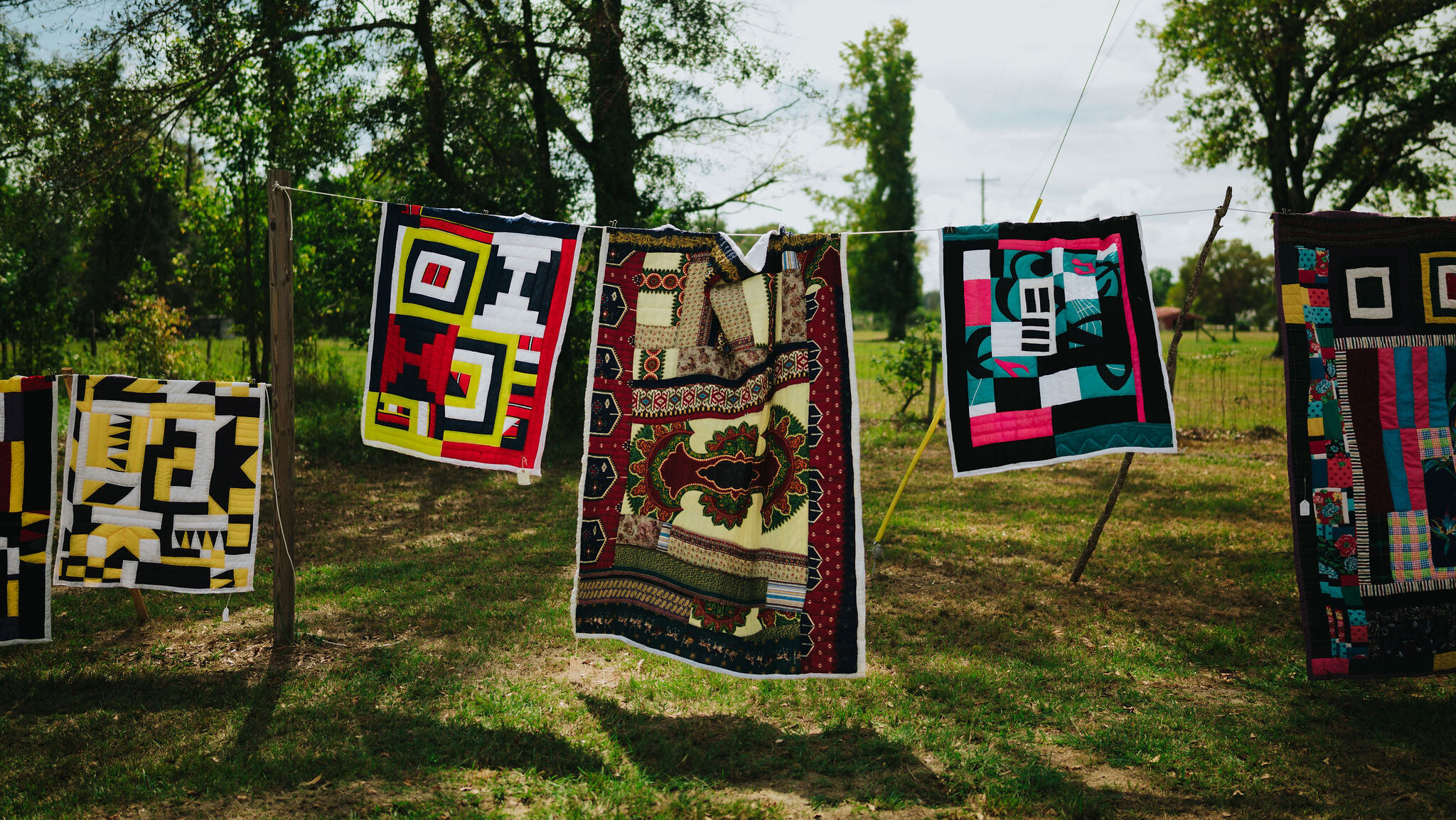
Along with “a group of wonderful women,” she started working on ArtsRevive, a charity with the stated goal of transforming Selma-Dallas County into an arts destination. They aim to build community through art in the Black Belt. She’s been on that board since 2007. Proof of concept arguably came when they used the proceeds from a play put on by the Alabama Shakespeare Festival to purchase their building in Selma. Now, ArtsRevive is known for its year-round events, support of local artists and art education initiatives.
“Just like Big Dave was in catfish, we are in ArtsRevive,” she said. It’s the same community-first mindset that she and her late husband used when establishing the catfish industry, only applied to the Black Belt art scene.
Fran Pearce couldn’t be more proud. And personally, we can’t wait to see what she becomes queen of next.
Love this story? Subscribe to our newsletter and get the best of Alabama delivered to your inbox every Friday.