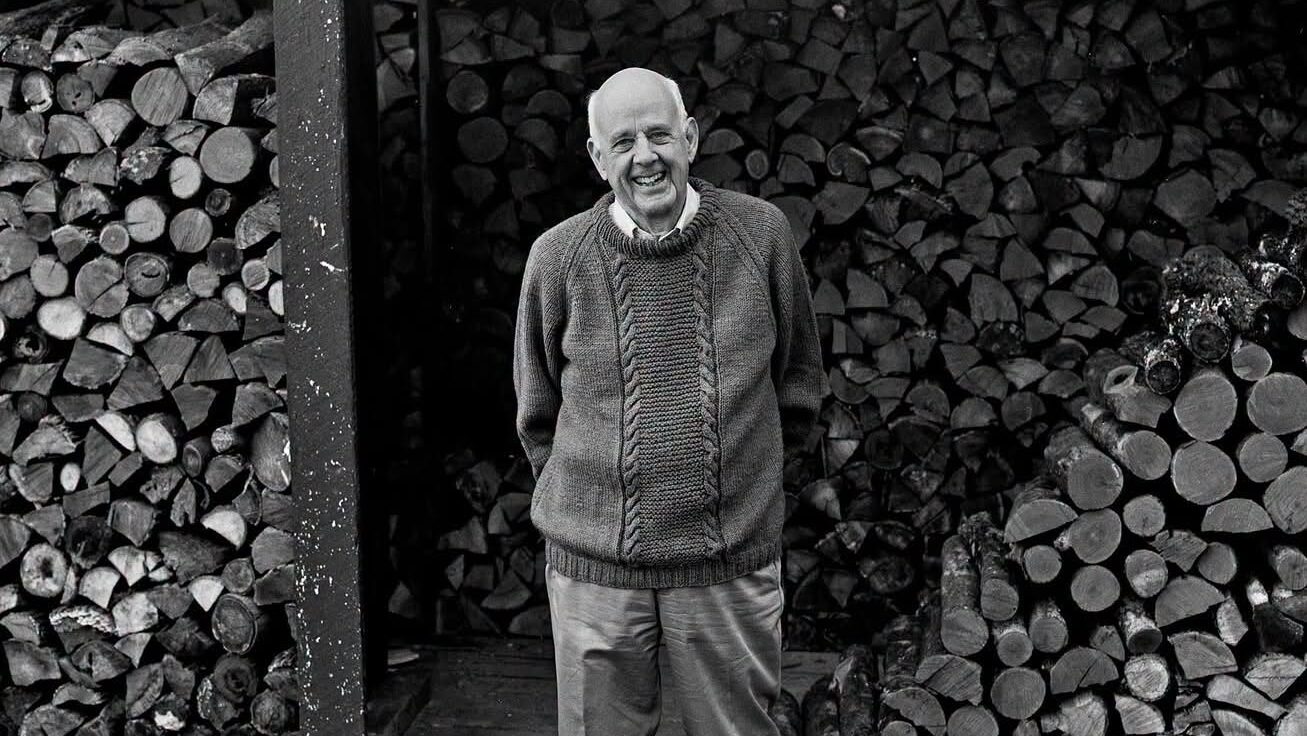
In a 2025 interview at The Berry Center, Wendell Berry posed a question to his audience, a question that reverberates throughout his body of work: “What does this earth require of us if we want to continue to live on it?”
At first glance, his poetry offers a gentleness to this answer. He wrote of the sacredness of our land, the humility of the farmer. But Berry marked his work with a throughline of zeal and enthusiasm, even fury at times. In his poem “A Warning to My Readers,” he gave this reminder: “Do not think me gentle because I speak in praise of gentleness, or elegant because I honor the grace that keeps this world.”
He was peaceful, but certainly not passive.
Berry understood what was happening to our planet, and began sounding the alarm, decades before it became part of the national conversation. Before we spoke of concepts around sustainability and conservation, he was attuned to the forces at work. In his landmark work The Unsettling of America, he bluntly recognized the alienation from our own land and food sources, and how these have somehow slipped into normalcy.
Even in his death, he has left behind an instructional manual on how to inhabit our earth, in prose that’s equally lyrical and evocative as it is practical.
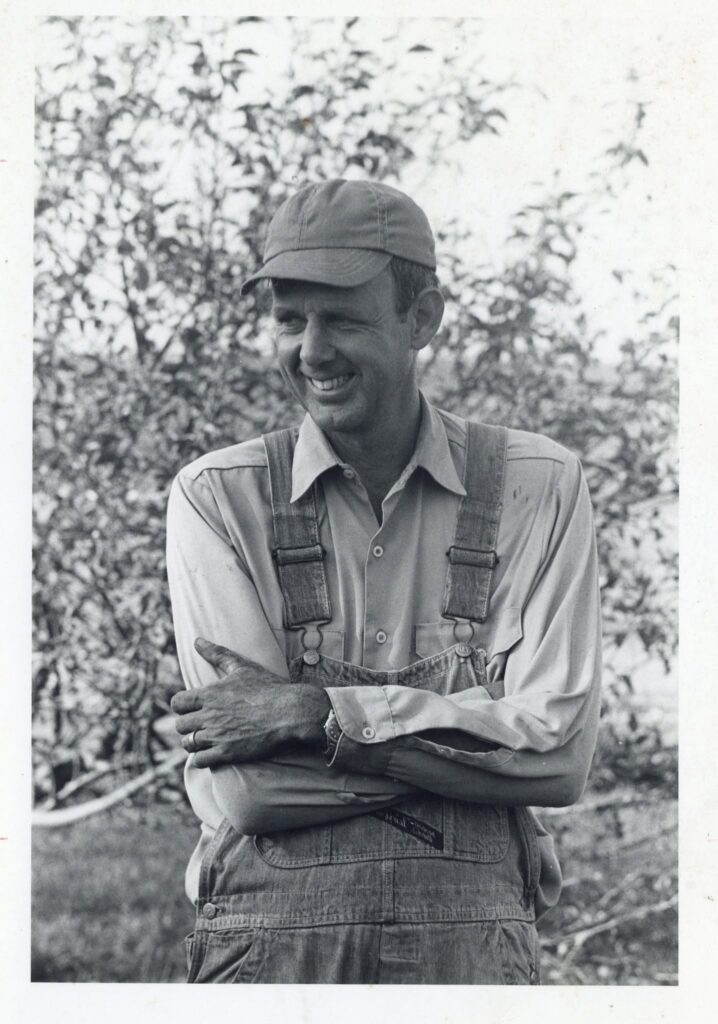
Berry never mistook his own gentleness for weakness when he spoke of power. Protesting to the governor of Kentucky, he said plainly that in this country, money determines who counts—the wealthy are “bigger, more powerful, more noticeable” as citizens than everyone else. He argued that we’ve built a society that can’t hold a real conversation about its hardest problems, and his own surroundings provided the proof of this. Living alongside the Kentucky River, he watched its poisoning firsthand: the eroding land bleeding into the watershed, a slow contamination, an intimate front-row seat to the repercussions of our decisions.
(The Berry Center/Facebook)
For Berry, there was no argument that justified this kind of permanent damage. The world, he said, is a conditional gift. It is ours to live in and live from, but only if we take care of it. And care, he argued, requires knowledge first, then the willingness to act on that knowledge, and beneath both of those, love.
He saw where this was heading. The endpoint of industrialization, as he understood it, was the replacement of people by machines and the narrowing of wealth into fewer and fewer hands—and he believed we were nearly there. Whether anything could still slow it, let alone reverse it, he wasn’t sure.
But he was sure of this: we are irreplaceable. We are fragile, just as the world we live in. We must defend our precious things, including ourselves, as kin to the land, inseparable from it. Berry’s continuing search for language, to find the right word, mimics the fragility of the natural resources he endlessly defended. And when his words aren’t in defense of the precious things, they are in thanks of them.
In his most recited poem, “The Peace of Wild Things,” Berry describes what happens when despair for the world grows too heavy to carry: he walks out to the woods, to the stillness of water and the blind patience of stars, and finds a kind of rest there. He writes of a grace that runs through everything living, every creature drawing the same breath—the implication being that nothing is unholy, because nothing is ungraced. There are no sacred places and unsacred ones. There is just the world, all of it worth defending.
Today we stare down the barrel of damaged ecosystems. Disappearing biodiversity. Whole landscapes remade beyond recognition. Fossil fuels burned without a thought for what comes after. Natural beauty traded away.
The solution, Berry would say, takes more than reverence. It takes more than words, too. In his own words, he says, “the answers will come not from walking up to the farm and saying ‘this is what i expect from you.’ You walk up and say ‘what do you need?’ You ask the land what it needs from you.”
It calls for a great deal of patience, humility, and understanding for the work ahead. Across Alabama, individuals and organizations are asking the land what it needs, exactly as Berry pleaded.
In Fosters, Hunter and Jessica Vick have built their mission around a version of that same question. Rather than imposing a plan on a property, they start by figuring out what a landscape used to be before cedar encroachment and decades of fire suppression buried it—then work, patiently, to let the dormant seed bank underneath do the rest of the work itself.
At Lovelight Farm, that same ethic shows up in the soil. The farm makes its own compost, refuses herbicides, pesticides, and GMOs, and grows every crop under Certified Naturally Grown standards—a peer-reviewed certification that treats the land with care and reverence.
On the Coosa River, Justinn Overton has spent over a decade protecting the same water she grew up drinking from. With the Coosa Riverkeeper, she works from a set of simple questions: Is this safe to swim in? Safe to eat from? What is this water doing to the people who live beside it? They’re the same questions Berry spent a lifetime asking of his own river, proof that knowing a place intimately is where the caring has to start.
In the grasslands themselves, Kyle Lybarger, founder of the Native Habitat Project, is teaching Alabamians the most basic form of that same listening: learning which plants actually belong to a place, and choosing them over what’s simply easy to grow. Grasslands are disappearing, he says, but that disappearance isn’t inevitable, and neither is standing by while it happens.
And in the heart of downtown Birmingham, where food deserts leave tens of thousands of residents without easy access to fresh produce, Jones Valley Teaching Farm has built its whole model around a simple belief: the people best equipped to fix that are the kids growing up inside it. On school campuses throughout Birmingham, students learn to grow their own food, and in doing so, learn what it takes to build a community that can feed itself.
All of these, and many more across our state, are taking up the mantle of his words. They are lifting on their shoulders his pledge of hope—not merely as a vaporous concept, but of something authentically lived. Hope staves off pessimism, and as Berry said in one of his final interviews, “I’ve always been trying to map out the grounds of authentic hope.”
Hope is not wishful thinking or empty promises. Hope is a gift our direct care, education, and setting forth of that education into practice. Hope is something that can never be taken by power or by wealth.
We resign ourselves to the work, and we hope.