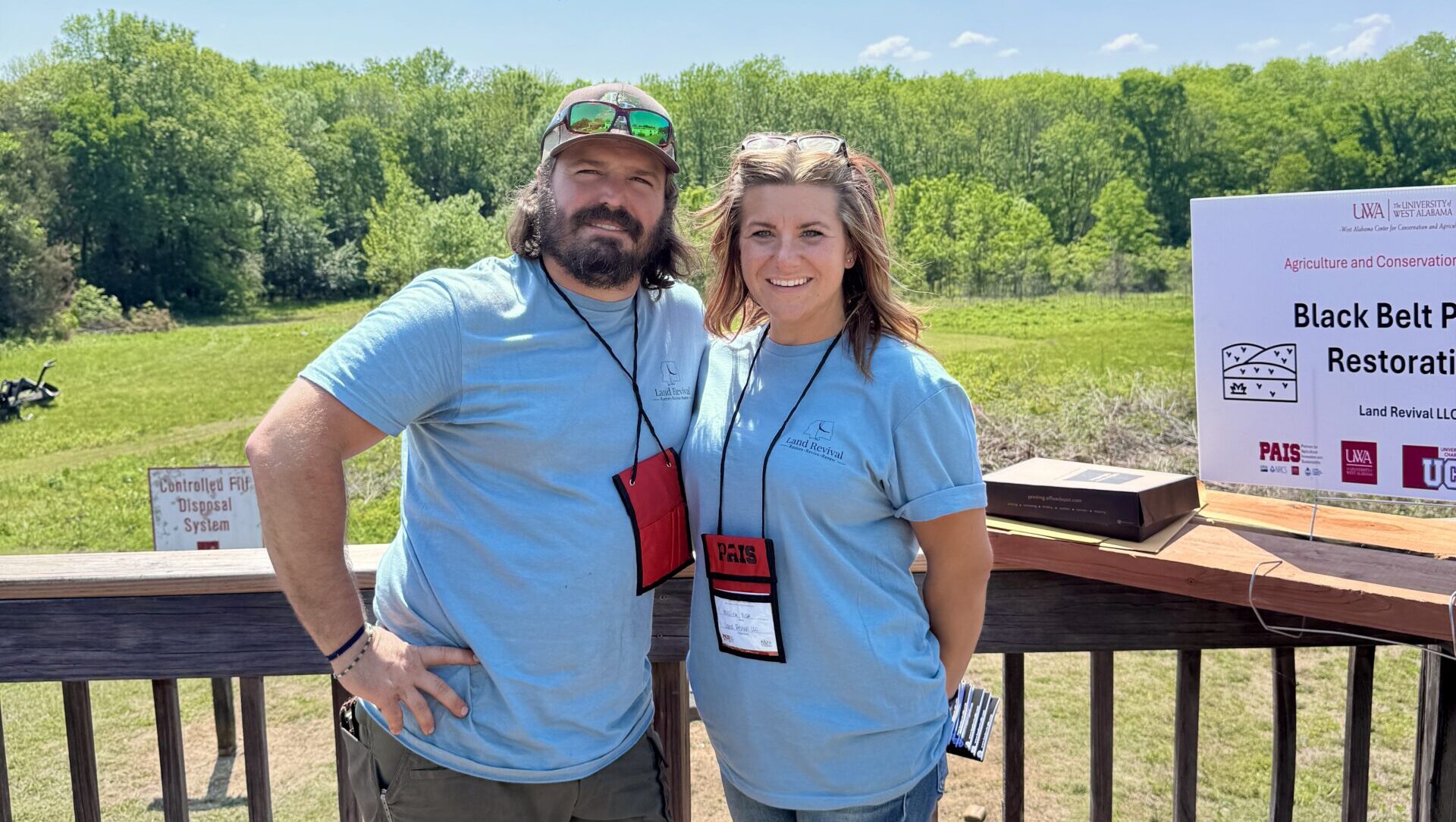
Before discussing prescribed burns, cedar removal, or conservation funding, Jessica and Hunter Vick began our conversation with a burst of excitement—they had just read hopeful news about butterflies.
The husband-and-wife team behind Land Revival LLC had just seen a report showing the eastern monarch butterfly population increased by 64 percent this year, a piece of news that felt particularly meaningful for two people who spend their days helping landowners restore Alabama’s native grasslands. While monarchs may not be the first thing that comes to mind when people think about the Black Belt, the Vicks see the increase as evidence that conservation efforts matter and that restoring habitat, even one property at a time, can create impacts that stretch far beyond a single fence line.
(Jessica Vick/Contributed)
From their home base in Fosters, just outside Tuscaloosa, the couple works with landowners across Alabama to restore prairie remnants, remove cedar encroachment, conduct prescribed burns, and improve wildlife habitat. Yet despite the technical nature of the work, Hunter says their mission has always been grounded in something much deeper than land management.
“What you own is not just about you,” he said. “Land ownership is not just a number on a map. It’s your responsibility to take care of it.”
That sense of responsibility has shaped both their personal and professional lives. Hunter grew up on a farm where his grandfather operated a cattle business, spending much of his childhood outdoors and learning firsthand how closely people depend on the land. Later, conversations with Jessica’s father, Claude Jenkins, a longtime biologist with the Alabama Wildlife Federation, helped him recognize that the things he enjoyed most could also become a career focused on serving others.
“Serving the greater public is a huge part of my life,” Hunter said, who originally went into nursing. Similarly, he views conservation as another form of service—one whose effects can ripple through entire communities and ecosystems.
“This impacts more people than what I can ever do in the hospital,” he said.
Jessica’s background in education has similarly influenced the way she approaches conservation. Living near the University of Alabama, she has met countless students who arrive in Tuscaloosa with little understanding of the ecological diversity surrounding them, despite living only a short drive from one of the most biologically significant landscapes in the Southeast.
“A lot of people don’t realize what we have here,” she said.
Restoring What Was Lost
(Jessica Vick/Contributed)
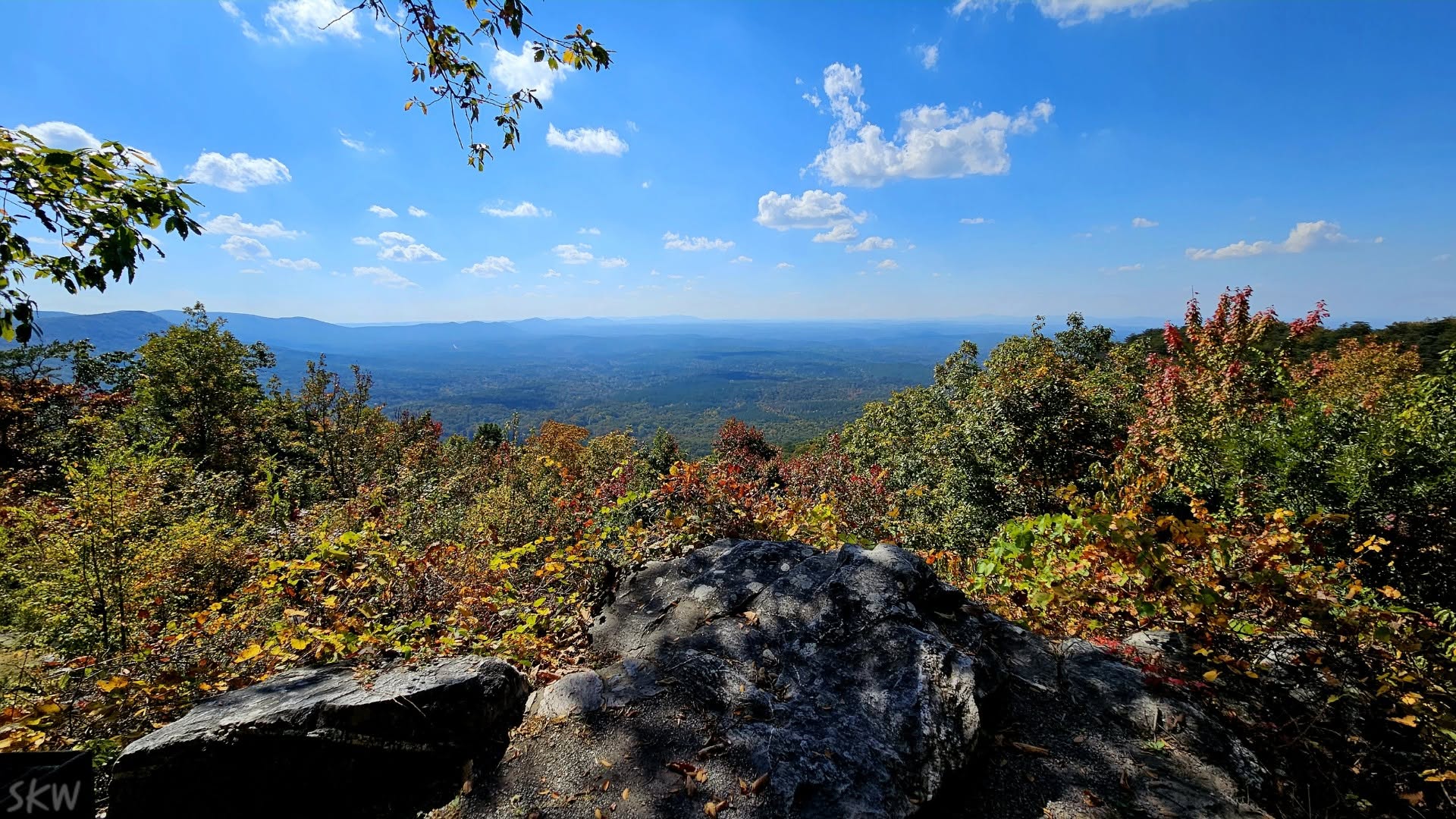
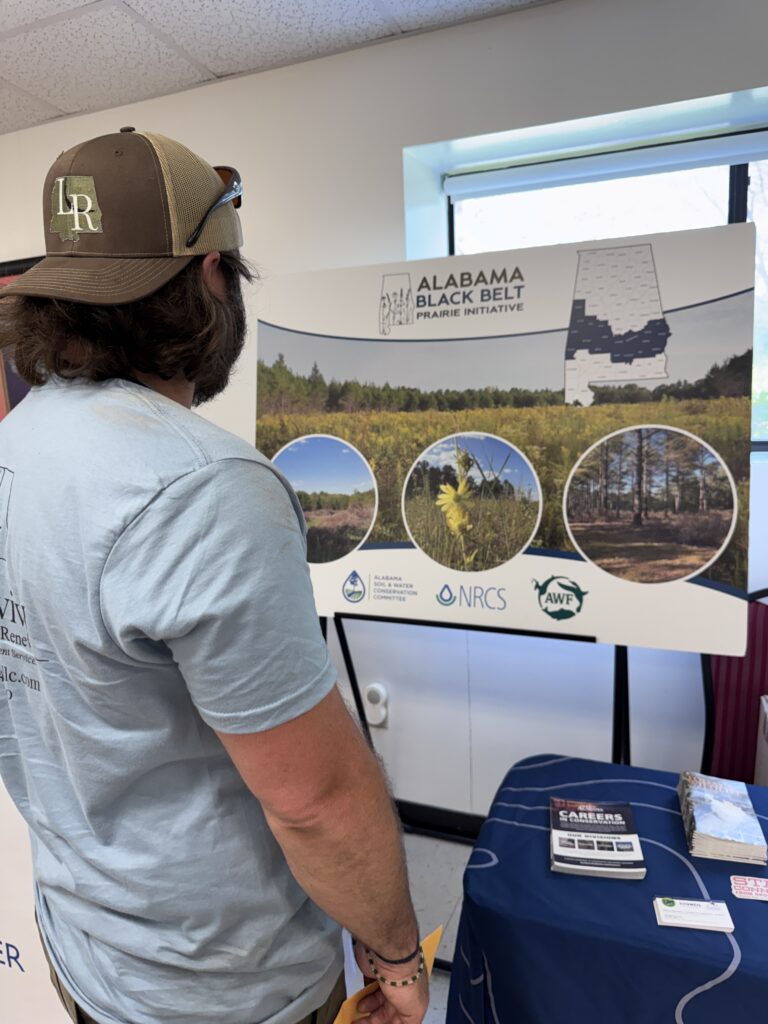
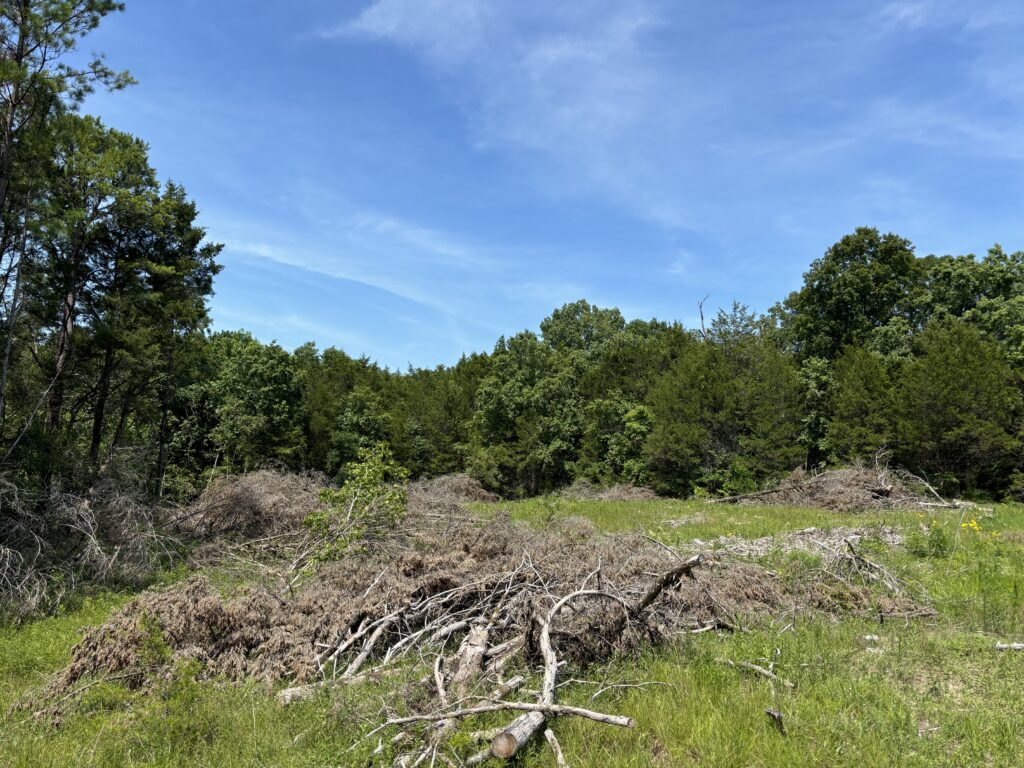
Much of the Vicks’ work focuses on restoring portions of Alabama’s Black Belt prairie, one of the state’s most endangered ecosystems. Once covering vast stretches of the region, these grasslands supported an extraordinary diversity of native plants, pollinators, birds, and wildlife. Today, however, only fragments remain after decades of agricultural conversion, development, and fire suppression altered the landscape.
For many landowners, restoration begins with a simple question: What should this land look like?
The answer is often more complicated than people expect. Prairie restoration is not as simple as planting native grasses or clearing unwanted vegetation. Instead, it requires understanding what historically existed on a property and identifying the factors preventing those native systems from functioning as they once did.
One of the most common challenges is cedar encroachment. While eastern red cedars are native to Alabama, decades without regular fire have allowed them to spread aggressively across prairie landscapes, creating dense canopies that block sunlight and suppress native vegetation beneath them. “Cedars will grow like weeds,” Hunter said.
Removing those trees is often the first step toward restoration, but Land Revival approaches the process carefully. Rather than relying solely on large equipment capable of clearing land quickly, the company uses smaller machinery designed to minimize soil disturbance and protect fragile prairie systems.
“You can go in with heavy equipment and do it faster, but because prairies are sensitive, we use smaller equipment and get a better product,” Hunter said.
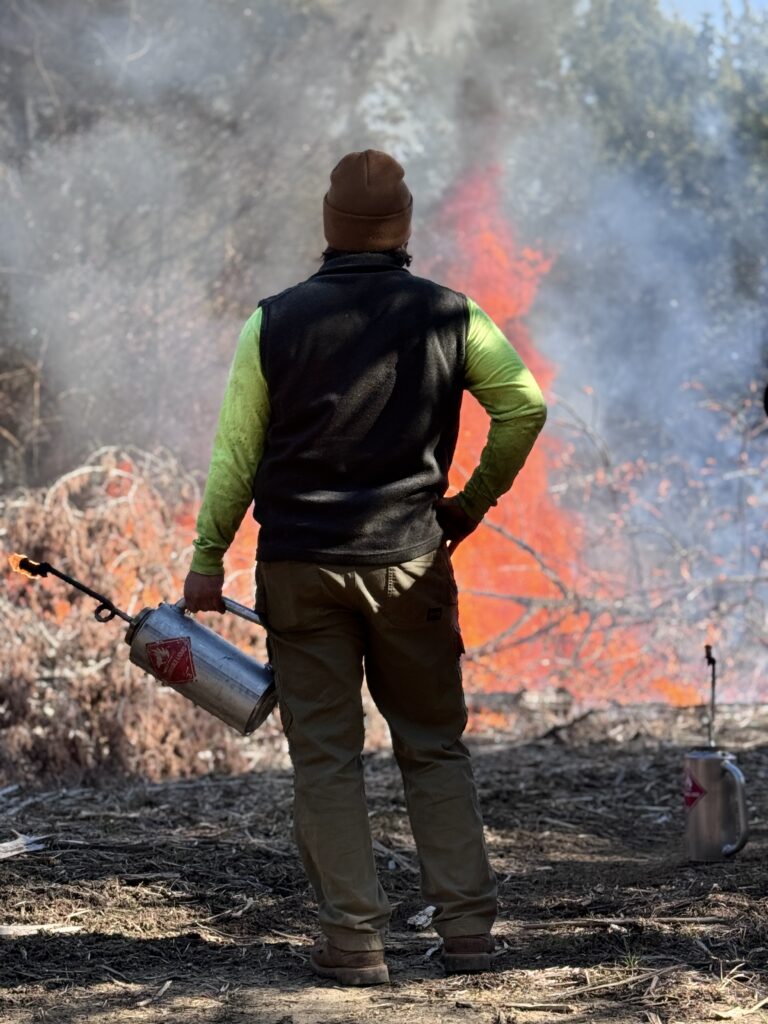
That attention to detail is critical because prairie soils contain something many people never see: a dormant seed bank made up of native species that have persisted beneath the surface for years. Once sunlight reaches the ground again and prescribed fire reintroduces the heat many species require to germinate, those seeds can begin bringing the landscape back to life.
The stakes are high. In some areas of the Black Belt, years of erosion have stripped away topsoil entirely, exposing chalky subsoils where little can grow. Driving through parts of west Alabama, Hunter points to large white expanses along the highway as reminders of what can happen when native systems are lost.
“Our goal is to prevent prairies from getting to that point,” he said. “To get it all back into grassland and educate landowners on how to maintain it.”
More Than a Business Transaction
(Jessica Vick/Contributed)
Although restoration work involves chainsaws, prescribed fire, and habitat management plans, both Hunter and Jessica believe the most important part of the process has little to do with equipment. “Land is personal,” they said. “It’s something where you have to get to know the people.”
That philosophy has become one of the defining characteristics of Land Revival. Many landowners initially reach out hoping to improve hunting opportunities by creating better habitat for deer and turkey. Those conversations often begin with practical goals but eventually expand into discussions about stewardship, family legacy, and what it means to care for a piece of land over the long term.
For the Vicks, their work is often shaped by their Christian faith, which informs both their approach to business and their view of conservation. They see land stewardship not as a political issue, but as a responsibility rooted in caring for creation and preserving it for future generations.
Hunter said helping people understand the broader significance of their property is often one of the most rewarding parts of the job. “When we get the chance to meet with them, we show them that what you own is not just about you,” he said.
The restoration process itself also requires a level of trust that cannot be built overnight. Prairie projects frequently take years to show their full results, and in the middle stages a property can appear rough or unfinished. Trees have been cut, burn plans have been implemented, and the landscape may not yet resemble the healthy prairie landowners envision.
Over time, those relationships often extend far beyond individual projects. Conversations about habitat management turn into conversations about family histories, favorite childhood memories, and the hopes landowners have for future generations. By the time a project is complete, the Vicks say they are rarely viewed simply as contractors.
“It can’t just be transactional,” Hunter said.
A Future Worth Protecting
(Jessica Vick/Contributed)
As Alabama’s prairie restoration movement continues to grow, the Vicks are encouraged by increasing awareness, expanded conservation funding, and a growing network of prescribed-burn practitioners working across the state. Yet they believe one of the greatest opportunities remains education—helping people understand that conservation is not reserved for scientists, land managers, or large landowners.
Whether someone owns hundreds of acres or simply wants to learn more about the natural systems around them, Hunter believes everyone has a role to play. “Everything is connected,” he said. “Down from the smallest insect and pollinator species.”
Healthy grasslands improve water quality, reduce erosion, support wildlife populations, and provide habitat for species whose migrations extend thousands of miles beyond Alabama’s borders. The effects of restoration can be felt far beyond the boundaries of a single property, connecting communities, ecosystems, and generations in ways that are often invisible until they are gone.
For the Vicks, that interconnectedness is what makes the work worthwhile. Long after the cedar trees have been removed and the prescribed burns have been completed, they hope people will see prairie restoration not as a political issue or a conservation trend, but as an act of stewardship—one that preserves a uniquely Alabama landscape while creating a healthier future for everyone who depends on it.
“Everyone has a role to play,” Hunter said. “No role is too small.”
Want to stay up to date on Alabama conservation efforts? Subscribe to our newsletter and get the best of Alabama delivered to your inbox every Friday.